



First MAN 48/60 MeOH retrofit will use low-pressure port fuel injection
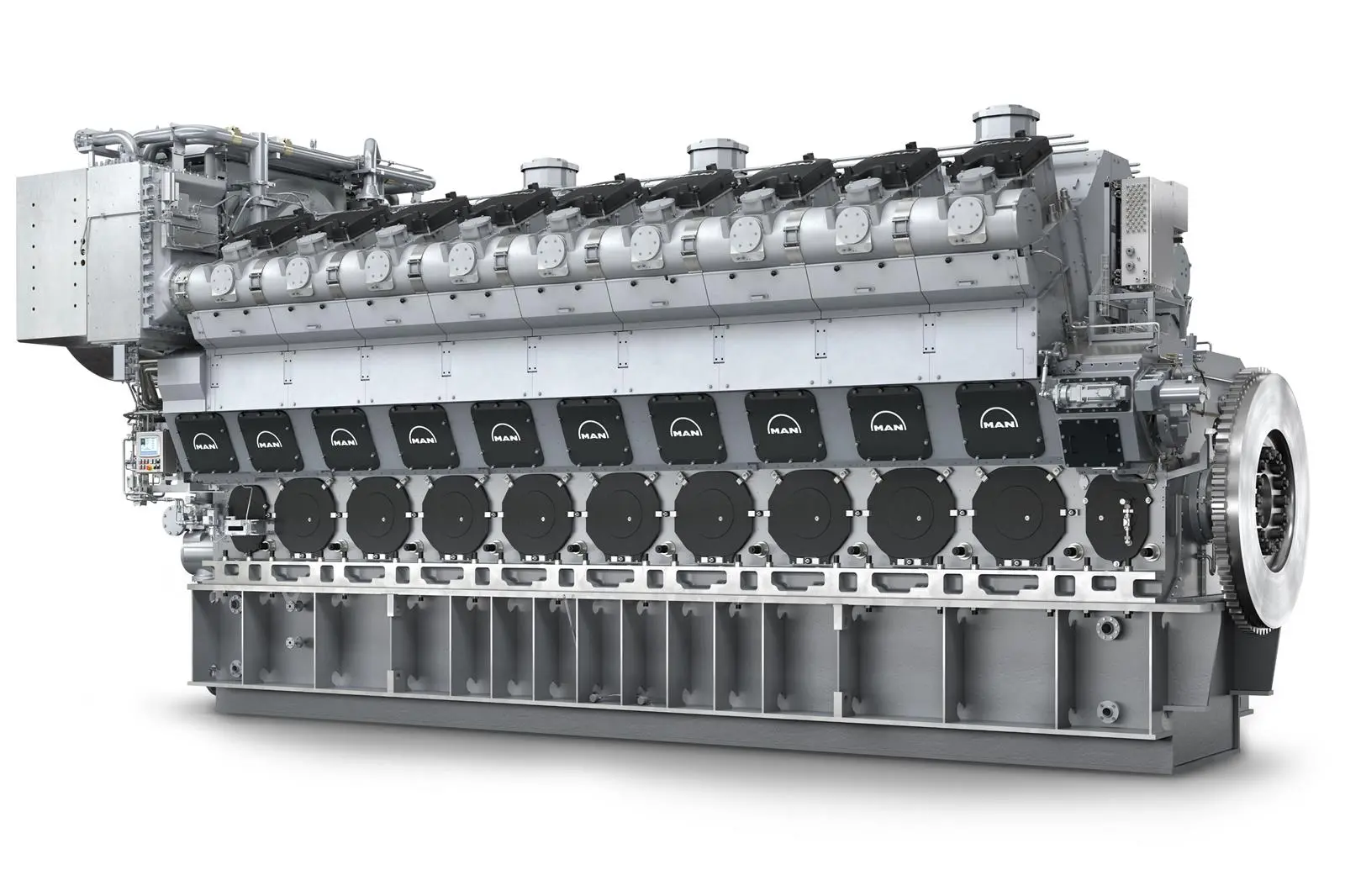
Last year, MAN signed a Memorandum of Understanding (MoU) with Stena Teknik and Proman for a retrofit project, and a similar one with Norwegian Cruise Line. Bernd Siebert, Head of Retrofit & Upgrades at MAN PrimeServ in Germany, has now confirmed that the projects will involve the adoption of their port fuel injection retrofit concept due to its inherent advantages for legacy installations.
After internal benchmarking the different technologies with market requirements and customer demands, these retrofit projects will involve pre-mixed combustion via the installation of a port fuel injection system for MeOH in addition to the existing diesel injection system. This simpler injection system esp. as a retrofit kit for existing engines in contrast to the high-pressure diesel direct injection based on Diesel combustion for new-built engines like the MAN L/V 32/44CR MeOH ready or the MAN 49/60.
Siebert says the system provides economic benefits for owners looking to retrofit their existing engines with the simply to retrofit PFI (port fuel injection) technology. Also, there’s no need to open the ship to remove the engine compared to an exchange with a new engine, so less time is required in drydock. “The larger the bore size and the younger the engine, the more reasonable a retrofit is from a commercial perspective.”
Performance options
The simpler injection system comes with a reduced MCR map for MeOH – currently operation up to 70% MeOH is possible, but on-going testing is expected to increase it up to 80%, enough for shipowners to remain compliant with existing legislation up to 2045. The amount of diesel in pilot injector will be limited to a maximum of 1-3%. In case the ship owner requires 100% MCR this can still be maintained in Diesel operation. In addition to the engine modifications retrofits will include a MeOH pump skid, and to be compliant with class rules, this will be containerised.
This PFI retrofit option for methanol operation will also be available for the entire 48/60 fleet (A, B and CR release status) . With the MeOH retrofit kit the 48/60 engine will be converted to a 51/60 engine type including an optimized combustion chamber (cylinder head, liner and piston) and a pilot oil system that reduces diesel performance but increases the MeOH map to 80%, making it comparable in performance to other MAN dual-fuel engines.
“With port fuel injection, we only have pressure of between 10 to 20 Bar, so it’s relatively easy to handle from an operating perspective. This leads consequently to lower efforts in piping and auxiliaries. When we talk about high pressure injection, we’re up to 300+ bar operating pressure. This is a challenge when it comes to piping on existing vessels, and that’s why we are concentrating on port fuel injection for retrofit,” says Siebert.
Converted engines will be technically equivalent to newly built MAN 51/60 units and, as a result, achieve significant savings in fuel consumption, CO2 and pollutant emissions, and increase reliability, says MAN.
AiP for newbuild engine
MAN continues to make progress on its MeOH engine for newbuilds. Most recently, RINA granted an Approval in Principle (AiP) certificate for its MeOH-ready MAN L/V 32/44CR engine. The AiP covers an upgrade concept for the four-stroke engine for conversion to dual-fuel running on methanol to provide greater flexibility to shipowners. “The idea behind this is that the subsequent retrofit is able to be done during operation of the vessel. We can take the engine out of operation for the conversion period – in best case when the engine is on standard maintenance anyway – and install the MeOH components without needing to have a trial period,” says Siebert.
He notes that MeOH has several, physical advantages as a fuel, including a liquid state at ambient temperatures and its accordingly easy handling aboard vessels compared to gaseous fuels. Under combustion, MeOH also emits fewer NOx emissions and no SOx or soot emissions. MeOH is also much less hazardous to marine life compared with conventional marine fuels. The AiP certificate permits the use of outer ship hulls as bunker tanks, thereby increasing fuel-storage capacity on-board.
MAN estimates that for four-stroke, newbuilds amount to approximately 750 per year for engine units larger than 1MW, and the existing fleet is around 30,000 ships. This highlights the importance of implementing decarbonisation action for both the existing and newbuild fleet. “Newbuild engines will always be equipped with high pressure direct injection: this is the long-term future,” says Siebert.
Related Articles
 2-STROKE & 4-STROKE
 2-STROKE & 4-STROKE
 2-STROKE & 4-STROKE