



A cleaner burn with caution attached
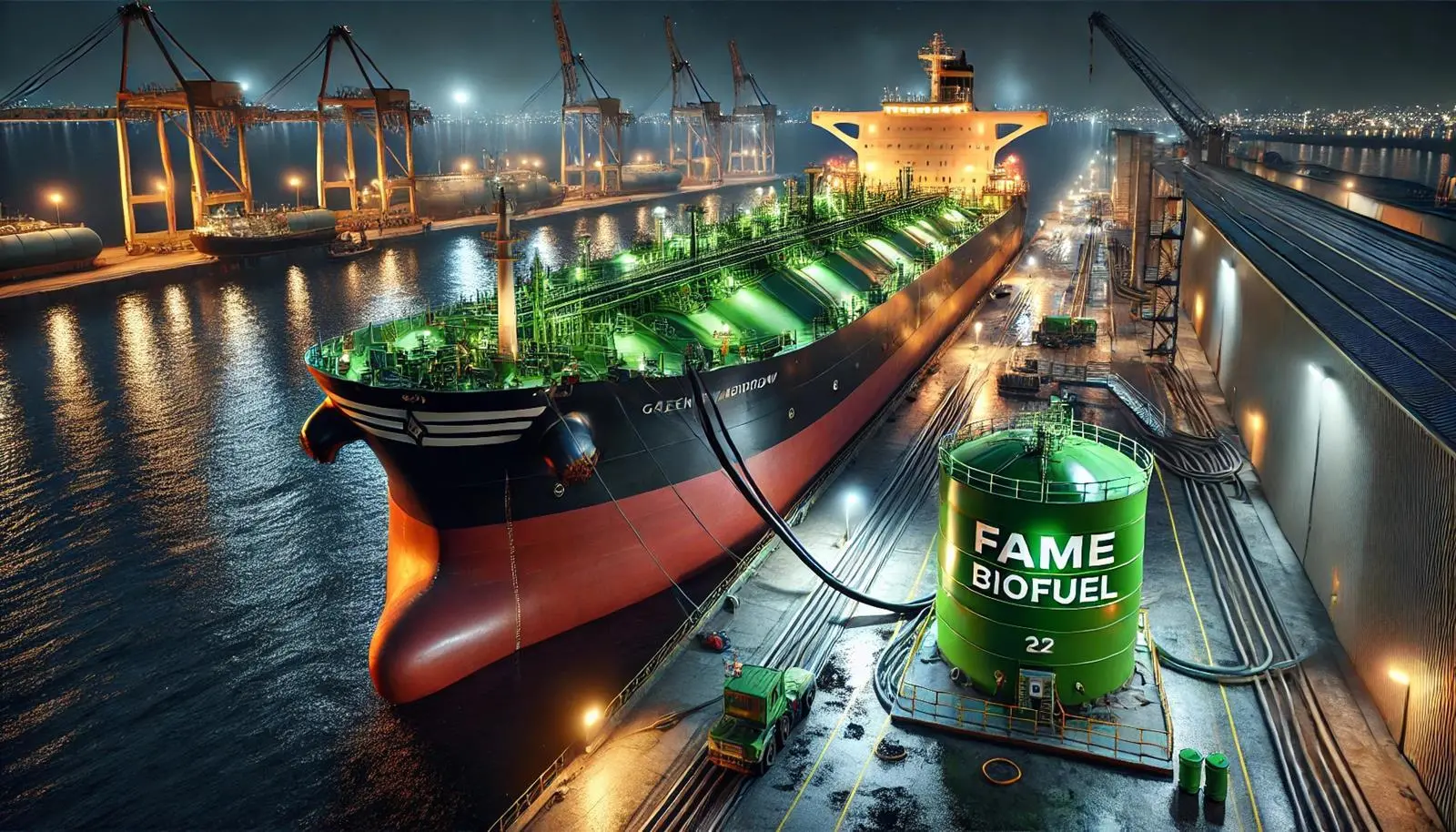
Yet as the sector embraces these alternatives, experts are urging operators to handle with care give a plethora of technical, operational, and maintenance challenges.
“The route to widespread adoption is paved with technical complications. Operators need to know exactly what they’re working with,” said Jørgen Skødt Vedsted, Principal Promotion Manager at MAN Energy Solutions (MAN ES).
Among the two main types, HVO is considered the more user-friendly. It boasts better oxidation stability, doesn’t suffer from cold flow problems, and poses fewer issues around calorific value. Still, viscosity needs monitoring. FAME, though often cheaper and more readily available, brings a raft of difficulties: it absorbs water, oxidises quickly, and has solvent-like properties that can dislodge residues in fuel tanks and pipelines, potentially leading to contamination of the fuel system.
Pre-blended FAME fuels such as BF24 and BF30 are now common in ports like Singapore and across Europe, yet even these come with caveats. ISO certification doesn’t mean immunity from risk, particularly at higher blend levels such as BF80 or BF100. These elevated concentrations have drawn concern from both engine builders and fuel experts.
CIMAC’s 2024 Guideline on Marine Fuels Containing FAME is clear on the risks. Chief among them is oxidation instability. When exposed to air and warmer temperatures, FAME degrades more rapidly than fossil fuels, producing peroxides, acids, and gum-like substances that can wreak havoc on fuel systems.
“FAME oxidises more quickly and easily than fossil fuel,” the guideline notes, warning that the resulting by-products “may cause operational problems, including deposits, gum formation and corrosion.”
Lubrication strategies must be adjusted. FAME’s tendency to form acids during combustion suggests a need for cylinder lubricants with a higher base number (BN). But that comes with its own trade-offs. Excess additive can lead to ash deposits, fouling cylinder liners and piston crowns.
Vedsted advises a Grade II Low BN cylinder oil but underscores the importance of tuning feed rates and keeping a close eye on drain oil condition. “It’s a delicate balance that must be struck between corrosion protection and deposit control – a challenge that requires careful monitoring of wear rates and regular analysis of drain oil samples,” he said.
The risks of fame
The biological makeup of FAME also introduces new risks. Its hygroscopic nature means it pulls water from the air, creating fertile ground for microbial growth. These so-called diesel bugs thrive at the water-fuel interface, clogging filters and corroding engine components. And that’s only part of the problem. Fuel batch compatibility – especially when blending onboard – adds another layer of complexity. CIMAC advises against mixing unverified FAME blends without thorough testing as incompatible fuels can create sludges that block filters, foul separators, and damage injectors.
As David Fuhlbrügge, co-managing director at Germany’s CM Technologies (CMT), explained: “The push for biofuels is transforming marine fuel strategies. But with that shift comes the need for greater diligence. Operators must actively monitor biofuel quality to prevent issues that could compromise engine efficiency, reliability, and compliance.”
FAME blends can increase acidity, encourage water ingress, and promote microbial contamination—all of which can accelerate wear on key engine components. “Biofuels do offer sustainability benefits,” Fuhlbrügge added, “but without the right monitoring and management, they can result in long-term engine damage, significant downtime and costs.”
CMT has seen a surge in demand for its onboard test kits, particularly from cruise operators moving towards B100 biofuel blends. These kits enable crews to regularly check parameters such as viscosity, water content, and microbial activity. “When different fuels are blended onboard, the risk of fuel instability and compatibility issues increases,” he said. “Ship managers and crews must continue to test and monitor this fuel regularly.”
For CMT, fuel strategy must now include a structured programme of pre-bunkering testing, routine analysis, and continuous performance monitoring. “It’s not simply about reducing carbon emissions,” Fuhlbrügge concluded, “it’s about understanding the complex chemical interactions happening within engine systems when we introduce higher biofuel percentages.”
Cold weather adds another complication. Unlike HVO or marine diesel, FAME has poor cold flow characteristics, potentially causing wax formation and blocked filters—particularly on ships without heated fuel systems.
Transitional fuel
And while HVO and FAME are seen as transitional fuels, their use is not yet universal. Among the 30,000 two-stroke engines currently in service, some 24,000 are MAN ES designs. Of these, approximately 15,000 are older mechanical models that rely on cam-driven fuel systems and cannot be retrofitted to run on alternative fuels like methanol, ammonia or LNG. For these vessels, biofuel compatibility becomes even more important.
“Mechanical engines will remain on the water for the next 10 to 15 years and will need biofuel solutions tailored to their limitations,” said Vedsted. “If we can’t change the output, and we can’t change the engine, then the only viable solution is to change what we put in it.”
MAN ES recommends a cautious, phased approach to biofuel adoption, particularly for ships with mechanical engines. Operators are advised to first test new blends on electronically controlled engines, which offer better flexibility to manage variable fuel qualities.
“For two-stroke engines we advise shipowners first try a blend on an electronical engine before use on a mechanical engine, due to the fuel booster and Low Calorific Value,” Vedsted said. “Test for a couple of hundred hours on one engine before using the fuel across the fleet. This controlled testing allows operators to assess wear patterns, oil condition, and combustion behaviour before committing to a fleet-wide adoption. It will minimise the risk of unexpected failures or costly downtime.”
While long-term carbon neutrality may rely on methanol, ammonia, or methane, Vedsted sees liquid biofuels as the main bridge for the large merchant fleet today – especially for mechanical engines. But only those that meet ISO 8217:2024 standards will be supported. “Anything other than ISO 8217:2024-certified FAME or HVO is not approved for use and may void MAN Energy Solutions engine warranties,” he stressed.
MAN ES is adapting its platforms to better manage these new fuels and evolving combustion behaviours. “We are sticking with combustion engines because they work,” Vedsted said.
Related Articles
 ALTERNATIVE FUELS & LUBRICANTS
 ALTERNATIVE FUELS & LUBRICANTS
 ALTERNATIVE FUELS & LUBRICANTS