



A look back at this year’s Special Reports
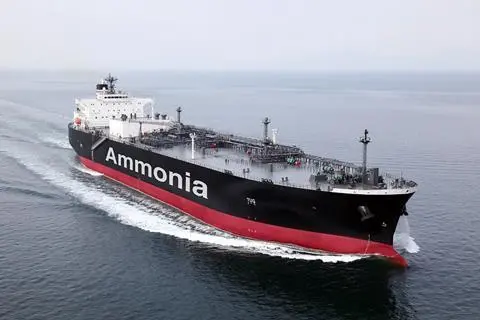
But which fuels will lead the charge? The Motorship’s recent series of special reports explored four of the front-runners — ammonia, nuclear, methanol and biofuels — each at different stages of maturity and facing distinct challenges. Together, they offer a snapshot of a sector in transition: technically ambitious, sometimes divided but steadily gathering momentum, albeit at different paces.
Ammonia, abundant as a substance but viable as a fuel?
Of all the fuels vying for a place in shipping’s decarbonised future, ammonia may be the most paradoxical. Infamously toxic, corrosive and difficult to ignite, it seems an unlikely candidate to power the global fleet. Yet its carbon-free combustion and existing global infrastructure — more than 250 terminals worldwide, thanks to the fertiliser industry — make it one of the most promising zero-carbon options currently on the table.
When produced from renewable electricity via green hydrogen, ammonia can slash lifecycle greenhouse gas emissions by as much as 90%. It emits no sulphur oxides or particulate matter and has a high volumetric energy density suitable for long-haul ocean transport. The caveat, of course, is safety. Ammonia’s toxicity demands a complete rethink of shipboard systems, training, and emergency response procedures.
Classification societies such as ABS, Lloyd’s Register and DNV are leading the development of safety frameworks, while shipyards and equipment suppliers are busy designing containment systems, valves and bunkering gear capable of handling the fuel safely. Perhaps the most significant technical breakthrough is coming from the likes of Everllence and WinGD, with the latter’s X-DF-A ammonia-fuelled engines marking a major step towards commercial viability.
WinGD began work on ammonia combustion in 2019 and expects its first commercial engines to be delivered from mid-2026. The design builds on its established diesel-cycle platform but incorporates a new injection system and combustion control method tailored to ammonia’s stubborn ignition characteristics. Extensive testing in dedicated combustion chambers and full-scale rigs has yielded results that surprised even seasoned engineers: ammonia slip under 10 ppm, nitrous oxide emissions below 3 ppm, and nitrogen oxides (NOx) comfortably within IMO Tier III limits — all without the need for exhaust after-treatment.
Safety remains at the core of the design. Double-walled piping, leak detection, ventilation, emergency shutdowns and crew training are integral to WinGD’s fuel handling philosophy. The company runs specialist courses for operators and is working with maritime academies to establish curricula for ammonia safety.
The first X-DF-A engines will power ammonia carriers and bulkers for Exmar LPG and CMB.Tech, followed by orders for AET’s Aframax tankers and a series of LPG/ammonia carriers for Tianjin Southwest Shipping. As Sebastian Hensel, WinGD’s vice-president of R&D, put it: “After intensive efforts to understand the principles of ammonia injection and combustion, we are ready to respond to market demand with a high-quality platform of dual-fuel ammonia-ready engines.”
Despite its challenges, ammonia’s appeal lies in its scalability. It can be produced, transported and stored using infrastructure already familiar to the chemical industry. That makes it a front-runner not just as a future fuel but as a foundation for the next generation of truly zero-carbon propulsion systems.
Methanol: Already running so is it a frontrunner?
Where ammonia still has hurdles to clear, methanol has already crossed the starting line. Engines capable of running on it are commercially available, ships are in service, and bunkering networks are taking shape at major ports. It is, in many ways, the practical choice for shipowners seeking early compliance with emissions regulations.
Methanol’s chief attraction lies in its manageability. It is a liquid at ambient temperature, far less toxic than ammonia, and easier to store and handle than cryogenic fuels such as hydrogen. It is already being used successfully across a range of vessel types, from tankers to ferries. One of the most visible examples is TUI Cruises’ Mein Schiff 7, equipped with Auramarine’s methanol fuel supply system — the first cruise ship of its kind to operate on the fuel.
Engine manufacturers including WinGD and Everllence have methanol-ready platforms either on the market or under development, while system suppliers and turbocharger OEMs are refining components to cope with methanol’s lower energy density and unique combustion behaviour. Methanol can be burned in both two-stroke and four-stroke engines, making it flexible across vessel segments.
The real issue is not technology but supply. The bulk of today’s methanol is “grey”, derived from natural gas and offering limited carbon savings. To make a genuine contribution to decarbonisation, the industry needs “green methanol”, produced either from renewable hydrogen and captured CO₂ or from sustainable biomass. The Methanol Institute and a growing number of energy companies are investing heavily to scale up production, often through green corridor initiatives linking ports and producers.
Availability, however, remains uneven, and green methanol commands a premium that not all owners can afford. The hope is that as demand increases, economies of scale will close the cost gap.
Methanol also serves as a gateway to other synthetic fuels. It can be converted into dimethyl ether (DME) or even used as a carrier for hydrogen, making it an attractive transitional molecule. Moreover, existing dual-fuel methanol engines can often handle ethanol, a related bio-derived alcohol now being promoted by the newly formed Global Ethanol Association as a cheaper, higher-energy companion fuel.
What methanol offers, above all, is momentum. Orders for methanol-ready vessels have surged since 2023, with Maersk, COSCO, and X-Press Feeders all investing heavily in dual-fuel fleets. It may not be the perfect zero-carbon solution — especially while green methanol is in short supply — but as an immediate, technically mature step towards compliance, it has captured the industry’s imagination.
Biofuels: The bridge to tomorrow?
If ammonia represents the bold long-term bet and methanol the pragmatic near-term choice, biofuels are the industry’s bridge between present and future. They require minimal engine modification, can be blended with existing fuels, and offer immediate emissions reductions — a tempting combination for operators looking to meet CII, EEXI, and EU ETS obligations without major capital outlay.
Biofuels encompass a wide range of products derived from biomass — typically waste cooking oils, animal fats, or plant matter — and are generally classified by generation. The first generation, FAME (fatty acid methyl ester), is the most widely available and can deliver up to 90% CO₂ reduction when used in pure form (B100), though most ships currently use blends such as B24 or B30. The second generation, HVO (hydrotreated vegetable oil), offers greater stability, better cold-flow characteristics and slightly higher energy density, but it is more expensive and raises concerns about land use and food-crop competition. A third category — algae-based biofuels — remains under development, showing promise for high yields without competing with agriculture, but is still costly and limited in scale.
Operationally, biofuels are already being proven. A six-month trial conducted by the Global Centre for Maritime Decarbonisation (GCMD) and NYK Line using a B24 FAME blend demonstrated reliable performance with minimal engine adaptation. GCMD also tested biofuel tracer technologies to verify origin and quantify blends, a step towards the certification transparency demanded by regulators and financiers alike.

Yet despite their advantages, biofuels remain controversial. Environmental NGOs such as the Global Forest Coalition and Biofuelwatch have warned that large-scale biofuel production can contribute to deforestation, land displacement and food insecurity. These concerns were echoed by industry experts at London International Shipping Week, who called for clearer sustainability criteria within the IMO’s forthcoming Global Fuel Standard.
Even within the industry, practical challenges persist. FAME can absorb water and degrade over time, complicating long-term storage, while its lower energy density reduces vessel range. Quality assurance and certification remain uneven, particularly when different regulatory systems — from the IMO’s CII to the EU’s FuelEU Maritime — impose distinct sustainability thresholds. As Johannes Schurmann of FincoEnergies explained, “A biofuel might meet one set of sustainability criteria but fail another if certification or feedstock origin does not align. It’s a layered landscape of regulation with real operational impacts.”
Nevertheless, suppliers such as GoodFuels, part of FincoEnergies, have established a firm foothold, bunkering cruise ships, bulk carriers and short-sea vessels across Europe. Biofuels’ cost premium — typically two to three times that of fossil fuels — remains their greatest obstacle, but their immediate emissions benefits make them a valuable transitional tool, especially for operators pooling under the EU ETS.
Nuclear
Our most recent Special Report subject nuclear’s reappearance in the maritime conversation was not quiet. It was direct, technical and business-focused, framed by Jez Sims of Lloyd’s Register as an emerging reality rather than a distant prospect. His contribution reflected the industry’s new appetite for rigorously evaluating all options capable of meeting long-term climate obligations while retaining commercial viability. Sims described a suite of Generation IV reactor concepts—molten salt, lead-fast and high-temperature gas reactors—that are smaller, simpler and fundamentally safer than the legacy designs which have shaped public perception.
Their attraction lies in physics as much as engineering: nuclear fuel contains orders of magnitude more energy than conventional marine fuels, removing the tank-penalty and range compromises inherent in ammonia, hydrogen derivatives, methanol or biofuels. A ship operating for three to seven years between refuelling, with cargo capacity gains of around 10% from reduced tankage and machinery space, challenges many of the assumptions underpinning today’s decarbonisation pathways.
The Lloyd’s Register–Seaspan study of a 15,000 TEU container ship added commercial clarity, projecting operational benefits of roughly $68 million per year over a 25-year life through avoided fuel costs, fewer emissions constraints and higher service speeds. The barriers are no longer technological performance but regulatory suitability, supply-chain development and public confidence. Sims’ call for product-based licensing to replace the outdated site-specific paradigm was widely viewed as essential to enable scale. Engagement with ports, the IAEA and the Nuclear Energy Maritime Organisation to modernise entry requirements and certification frameworks reflects how seriously the question is now being treated. For an industry under pressure to reach net zero without sacrificing global service patterns, nuclear moved in Hamburg from thought experiment to serious contender for future deep-sea propulsion
A multifuel future
Taken together, ammonia, nuclear, methanol and biofuels illustrate both the diversity and the complexity of shipping’s decarbonisation pathway. No single fuel is likely to dominate the market in the foreseeable future; rather, a multifuel landscape is emerging, shaped by regional availability, vessel type, and evolving regulation.
Ammonia holds the promise of a truly zero-carbon future, but demands new technology, infrastructure and safety culture. Methanol offers an operationally simple, commercially available bridge, contingent on the scaling of green production. Biofuels provide an immediate compliance solution, though their sustainability and scalability are under scrutiny. Each pathway has its advocates, its risks, and its window of relevance.
What unites them is progress. Engine developers, classification societies and shipowners are no longer debating whether change will come, but how fast they can make it work. From ammonia-ready tankers to methanol-powered liners and biofuel-blended feeders, the industry is moving — cautiously perhaps, but unmistakably — towards a lower-carbon horizon.
The next decade will determine which fuels survive beyond transition and which fade as stopgaps. For now, one conclusion seems clear: there will be no single winner, only a gradual convergence of innovation, regulation and market pressure steering shipping into its post-carbon age.
Related Articles
 ALTERNATIVE FUELS & LUBRICANTS
 ALTERNATIVE FUELS & LUBRICANTS
 ALTERNATIVE FUELS & LUBRICANTS