



ABS: Fusing data to provide actionable insights
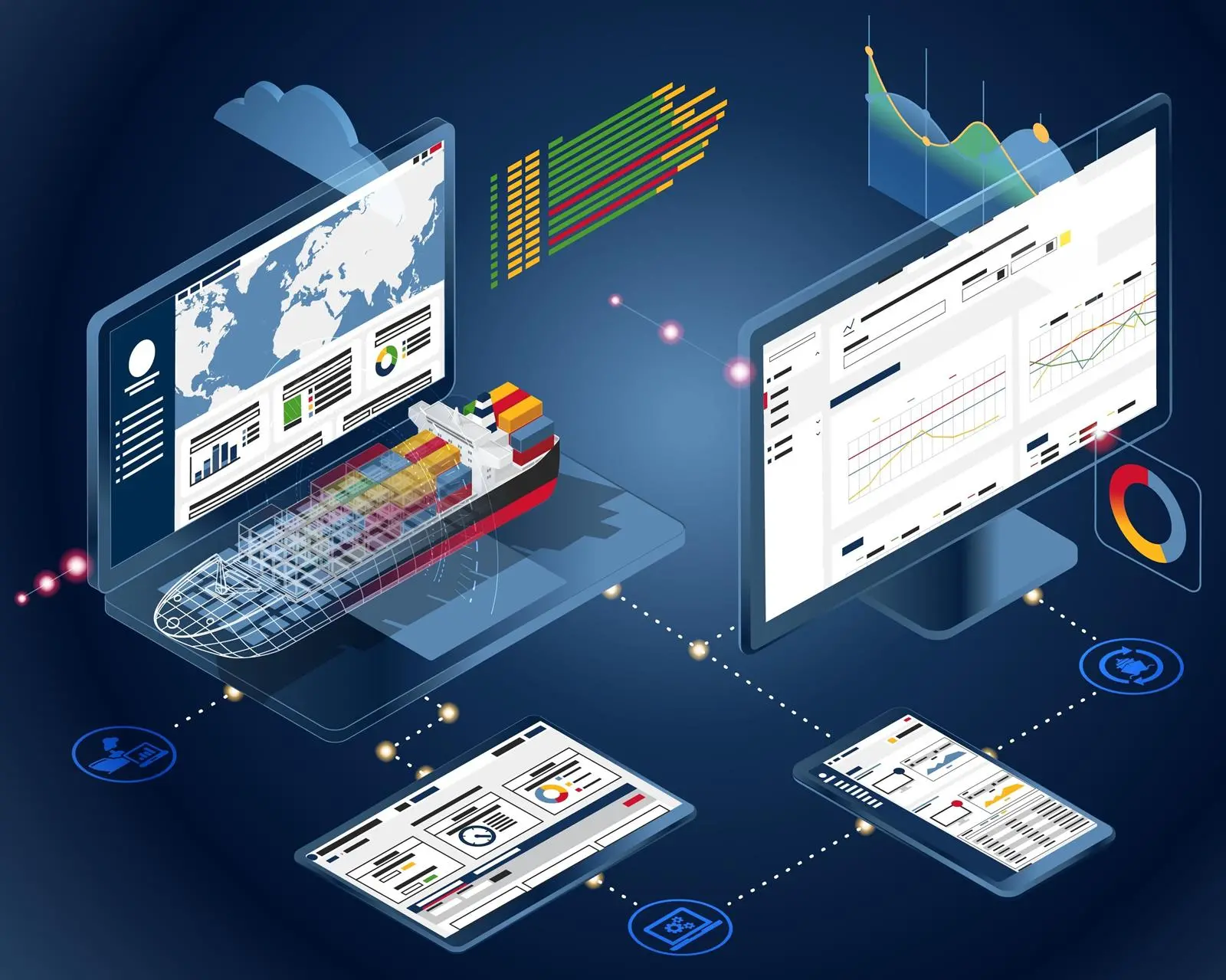
Kashif Mahmood discussed the specific advantages of ABS’s new digital platform, My Digital Fleet™, for ship owners and operators in an interview with The Motorship in October. In a wide-ranging interview, Mahmood touched on the challenges of developing algorithms for operational machinery, before concluding with potential wider applications of the solution’s digital architecture to remote fleet operating centres.
The underlying philosophy behind the My Digital Fleet solution is that the increasing disparity of data means that the data itself will become a source of competitive advantage for ship owners and ship operators. Mahmood suggested that current discussions within the industry about the ultimate ownership of data were missing the point: the ability to combine data elements rapidly together was itself a source of competitive advantage.
At its simplest, My Digital Fleet is a data platform that permits ship owners and operators to access relevant operational and Class data for their assets. The solution’s real-time, data-driven insights are intended to improve fleet efficiency, reduce costs and help manage risks.
The solution combines (or ‘fuses’) data from discrete feeds from ABS’s proprietary structural, machinery, and environmental analytics products with third-party data covering emissions, compliance, cyber security and weather conditions to provide an integrated picture of the risks and operational condition of an asset. This platform allows an asset’s performance to be viewed in terms of regulatory compliance, fuel efficiency, structural and mechanical integrity.
However, the platform is designed to be modifiable in order to respond to an individual ship operator’s or ship owner’s requirements.
“If your business need is to improve the reliability of your equipment, My Digital Fleet offers options to support this goal. But if your focus is on the structural condition of your assets, or on environmental emissions, you can leverage our solution for those purposes.”
My Digital Fleet
Mahmood stressed one of the key advantages of the My Digital Fleet solution is its flexibility and adjustability. As it is built around a component-based design, different elements can be turned on or off, while ship owners or operators also have the flexibility to integrate their own data feeds and data partnerships into the system.
This flexibility means that the solution is compatible with the different operational and commercial requirements of small and medium-sized operators as well as larger fleets.
“One of the reasons why we architected My Digital Fleet with a component- based design was because we understood the spectrum of digital maturity was extremely wide,” Mahmood noted. He added that the solution had been trialled by several large- scale ship operators, as well as smaller-sized ship owners.
As the data can be viewed at an asset and aggregate fleet level, it could be useful for ship owners seeking a composite view of all their assets where their vessels are managed by several ship managers, for instance.
Adopting an AI MBL approach
In 2019, Mahmood and ABS decided to completely rearchitect how it produced analytics, implementing smart components that automatically internally adjust to the data feed instead of developing vessel-specific models. “We adopted hardcore cognitive AI,” Mahmood said.
The data from different combinations of sensors are fed into the central digital asset framework, or “central database”, which then allocates it to different templates depending on the volume of data.
“Rather than going out and retrofitting equipment to algorithms to make them effective like everyone else, we are retrofitting the algorithms to the equipment to bring time to value.”
The digital asset framework applies machine-based learning to extract valuable insights from the raw data, allowing significant data elements to be identified while “screening out the noise”. Meanwhile, similar models look at data supplied from other critical systems, such as gensets, turbochargers, ballast water systems and so on.
Advantages of framework
The AI/MBL approach also offers significant flexibility going forward.
“I can now propagate the model according to any business metric that you want to look at,” Mahmood said, adding that development work was focusing on environmental emissions, as this was a key area of focus for shipping.
Looking forward, Mahmood expects My Digital Fleet to eventually play a more active role in assisting operational decision making, based on the expectation that remote operating centres will play an increasingly important role supporting crews in the future.
“We have architected My Digital Fleet to run in a remote operating centre, and in fact, it runs in our own decision support centre,” Mahmood notes.
Related Articles
 ENERGY SAVING DEVICES
 LNG
LNG
 ALTERNATIVE FUELS & LUBRICANTS