



Acting to meet long term objectives
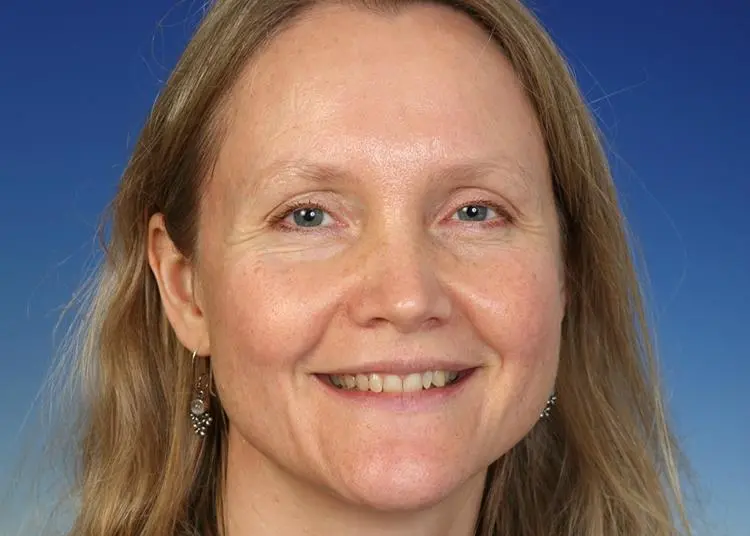
During a recent visit to MAN Energy Solutions’ headquarters in Copenhagen, Dorthe Jacobsen offered her perspective on how MAN Energy Solutions will help the industry meet the IMO’s 2050 greenhouse gas emissions targets.
Jacobsen noted that MAN had established two long-term objectives, decarbonisation and digitalisation, which would guide the company’s strategic development. Meanwhile, MAN Energy Solutions was continuing to design and manufacture solutions to meet the market’s needs.
MAN ES has recently expanded the number of teams working on digital-led solutions, which encompass every step of a vessel’s design, operation and will transform the amount of data that engine designers and ship managers have at their disposal.
“Digitalisation has a large part to play in us achieving our decarbonisation objectives: if digital services offer operational efficiencies and lower fuel consumption, that also mean emissions reductions,” Jacobsen said.
Turning to the current discussion around decarbonisation targets at the IMO, Jacobsen was emphasitic that regulatory and/or financial incentives would be needed.
“An agreement on measures at the MEPC (IMO) will also help, as will revisions to the EEDI criteria.”
“We have seen how we need regulation before the industry takes action,” Jacobsen said, citing the introduction of Tier III rules in driving implementation in emissions reduction equipment.
The introduction of tighter emissions regulations would also encourage the wider implementation of energy efficient technologies. This includes both existing technologies, such as waste heat recovery, which have the potential for wider adoption, as well as new innovations. “We are working on new equipment to reduce NOx emissions”, Jacobsen noted.
In addition to the “stick” of regulation, Jacobsen sees a need for a larger “carrot” in terms of financial incentives to create demand for new types of fuel. Regional or national incentives have played a role in creating local markets, but wider schemes, such as the Poseidon Principles or even a CO2 levy could also be needed.
Turning to the range of fuels under consideration, Jacobsen noted that the internal combustion engine remains the most efficient means of propelling a large vessel. “Whatever the final fuel or fuels selected by the industry, we will be able to supply engines to meet that demand,” Jacobsen stated.
Jacobsen provided a detailed analysis of the advantages and drawbacks of the alternative fuels under discussion, adding that there was no one single perfect replacement fuel for diesel. Jacobsen added that the next fuel should be sustainable: greenhouse gas emissions analyses should take into account all of the emissions generated by a fuel, measured on a “well-to-wake” basis.
As MAN’s portfolio of engines propels a significant proportion of the world’s deep-sea fleet, which in turn accounts for over 50% of all marine emissions, it has naturally focused attention on solutions for existing vessels. From a broader environmental perspective, recycling existing vessels after 15 years risks creating more emissions (from embedded steel production and shipbuilding emissions) than extending the life of operational assets.
One of the potential solutions to the challenge would be to adopt a more modular approach to engine design. “We would like to make an engine that was relatively easy to retrofit to be able to operate on a range of alternative fuels.”
MAN’s existing range of engine platforms already offer significant flexibility in terms of modifications. The ME engine platform can be retrofitted to add a dual-fuel capacity for LNG, ethane, methanol or LPG. It can also be modified to operate on both ethane and LNG. And the engines can also be retrofitted to the other solutions.
This offers shipowners peace of mind about the ability to operate in the medium to long term, no matter what fuel or fuels the market adopts.
The ability to modify the secondary fuel systems also offers near-term flexibility as emissions reduction technologies mature and enter the market. MAN has recently brought methanol/water emulsion technologies to market for ME-LGIM customers, for example.
Another area of interest is the capture and recycling of volatile organic compounds (VOC), which are generated during the loading and unloading, as well as during the transportation of oil cargoes.
By capturing and recycling VOCs generated from crude oil tankers, ME-GIE engines and/or ME-LGIP engines could be modified to reduce emissions, improving fuel efficiencies.
But one thing is certain, Jacobsen said in conclusion. “If the world wants cleaner air, we need to have cleaner engines out sailing.”
Related Articles
 INTERVIEWS
 CONVENTIONAL FUELS & OILS
 GENERAL NEWS