



Alternative fuels for an LR1 tanker: Costs and benefits
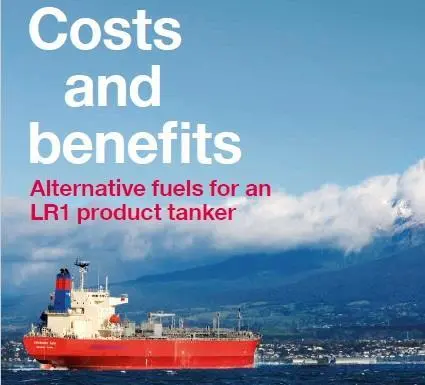
The sulphur emission control areas (SECAs) in place in North-America and Northern Europe, in combination with the upcoming global 0.5% limit on sulphur in 2020 (or 2025) and similar EU limits in 2020, call for alternative fuels as a means for compliance. Several alternative fuels are available and, at the same time, new fuel oil products with very low sulphur content have been introduced.
In June 2015, IMO’s Maritime Safety Committee (MSC) adopted the International Code of Safety for Ships Using Gases or Other Low-flashpoint Fuels (IGF code). The IGF code aims to minimise the risk to the ship, its crew and the environment, taking into account the nature of the fuels involved, which can pose some safety risks if not properly managed. As such, the IGF code has created long-expected predictability for planning gas-fuelled ships.
The goal of this study, carried out by MAN Energy Solutions and DNV GL, was to analyse costs and benefits of various fuel options for a case with one particular ship and its operating pattern. The alternative fuels selected were LNG, LPG, methanol and a new ultra-low sulphur fuel oil, a so-called hybrid fuel. Costs and benefits for a newbuild were determined by looking at its additional investment and operating costs compared to a standard fuel variant using HFO and MGO.
Related Articles
 AMMONIA
 AMMONIA
 AMMONIA