



Alternative routes to greener shipping
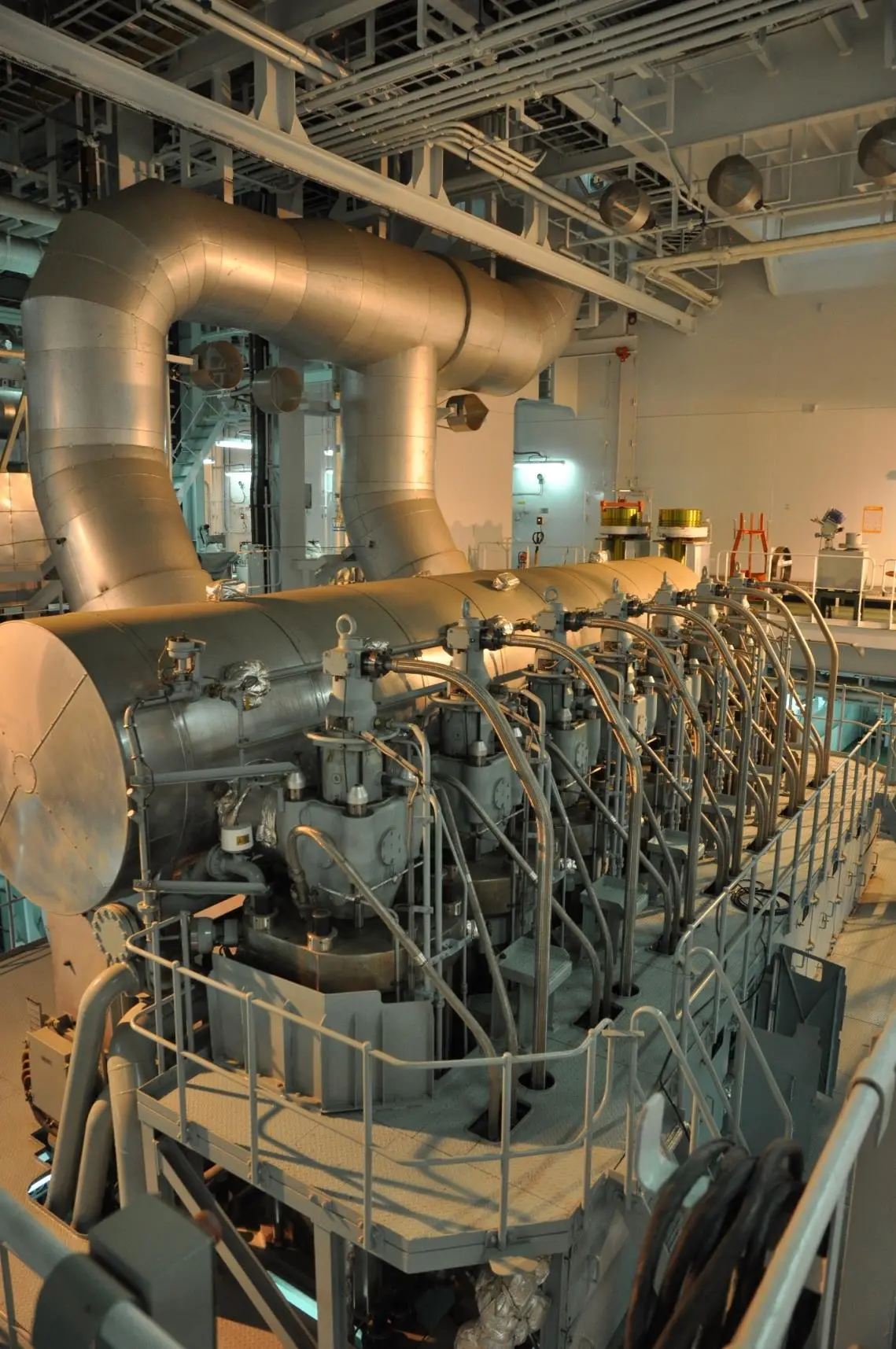
Current estimates indicate that shipping’s share of global CO2 emissions could increase to 20-30% by 2050. With 90% of global trade carried by sea, this is an issue that cannot be sidestepped. It is important to note that while the emissions debate is beneficial for all in terms of reducing the environmental impact, it is sometimes hard to see the plethora of solutions being proposed as anything other than a cost that the shipping industry must bear, with little financial benefit. Solutions with tangible commercial benefits may provide significantly more leverage to establish the win/win situation that will reduce costs and limit damage to the environment.
New technology can be harnessed to make ships more fuel efficient through making engines more efficient and increasing hull efficiency. More importantly, technology can be used to measure performance throughout a ship’s life-time and provide a baseline against which improvements can be measured. To quote the eminent physicist and engineer Lord Kelvin: ‘to measure is to know’. Solutions such as BMT’s Smartpower record and collate real-time performance data, providing much improved performance data over the standard manual reporting process. By measuring, recording and analysing good quality data it is possible to break down the overall performance into individual components, remove variables, identify where efficiency losses are being introduced into the system and react accordingly.
Changes in operational procedures can deliver environmental and commercially beneficial improvements. The traditional ‘sprint/loiter’ approach, where a ship proceeds quickly to its destination and then waits to be unloaded or to receive further orders, has benefits in enabling maintenance time (for example) but has a detrimental effect on fuel efficiency and emissions. By optimising vessel speed (or ‘slow steaming’) based on knowledge of environmental conditions including wind, wave and current, the speed profile of the voyage can be tailored to ensure that the ship arrives at the destination just in time to be loaded or unloaded. There is the need for all parties in the logistics chain to understand the issues involved and ensure that there is suitable shore based infrastructure to service ships as they arrive. ‘Slow steaming’ certainly has its benefits but there are downsides too. If we accept that slow steaming is here to stay, will we need extra ships to cater for trade growth? Should new ships be designed with slow steaming in mind in order to optimise their efficiency? There are issues associated with running a ship that is designed to do 25 knots at an off design condition. Inherently it is not as efficient as it should be and will require increased maintenance. BMT is beginning to see the effect of slow steaming as part of its hull and machinery condition survey work, and engine manufacturers are now issuing service bulletins recommending preventative measures that should be taken to prevent damage in long term.
IMO) has already identified the importance of shipboard energy efficiency. The Shipboard Energy Efficiency Management Plan (SEEMP) seeks to improve a ship’s energy efficiency through four steps: planning, implementation, monitoring, and self-evaluation and improvement. At present it is mandatory for a ship to carry its SEEMP but there is no requirement to comply with it. As the culture changes, the SEEMP will become an increasingly valuable tool.
In order for the SEEMP to be effective, it is essential to have a performance baseline in place that provides the feedback that can be used to help learn and improve. Areas such as optimising maintenance and hull cleaning can be improved by moving away from fixed schedules to ‘condition based’ approaches. When one of the first ships that deployed Smartpower technology displayed . a worsening in hull performance, BMT recommended hull cleaning ahead of schedule, resulting in a direct saving of about 7 tonnes of fuel per day. This particular system had only been on board for two months so immediately showed environmental and commercial benefit.
Success also depends crews using the new technology or deploying new working practices. As so often happens when implementing change, a cultural shift is required. Some crews will be proactive and engage as a matter of course while some will need incentives. When two similar ships run two similar routes with different performance the only real variable is the crew. Crews bonuses based on improvemed fuel consumption can pay off.
The final element of a comprehensive energy management strategy is understanding how the carbon markets work. The shipping industry is going to be charged for its carbon emissions. Whether it is a bunker fuel levy, regional emissions trading or another of many proposed schemes, an appreciation of the carbon market will prove invaluable. BMT group’s experience has highlighted the impact these may have, and how poorly understood the carbon market is by the industry at large.
There are certainly major environmental and commercial benefits in achieving greater energy efficiency and making shipping ‘greener’. Operators are beginning to recognise this but we are still in the early stages of the process.
Related Articles
 ALTERNATIVE FUELS & LUBRICANTS
 ALTERNATIVE FUELS & LUBRICANTS
 OPINION