



Ammonia and LCO2 among Babcock LGE’s development targets
[MS] Since our last interview in November 2021, the pace of developments in the market for alternative liquid and gaseous cargoes has accelerated. Before we turn to upcoming product developments, could you share your perspective on how your existing portfolio of products is evolving?
[AS] We have been fortunate enough at Babcock LGE to celebrate another record- breaking year in 2021 for both contract wins and vessel deliveries. The business offers a range of innovative technologies for the global gas carrier fleet and continues to expand our suite of solutions to enable the transition to net zero.
In terms of latest product launches, a particular high-point was the launch of our ethane cargo handling and fuel gas supply system – branded ecoETHN® – on the world’s largest ethane carrier in China in January 2022. This was an extremely proud moment for Babcock LGE and particularly in light of the continued logistical challenges faced in China with COVID-19. ecoETHN enables the highly efficient carriage of ethane by integrating the cargo handling system with the fuel gas supply system – a significant benefit to the ship operators.
Our market leading LNG Boil Off Gas reliquefaction solution; ecoSMRT®, continues to secure significant market share in the newbuild LNG carrier sector, benefitting from the growing demand for long-haul transport of LNG as a cleaner source of energy. We have on-going product enhancements for ecoSMRT® and will soon be launching the latest version which will reduce overall plant footprint.
[MS] Can you share any details about how you see demand for LPG-fuelled vessels to evolve?
Market intelligence shows that today, up to 90% of LPG carriers ordered today are dual-fuel – indicating demand for LPG-fuelled vessels has grown significantly. Babcock LGE’s LPG fuel gas supply system – ecoFGSS® – will be in service on 25 vessels within the next 2 years and we continue to see strong interest in LPG as a fuel from multiple industry stakeholders – shipowners, energy majors, and shipyards on both newbuilds and retrofits.
Whilst the high LPG price is currently a commercial challenge for dual-fuel ships, LPG will become more competitive over time, especially as the price of Very Low Sulphur Fuel Oil (VLSFO) reaches new highs.
Our operational experience in LPG as a fuel makes us the perfect partner to retrofit ecoFGSS on vessels which will require upgrades to align with Energy Efficiency Existing ship Index or Carbon Intensity Index rating standards – now a crucial consideration in today’s competitive markets. Babcock LGE is working with several prominent LPG shipowners on these projects.
Babcock LGE has also developed a training programme for our ecoFGSS solution which has been made available to our customers and will maximise the efficiency and expertise of ship’s crew, reducing downtime.
How is Babcock LGE responding to the significant increase in interest in alternative liquid and gaseous cargoes? In particular, how do you envisage ammonia will fit within the types of cargoes transported by sea?
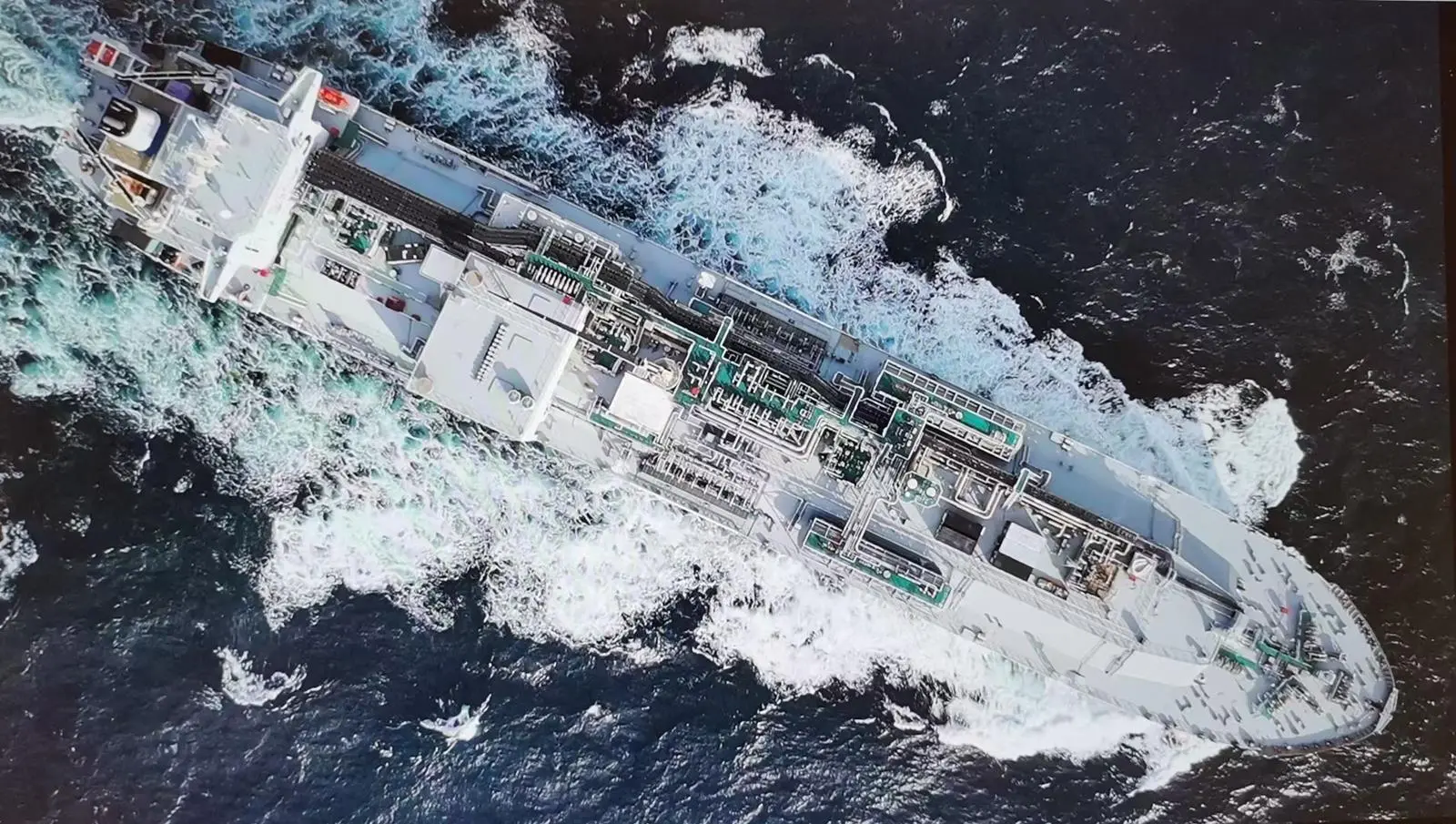
As the industry’s focus switches to zero carbon fuels, ammonia has come to the forefront of discussions, offering a carbon-free, hydrogen-rich fuel which is truly ‘green’ when produced using renewable energy sources.
For many years, the main issue associated with ammonia was its toxicity and it was assumed, for practical intents and purposes, to be non-flammable. However, for many projects it is now the transition fuel of choice, with engine manufacturers working to deliver ammonia-capable engines in the next few years. We are working alongside the major Original Equipment Manufacturers and shipowners to develop a solution that works for all ship configurations. The pace of development is at the mercy of the engine manufacturers of course but we know testing is underway on ammonia engines which is extremely promising, and a crucial step on the voyage to zero carbon shipping.
As an established developer of Fuel Gas Supply Systems, do you see any specific issues around ammonia’s characteristics?
Safety is a top priority for Babcock LGE and that is why our systems prioritise safety as an integral component of all designs. As part of a rigorous Process Hazard Analysis (PHA) approach, Hazard Identification and Hazard and Operability studies are conducted internally and externally, supported by input from shipowners, Classification Societies, shipyards and suppliers. This, together with Reliability, Availability and Maintenance studies, ensures the safety and reliability of our technologies which we understand is the top concern for our customers.
The introduction of new fuels and cargoes is likely to change the market over the medium term. How do you see the market evolving, and are you looking at products that address the different requirements of different fuel types, for example?
We recognise that there will not be one single future fuel as has been the case for many years with conventional fuels. What works for some shipowners may not work for others; what is clear is the appetite for alternative fuels which has grown significantly in the past 2-3 years and will continue to do so. Babcock LGE’s strategy is to design solutions to meet customer requirements. The market is going through a stage of learning, with the introduction of bridging fuels – including LPG and LNG – which will enable market and crew learnings to occur whilst solutions for true zero carbon shipping are under development. Babcock LGE’s ecoFGSS-FLEX® will enable multiple fuels to be used when they are available.
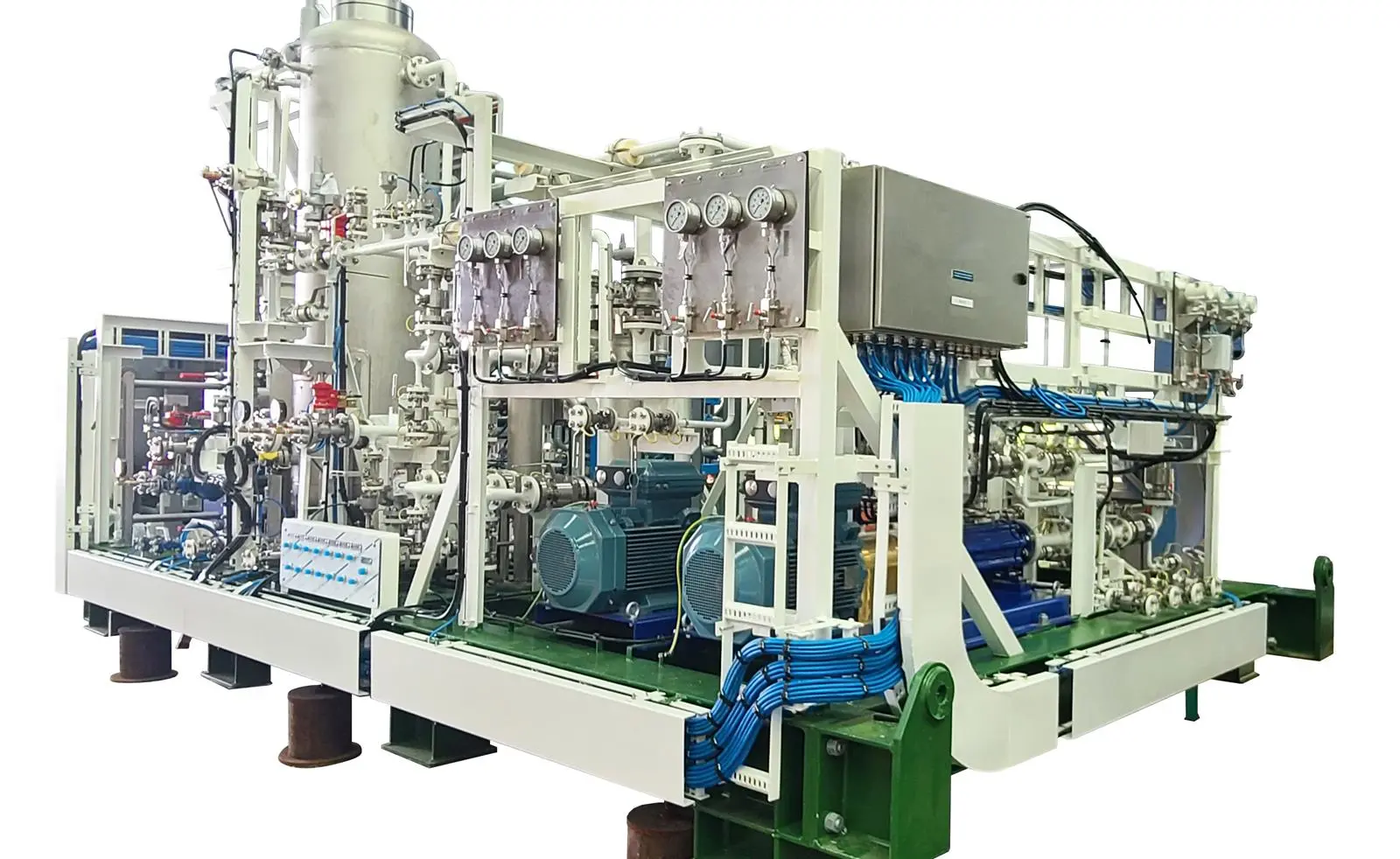
You have previously discussed your perspective on novel fuels, such as hydrogen. Do you think some of the technical challenges are likely to act as a barrier to entry for hydrogen?
The issues associated with marine transportation of liquefied hydrogen e.g., carriage at below ‑250°C, high flammability range, embrittlement and small molecular size, are well known and will undoubtedly be resolved but in the immediate term are effectively barriers to entry. Additionally, the quantities of hydrogen that would be required to be a viable marine fuel at scale are currently not available, particularly truly green hydrogen.
One area where there has been a lot of development in the past six months is in the nascent carbon capture market. Could you share any details about your research into the development of systems for liquid CO2?
LCO2 carriers share several of the key design features of an LPG carrier. While not a straight copy by any means, Babcock LGE’s extensive experience in LPG – with over 300 ships in service – makes us the ideal partner for development. We have been involved in multiple industry projects with shipowners, shipyards and energy majors which consider the full CO2 value chain and are working on large scale and mid-size liquefied CO2 carriers. LGE’s involvement will be primarily concentrated on the cargo handling system of the vessels and our solution will be designed based on known specifications, cargo compositions and voyage profiles to ensure optimisation of design. By considering not only the vessel in isolation, but the full value chain, LGE’s cargo handling technology will be both flexible and market ready.
As with the wider Carbon Capture and Storage (CCS) market, development depends on increased investment in CCS projects, as well as the introduction of frameworks to support investment – either environmental regulations, carbon tax or government funding, or all three. It is widely acknowledged that without CCS, the world will struggle to reduce emissions in line with the Paris Agreement and thus it is crucial this infrastructure is developed as soon as possible.
Related Articles
 ALTERNATIVE FUELS & LUBRICANTS
 ALTERNATIVE FUELS & LUBRICANTS
 ALTERNATIVE FUELS & LUBRICANTS