



Ammonia cracking technology could face headwinds despite its advantages
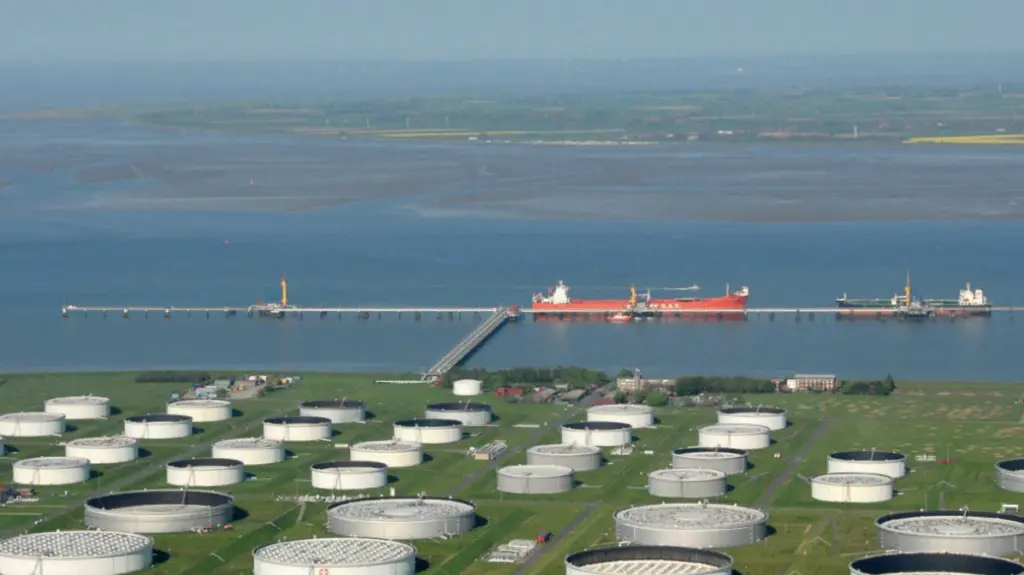
Ammonia is currently probably the best and cheapest way of transporting renewable hydrogen at scale, says Scott Trevean, Team Lead Hydrogen and CCUS, ANZ, Energy Systems at DNV, and there’s a ready market for molecules in countries such as Singapore, Korea, and Japan as well as in Europe. LNG is a stopgap, but ultimately these countries will require a fully decarbonised solution such as ammonia which is already shipped around the world as a commodity.
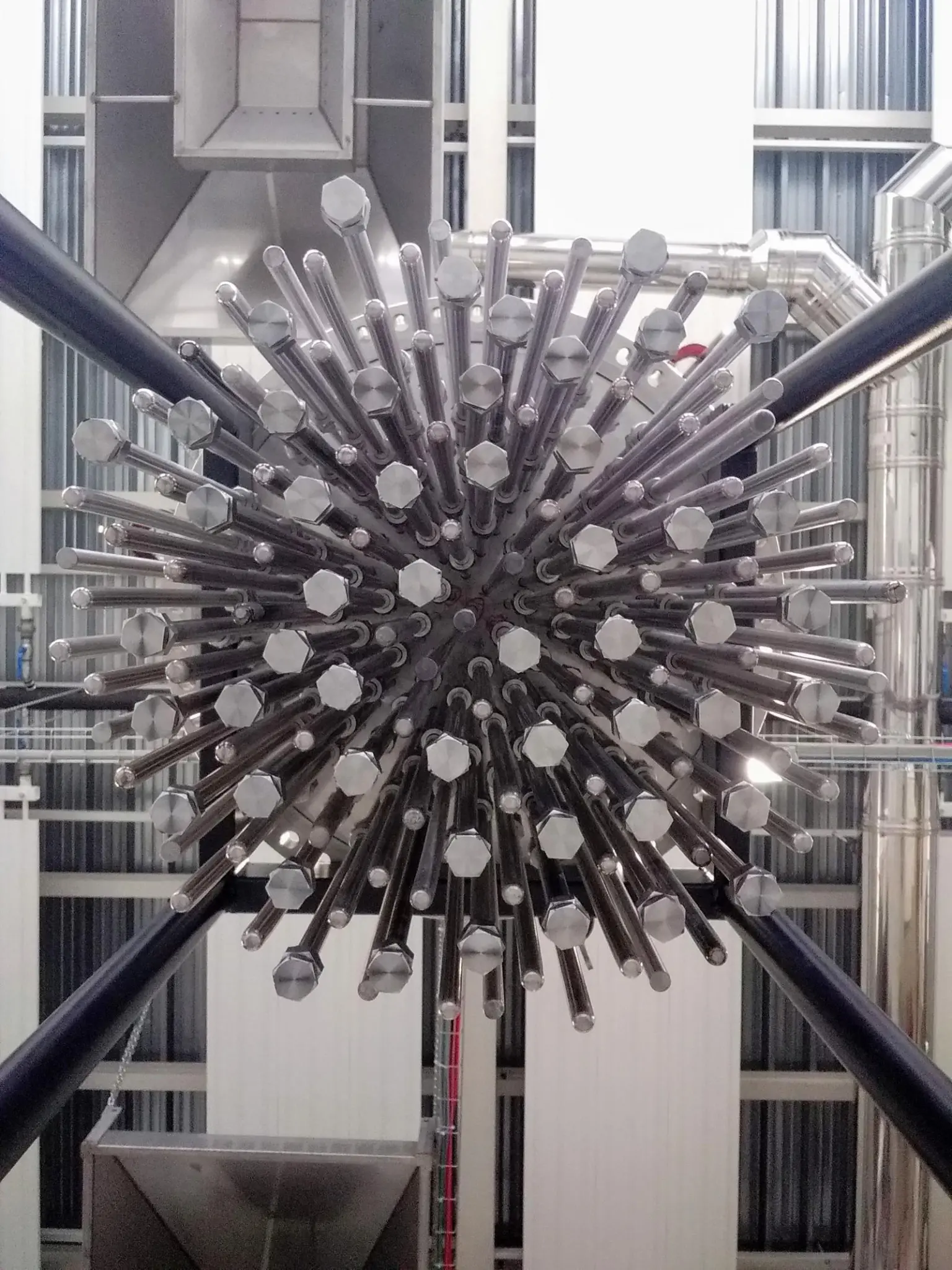

Mr Trevean sees three major use cases for ammonia: the existing fertiliser applications, as an energy carrier for power generation and as a fuel for ships. While liquified hydrogen may eventually be more competitive, ammonia is a good solution for at least the next 15-20 years.
Ammonia can be created at temperatures of around 400oC at high pressures using the Haber-Bosch process, but to crack it back to hydrogen and nitrogen at these temperatures, current commercial applications are limited to small lab-scale devices for niche applications, using precious metal-based catalysts.
Mr Trevean notes that some major players are capable of building large scale crackers based on what is essentially a variation of steam methane reforming furnaces – using off-the-shelf process technologies reconfigured for ammonia feedstock rather than natural gas. These crackers would largely operate using nickel-based catalysts, requiring a large furnace operating at 850-900°C.
There are large-scale projects getting underway. In December 2022, 18 companies, led by the Port of Rotterdam Authority, kicked off a study into the possible establishment of a large-scale ammonia cracker. The participants commissioned Fluor to evaluate the possibility of building a large central cracking facility in the port to convert imported ammonia into a million tonnes of hydrogen per year, and Fluor subsequently confirmed the technical and economic feasibility of the concept. The hydrogen could be used in the port or transported onwards via pipelines to facilitate decarbonisation of industrial clusters in North-West Europe.
bp is evaluating the feasibility of building a new hydrogen hub in Wilhelmshaven, Germany. The project is expected to include an ammonia cracker which could provide up to 130,000 tonnes of low carbon hydrogen from green ammonia per year from 2028. Green ammonia – produced by combining nitrogen with hydrogen derived from the electrolysis of water using renewable energy sources – is expected to be shipped to Wilhelmshaven from bp green hydrogen projects around the world to feed the plant.
Despite the early promise of large projects such as these, there is a lot of on-going research into developing cheaper, lower temperature catalysts and better utilising waste heat for processes such as vaporising the ammonia or purifying the hydrogen. The cracking process currently requires either costly precious metal-based catalysts, or high-temperature nickel-based catalysts, and research is underway into low-cost, low-temperature alternatives such as lithium and sodium amides. This could boost the efficiency of what is otherwise a process that is only about 87% energy efficient theoretically, but at best 70-80% in real-world applications. Operation at lower temperature can potentially enable direct electrification of furnaces, removing the need to combust fuel for heat supply. “Any high temperature process tends to have losses. You can never capture all the waste heat and utilise it,” says Mr Trevean.
This is the same for ammonia power systems. “Whether you’ve got a fuel cell or a reciprocating engine, it has waste heat, and it could be from around 200oC to 400oC. If you can take a portion of that and apply it to the cracking, that provides a synergy in terms of doing some of the work of cracking.”
Added to energy efficiency concerns, there’s no one-size-fits-all for the purity of hydrogen needed, and ensuring 99.999% purity can be expensive. That’s where the debate of whether it’s better to have a centralised or distributed cracking model becomes important. “With common infrastructure, you need to cater for everybody, and that drives costs higher. It may be more economical to do the cracking on site at each particular offtaker’s facilities.”
That, though, introduces the potential need for ammonia pipelines, wider onshore distribution of ammonia infrastructure, and associated concerns about its toxicity. So, for now, Mr Trevean sees a bit of “wait-and-see” sentiment in the market.
The path forward for shipping applications is not clearcut either. Ammonia fuel cell solutions are in competition with electrification and the direct use of hydrogen for smaller 1-2MW applications such as harbour craft and smaller passenger vessels, says Mr Trevean. For larger ocean-going vessels with around 20MW power requirements, SOFCs could be around 10 times the cost per kilowatt compared to combustion engines. More work is needed to improve the economics and to ensure operational flexibility. “SOFCs, and I would say any high temperature equipment, generally don’t like to be flexible. Any temperature or pressure fluctuations can be quite detrimental to maintenance costs and longevity.”
Additionally, says Mr Trevean: “You’re also fighting against the benefit of incumbency where people are familiar with reciprocating combustion engines.” Despite this, there is enthusiasm amongst technology developers.
Amogy has backed its optimism with the September 2023 announcement that it has a renovation underway on a 53,000-square-foot manufacturing facility in Houston. Set to be operational in early 2024, the manufacturing facility, an investment of over $40 million, will be used for the assembly of Amogy’s “powerpack” which enables carbon-free mobility for the hard-to-abate sectors.
Amogy has developed a compact, high-efficiency chemical reactor to split liquid ammonia into hydrogen and nitrogen. The company says its reactor system comes equipped with a high-activity catalyst, allowing the reaction and ammonia cracking process to take place at higher efficiency levels and lower operating costs than alternative designs. The hydrogen is then used to generate power through a fuel cell, which can be used to power electric motors. This proprietary design leverages the superior physical characteristics of liquid ammonia with the performance advantages of hydrogen. Amogy intends to supply the reactor alongside a fuel cell as part of a compact and integrated power system, suitable for use on vessels, inland vehicles, and for stationary power generation applications.
In other developments, Navantia Seanergies, the green energy division of Navantia, and H2SITE, a hydrogen production technology company, have signed a strategic agreement to drive the development of hydrogen-based power generation systems for commercial marine applications. H2SITE says its cracking technology achieves high conversion efficiency due to its reaction and separation in a single stage, representing a substantial improvement compared to other transformation technologies. These systems have already been tested in pilot-scale terrestrial and maritime applications. Currently, they are being scaled up for larger applications.
Mr Trevean says there’s not necessarily a need to fully crack the ammonia for it to be used as a feedstock in either combustion engines or fuel cells. It is possible to take some recovered heat, use it in a catalytic reactor, and perhaps crack only some portion of the ammonia. The hydrogen produced can boost the otherwise poor combustion characteristics of ammonia when used in an internal combustion engine.
“And in some cases, you can feed such partial cracked gas – – a mixture of ammonia and hydrogen – into a fuel cell, and the hydrogen will combust and generate heat. The ammonia itself could then also be cracking within the fuel cell so you get simultaneous cracking and combustion. You essentially get an overall auto-thermal reaction happening within the fuel cell where you’re getting a combination of cracking (endothermic reactions) and combustion (exothermic reactions). There’s a lot of R&D going on in this space.”
Competition for ammonia comes from other carriers, such as LOHC or methanol, and also from liquified or compressed hydrogen. But there’s another source of competition – the direct use of ammonia as feedstock. In July 2023, MAN Energy Solutions announced the successful first running of a test engine on ammonia at its Research Centre Copenhagen. MAN anticipates operation onboard a commercial vessel from around 2026.
The use of ammonia as feedstock is also part of the picture for fuel cells. Alma Clean Power has tested a 6kW unit of its modularised SOFC system and delivered an electrical efficiency of 61-67%. The company’s design of a 1MW ammonia fuelled SOFC system has already received Approval in Principle from DNV. Two modules will be retrofitted as an open-deck installation on the offshore supply vessel Viking Energy as part of the EU-funded ShipFC project.
And the overarching objective of AMON project is to demonstrate highly efficient, direct conversion of ammonia in fuel cells that could be used for land-based or ship-based power. A G8X SOFC stack from SolydEra will be utilised, and an overall ammonia fuel cell system will be engineered and manufactured by Alfa Laval to be tested in a relevant environment in a port area in Venice by SAPIO.
With the competition diverse, Mr Trevean sees a future where solutions are regional. There may be shipping corridors particularly suited to the centralised or distributed ammonia cracking concepts where synergies exist between maritime and onshore power generation ammonia end-use. Overall, he says, the use of ammonia as a fuel is still in a state of flux.
Related Articles
 AMMONIA
 AMMONIA
 AMMONIA