



AMMONIA SCR SOLUTION CONSIDERED FOR AENGINE PROJECT
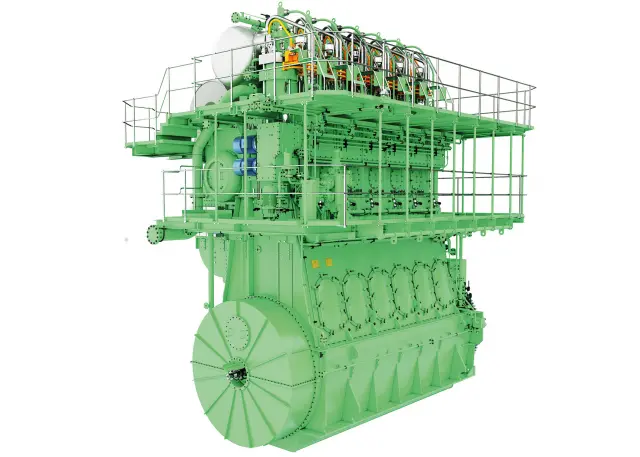
MAN ES provided an update on the progress of its research into new ammonia-fuelled engine, which builds on the existing architecture of the MAN B&W ME-LGIP engine, in a recent white paper.
Other participants in the AEngine project includes Eltronic FuelTech, Technical University of Denmark and the classification society DNV GL.
Research into the combustion and heat release characteristics of ammonia is ongoing. However, the results of engine tests due to be held in Copenhagen in 2021 would influence eventual design choices.
After-treatment
One area of focus is the emissions released by the combustion of ammonia in a two-stroke engine. While ammonia is carbon- and sulphur-free and generates almost-zero CO2 or SOX during combustion, it does release NO and NO2.
The solution also needed to minimise emissions of ammonia from the engine (so-called ammonia slip). One of the solutions under consideration would be to equip MAN ES engines with selective catalytic reduction (SCR) technology using ammonia as the reductant. This technology was introduced in the 1990s aboard four bulk carriers, and would eliminate the need for urea storage aboard.
Using ammonia rather than urea in the catalytic reaction, results in the conversion of NH3 and NOX to diatomic nitrogen (N2) and water (H2O). This minimises emissions of unburned NH3 (ammonia slip) and the potential formation of nitrous oxide (N2O), a more potent GHG gas. However, the potential increase in SCR volume and ammonia consumption required to achieve Tier III compliance needs to be investigated. MAN ES noted it would not specify its after-treatment solution until 2022.
Design considerations
Returning to design considerations, MAN ES noted that significantly lower calorific value of ammonia compared with propane (LPG) is likely to require modifications to the fuel injection system. The lower calorific value for ammonia is 18.6 MJ/kg, while LPG is 46.4 MJ/kg.
The Motorship previously reported that significantly higher pilot fuel ratios were required to overcome ammonia’s combustion characteristics, MAN is experimenting with other means of reducing the emissions associated with pilot fuel ratios of up to 20%.
The current design allows for an injection pressure of between 600-700 bar, while the fuel supply is expected to be at around 80 bar. However, both values may be optimised following engine tests in 2021.
Another technical challenge relates to the corrosive nature of the fuel for copper, copper alloys and plastic, while it is not compatible with alloys with a nickel content above 6%.
Fuel Supply System
The fuel line comprises of a fuel supply system to take ammonia from the storage tanks, and ensure the required temperature, pressure and fuel quality on the engine.
A small proportion of the ammonia fuel is recirculated to the FSS via the recirculation system. This eliminates the risk of contaminating fuel storage tanks with oil. The recirculation line also separates and bleeds off nitrogen from the recovered ammonia fuel.
When the engine is not in dual-fuel operation, the fuel valve train ensure the isolation of the engine. The FVT uses a double block-and-bleed approach to isolate the fuel inside the engine from the fuel line when the engine is not in dual-fuel operation.
The system includes a nitrogen purging system, which will be maintained at a pressure higher than the service tank pressure.
The ammonia fuel systems and piping will also feature the double-wall ventilation system previously used in other MAN B&W dual-fuel designs. If any ammonia fuel leakage is detected, it is directed away from the engine room to a separate ammonia trapping system.
However, MAN ES will not specify its ammonia supply system until after it holds its first engine tests at its Research Centre Copenhagen (RCC) in 2021.
Retrofit and ammonia-ready options
MAN noted that the safety and reliability of the FSS were key aspects to the development. The engine designer has performed three hazid investigations observed by representatives from the classification societies, shipowners, yards and component suppliers.
MAN ES is continuing to work towards installing the first ammonia engine in a vessel in the first half of 2024. The company plans to introduce a dual-fuel, modular retrofit solution for existing electronically controlled engines by early 2025.
Finally, MAN ES has also added the possibility of selecting an ‘ammonia-ready’ option for new engine orders placed before the ammonia engine is added to MAN’s portfolio in 2024. The option is likely to appeal to shipowners concerned that assets may become stranded in the future if regulatory initiatives, such as CO2 or GHG taxes, are introduced, as MAN ES believes likely.
Related Articles
 2-STROKE & 4-STROKE
 2-STROKE & 4-STROKE
 2-STROKE & 4-STROKE