



An industry ‘sleeping at the wheel’?
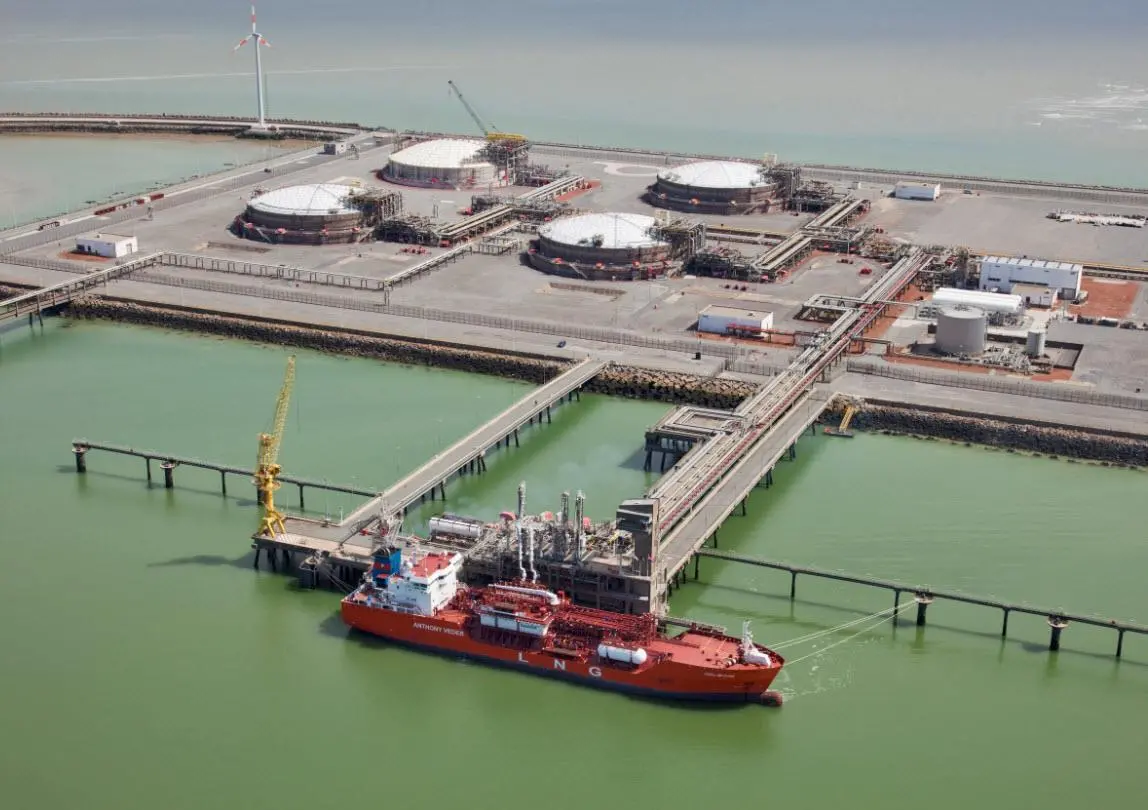
Although it’s still patchy on a worldwide scale there are hotspots of LNG-driven port development, particularly in Northern Europe and Asia – Singapore being just on the brink of opening a multiuser LNG terminal that will start operating mid-2013. Others aren’t far behind with Shell recently announcing plans to build two liquefaction plants in Geismer, Louisiana and Sarnia, Canada and quite a few countries seem to be seriously evaluating their resources.
However, when it comes to the ships themselves, PSVs provide a “natural fit” for LNG fuel says Terje Nordun of Wärtsilä, adding that right now there are some 20 LNG fuelled PSVs either in the market or presently being built.
The question is, when there is so much interest in gas, why is there still a reason for seeing the development of dual fuel? After all, many European ports are now embarking on LNG bunkering with Antwerp involving DNV in getting its procedures sorted out. Further, the European TEN-t core network of ports may well be pushed by the EC into providing some LNG bunkering, and the points been made that if you are looking at gas and the infrastructure is in place, a pure gas engine is simpler. However, Mr Nordun explains that beyond the bunkering infrastructure, which outside Northern Europe is still somewhat inconsistent, there are onboard technical issues to reckon with and these swing the game around to keeping the diesel in place, at least for offshore support craft.
The main concern is the need for fast and immediate power which is not something you can get unless the engines are already on the ball – typically PSV operations need to rely on a swift and certain response to what can be difficult situations around offshore structures in high sea states: “Manoeuvrability is critical, you can’t risk the gas shutting down. If you have a pure gas engine it can stop, but a dual fuel one will simply flip over to diesel.”
Moreover, he points out that vessels with DP2 Classification also need 50% capacity redundancy to meet Class rules and it simply makes better sense to spread the fuel flexibility across to the liquid side, especially as this gives a differentiated redundancy rather than a duplicate of the whole gas fuel system. So, Mr Nordun concludes: “If you look at the whole ship installation, the pure gas solution isn’t actually that simple.” Mr Nordun’s colleague Peter Jantzen further adds that a duel fuel solution means this extra redundancy will be “automatically and economically” met, and adds he believes fuel availability makes a case for dual fuel power “for the next 10-15 years”.
While most builds are in Europe with Norwegian builds taking the lead due to their tax fund for emission-lowering craft, America isn’t far behind. Harvey Gulf International Marine already has five dual fuel PSVs being built at Trinity Offshore’s Gulfport shipyard in Mississippi. Its already been noted that the environmental stance springs from heightened awareness after the Gulf of Mexico oil spill and Chad Verret, senior vice president of Harvey Gulf says: “Many permits for the eastern Gulf of Mexico already demand that operators use the best available capture technology with regard to particulates. In my opinion, the best available particulate matter capture technology is not to have any to start with, and that’s what burning LNG gives you.”
Interestingly, Australia is also now looking seriously at kick starting the process of getting LNG into ports. While in the US the environmental awareness has been helped by much lower gas prices following extensive shale gas development, Australia has, as usual, huge reserves to exploit and, explains Henning Mohn of DNV, a political agenda that is looking at Australia’s gas exports: “They are asking ‘why not put Australian gas in vessels operating in Australian waters?’”
Further, looking at different combinations of bunkering solutions such as tank trucks, permanent tanks and barges in as many as ten different ports, efficient LNG bunkering could be established fairly quickly. So, although Australia doesn’t have a large emissions legislation ‘push’ yet, it does have a lot of offshore majors nearby which could, says Mr Mohn, start asking its support vessels for a ‘greener’ footprint. “Although its speculation, developments might follow a similar parallel with the North Sea,” he says.
The fact that Australia doesn’t have the devil on its tail in terms of Emission Control Areas might actually help, as the development could start at the smaller end of the wedge and pick up speed, which spreads the pain of innovative projects that for a couple of years are relying on a few owners who want to get ahead of the pack.
This reliance on a narrow customer base was the case in the North Sea: Mr Nordun adds that if it weren’t for Eidesvik and its very innovative stance in the early years of PSV development “I really don’t know where we would be now”. However, as for cost of fuel, it interesting that there are no guarantees as Mr Mohn points out that Australian gas is still fairly expensive due to the large domestic pull from Asia, although Mr Nordun says that a freeing up of the market “will probably bring down the fuel costs in the Norwegian market in the next few years.”
Mr Jantzen adds that the market still hasn’t really woken up to reality: “There’s a perception that all this change is still some way off but the fact is its already here, and the biggest mistake operators can make right now is to do nothing; I think the industry is in danger of being caught sleeping at the wheel…”
He goes on to say that late reaction may well cost money rather than lower the investment threshold, as some may be expecting. He points out that the technology is already mature; there are more than 7m running hours behind DF engines and there’s no reason to think that the technology will come down much in price. “The total economic case for dual fuel is already competitive today,” he says.
But there’s also the customer base to think of and this means the reactions by the oil majors who are starting to demand low emission vessels to serve their platforms: “If a company doesn’t show itself to be willing to get ahead of the legislation, it might well stand to lose market share – a big mistake in this climate,” says Mr Jantzen.
It has to be said that Mr Jantzen might well be right about ‘late reaction’ by the industry but you need to “exercise caution about predicting where the market will jump” according to Ted Brooking of Braemar Engineering.
“While there’s a lot of enthusiasm for new technology, and legislation will indeed be putting pressure on some parts of the offshore sector services, how that pans out against the hard, upfront cash is not clear yet – and I think the general feeling is that some owners will be holding fire for the moment and staying put with conventional systems.”
Secondly he points out that developing gas production methods do have a part to play. The fact is that no-one is yet that certain of future gas prices – and even today its very sharply differentiated between different locations with US gas being much cheaper than its European counterpart. However, Mr Brooking says: “If the fracking gas extraction method gets the various governments onboard, then the price could come down around the world, and this would probably provoke more solid interest.”
By Stevie Knight
Related Articles
 PROPULSION
 GENERAL NEWS
 HYDROGEN