



An interview with Rick Boom of Woodward
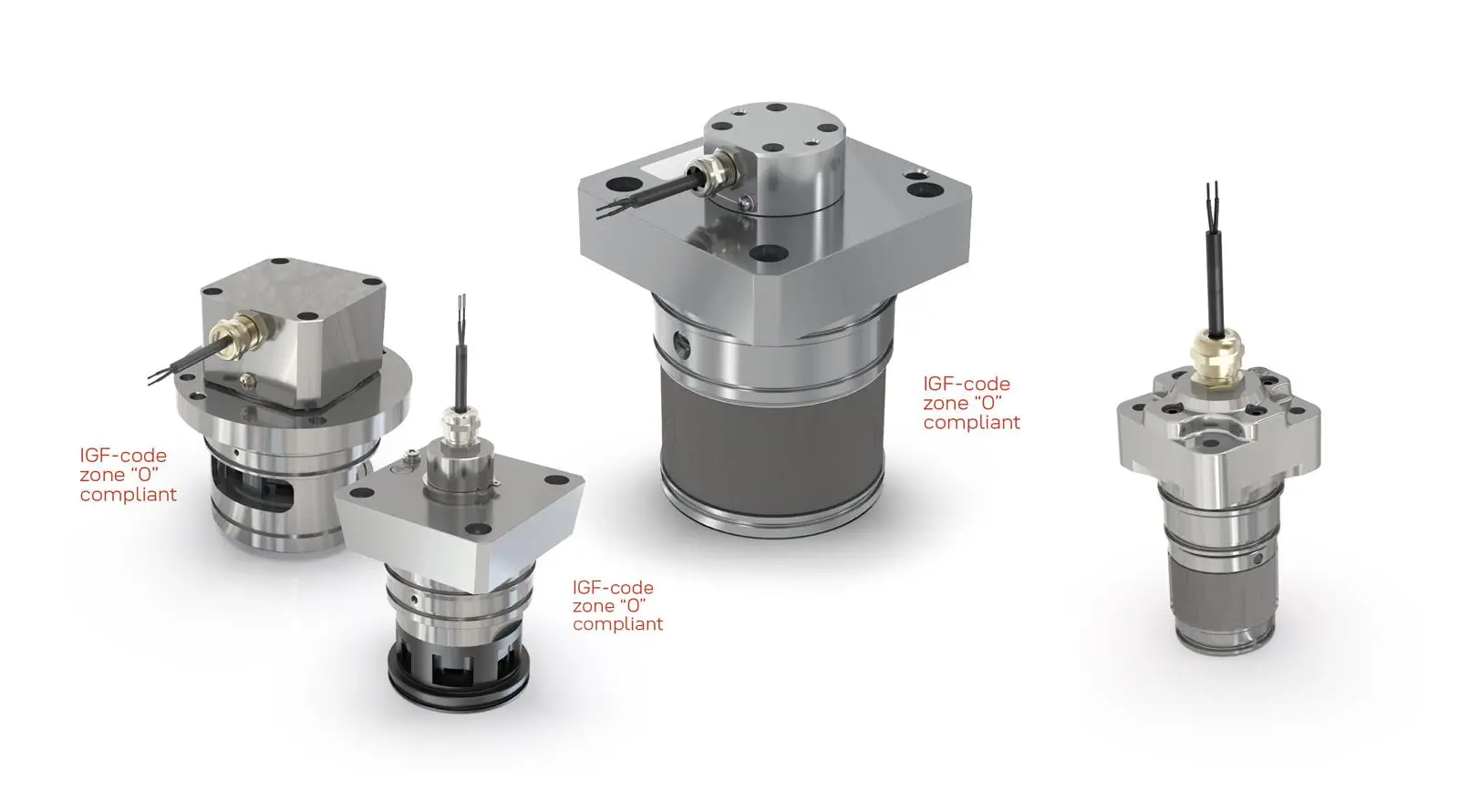
Among the companies at the forefront of this technological shift is Woodward, a global engineering firm with more than 150 years of innovation in energy control systems. Their marine-focused solutions are driving significant developments in both newbuild and retrofit applications, helping engine manufacturers meet IMO carbon regulations while improving performance.
We sat down with Rick Boom, director of business development for Large Engine Systems at Woodward, to gain insight into how the company is tackling the unique challenges of methanol combustion. With a background in mechanical engineering and over two decades in the field, Rick has been instrumental in shaping Woodward’s approach to advanced fuel systems and engine control for dual-fuel and alternative fuel applications.
In this in-depth interview, Boom explains how Woodward’s Medium Pressure Injection (MPI) and High Pressure Dual Fuel (HPDF) systems are being tailored for marine methanol use, discusses retrofit potential, and explores how innovations like the company’s X-series actuators and LECM control systems are supporting new emission goals. His expertise provides a valuable look into how engineering is evolving to meet the demands of the green shipping revolution.
Question: How does the difference in pressures of your new Medium‑Pressure Injection (MPI) and High‑Pressure Dual‑Fuel (HPDF) systems impacted combustion efficiency and emissions performance in marine field trials?
Rick Boom: In general terms we tend to define the fuel pressures of MPI systems, more in the 10’s of bars. Let’s say 15 up to 60 bar. With a proper design of the fuel nozzle the Methanol spray pattern can be optimized, and enough small droplets can be generated to enable atomization at the inlet runner conditions. Increasing the charge air temperature is a mean to support atomization and is in that sense more efficient than raising the pressure. Raising the pressure of the MPI system too much it will carry the cost of the high pressure (HPDF) system for the pump but it remains a port fuel injection pre-mixed system. I understand that they support methanol at up to 250 bar (MPI) and even700 bar (HPDF) injection pressure (to the relative layman like me it would seem that higher pressures will aid combustion efficiency and emissions production but possibly increase wear and tear for instance). The power density, operating map of the engine and substitution rate is maximized when using an HPDF system. The MPI and therefore port fuel system does have limitation in the operating range of the engine. The complexity and therefore cost of the HPDF system lies with the pressure generation of the Methanol fuel. Till date there are several solutions available and under development. Most of them are external – off engine – and sometime even industrial solutions. As Woodward we focus on an own and unique pump concept. It’s an engine mounted and driven concept, which is controlled electronically. In combination with our Engine control capabilities, we can integrate the control of the Methanol supply with the overall engine control. We eliminate, cascading control loops, faster response, and elimination of parasitic loses.
Q: I’ve spoken to some engine manufacturers about retrofitting diesel engines to run on methanol. Regarding retrofits, how adaptable are your direct‑solenoid MPI injectors for converting existing diesel engines to methanol, and what retrofitting limitations should operators be aware of?
RB: The limitation of operating range of the engine is one of the disadvantages. In the lower and high load conditions the MPI systems have their challenges. For a genset, operating with other gensets and proper power management, one can keep engines at the ideal load point for Methanol port fuel systems. When these option are not available engines may need to switch back to 100% diesel in low or high load conditions.
Q: How does the SOGAV gas admission valve family/system—now IGF Code compliant for Zone 0—perform specifically with methanol compared to ammonia or hydrogen, especially considering methanol’s liquid phase upon injection? Could you perhaps tell me about any engine makers you’ve been collaborating with, as mentioned by Dr. Michael Willmann in an article I read.
RB: First of all, a SOGAV can only do gaseous fuels, so liquid Methanol is out of scope of SOGAV. However, the admission of gaseous Ammonia is well within scope of our SOGAV line up. As Woodward we have and are investing heavily in gaseous Ammonia capable SOGAV and in combustion recipes. Combustion recipes like RCCI have proven to be efficient and cost effective to use Ammonia as a fuel. The fuel system has a lot of design commonalities with the existing and well proven low pressure LNG dual fuel solutions. Investments made to harden the existing SOGAV platform for Ammonia have resulted in the first commercial applications. As Woodward we have added the Ammonia capability to the SOGAV-IGF design, as operating on Ammonia requires the same IGF-code compliance as for LNG.
Q: What impact have the upcoming IMO carbon regulations had on the development of your ECM control systems and X‑series actuators, especially regarding injector timing and fuel blends in methanol‑dual fuel engines?
RB: Our Large Engine Control Module (LECM) is kept in line with the latest de-carbonisation developments by enhancing software algorithms. One example is the Real Time Combustion “monitoring” that has been in the field for years. It enable active cylinder balancing and air fuel ratio control of individual cylinders. With the introduction of the Active Combustion Control (ACC) we take it to the next level. Enabling RCCI or phased combustion control. This is considered an important stepping stone to achieve high levels of diesel substitution in gaseous ammonia dual fuel systems. The X-series has been developed to deal with higher charge air pressures of stationary hydrogen fueled gas engines. Hydrogen fueled engines need to run leaner and need therefor more air. Resulting in higher pressure and also higher differential pressures across throttle valves. The X-series provides twice the torque in the same form and fit and can therefore actuate the same diameter throttles but at a higher dP.
To hear from more experts, join us in Hamburg for the Propulsion and Future Fuels conference in November.
Related Articles
 METHANOL
 METHANOL
 2-STROKE & 4-STROKE