



Are LNG and methanol climate dead-ends?

The research, submitted to the journal Environmental Innovation and Societal Transitions, was conducted by the UCL Energy Institute and examines whether so-called transitional fuels genuinely help the industry move toward long-term decarbonisation.
Entitled “When is a stepping stone a dead-end? Insights into ‘stepping stone’ pathways from the maritime shipping transition”, the paper proposes a framework to determine whether emerging technologies support a future zero-emissions system or risk locking the industry into fossil-fuel infrastructure.
Dr Pinar Langer, research fellow at the UCL Energy Institute Shipping and Oceans Research Group, warned that short-term emissions reductions could mask long-term risks.
“There is a real danger in confusing short-term movement with long-term progress,” she said. “Our findings based on interviews, documentary analysis, including patent data and econometric analysis, show that investments in LNG and methanol can easily become dead ends if they lock capital, infrastructure and expectations into pathways that do not lead to zero-emission shipping.”
The analysis draws on 25 industry interviews, documentary research, patent data and econometric analysis of 7,355 vessels recorded in the Clarksons World Fleet Register. Researchers examined newbuild premiums for dual-fuel vessels and assessed developments across four areas: financial investment, technological knowledge, regulation and industry expectations.
LNG has often been promoted as a transitional fuel because it can reduce some air pollutants compared with conventional marine fuels, while methanol has gained traction due to easier storage and handling characteristics. Several shipping companies have already committed to methanol-fuelled vessels, including A.P. Moller–Maersk, which has ordered multiple container ships designed to run on the fuel.
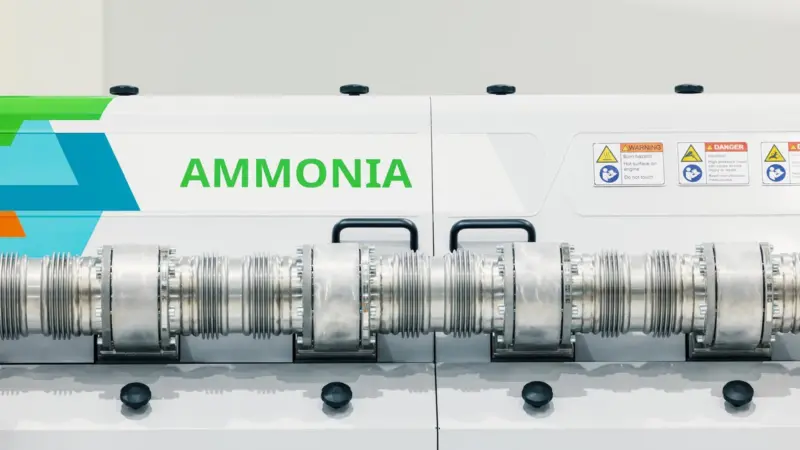
The study concludes LNG could potentially serve as a stepping stone only if ships, bunkering systems and port infrastructure are built to be ‘ammonia ready’. Without such safeguards, investments risk becoming stranded assets that compete with emerging zero-carbon fuels.
Dr Will McDowall of the UCL Energy Institute said: “We know that we need deep decarbonisation of the global shipping fleet. Near-term investments need to build a pathway to a sustainable long-term solution, not risk locking in further reliance on unsustainable fossil fuels or insufficient bioenergy.”
The researchers call for stronger policy signals, expanded research funding and accelerated demonstration projects to enable commercial deployment of green ammonia-fuelled shipping later this decade.
Related Articles
 AMMONIA
 AMMONIA
 AMMONIA