



Asian AHTS market shifts focus
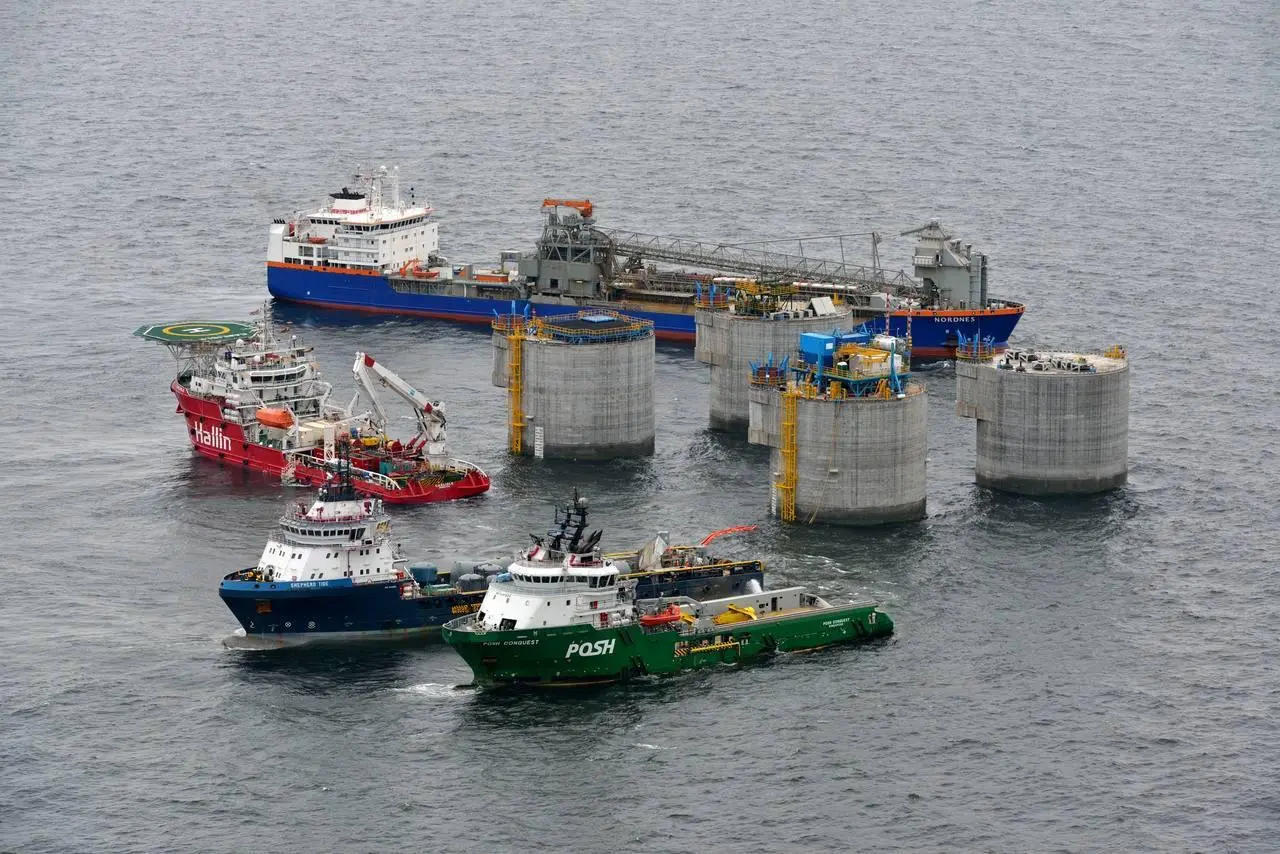
Looking back over Wärtsilä Ship Design’s 30 years of experience, Riku-Pekka Hägg, Vice President of Ship Design at Wärtsilä, has seen an increasing demand for more sophisticated vessels with main equipment such as winches also having grown since the introduction of the anchor handler.
“In general there has been a trend for more advanced and sophisticated vessels but you need to distinguish between the operational areas the vessels are working in. Typical North Sea operations require larger AHTS than a South-East Asian operation,” he says. Typically, AHTS working in Asia have 80 to 120 tonne bollard pull. Looking to the future Mr Hägg predicts that the greatest changes over the next few years will be the result of more stringent environmental rules and the demand for better fuel efficiency.
Francis Tang, managing director of Wärtsilä Ship Design Singapore, also sees increasing focus on vessel and crew safety as operations move further offshore. Greater endurance will be required for vessel operation, more robust designs and more automation, he says. Mr Tang sees widely differing views regarding high customisation versus off-the-shelf designs. “In general, the ‘big boys’ and European owners would go for the former, conservatives would prefer well proven designs,” he says.
In December 2012, Wärtsilä signed a contract with China Oilfield Services (COSL) to supply the designs for a total of six new ships including four AHTS that will initially provide support operations in the South China Sea and Bohai Bay. The vessels will be built to Wärtsilä’s VS 4612 AHTS design and will have bollard pull of 145 tonnes.
Singapore’s Jaya Holdings delivered AHTS Jaya Supreme to Canadian owner Atlantic Towing late in 2012. Jaya Supreme’s main engines deliver over 16,000 bhp power output with a continuous bollard pull of 211 tonnes. The vessel is built to Wärtsilä’s VS4622 design with Clean Design notation from DNV. For emergency oil spill response purposes, the vessel features oil recovery tanks. Jaya Supreme is also built to Comf-V(3) class.
Jaya Supreme is the largest and most advanced vessel to be built at the shipyard. “Production of oil and gas in shallow waters like the Java Sea has peaked, so the oil majors have moved into deeper waters. Offshore drilling has taken off in difficult and remote locations like the North Atlantic, Greenland, the Russian Arctic Sea and the Barents Sea. Exploration in such areas requires support ships to meet the challenges of harsh environments. The delivery of Jaya Supreme sends a clear signal we are ready and able to supply the technically advanced vessels needed,” said George Horsington, President of Business Development for Jaya at the time of delivery.
Local owners are also looking to greater sophistication. “We have AHTS on order and that there is a drive for more powerful vessels in order to support operations in deeper locations and harsher environments,” says Florent Kirchhoff, Commercial Manager for Swire Pacific Offshore (SPO). “There is also a growing emphasis on efficiently managing fuel consumption and oil recovery capacity also seems to be in growing demand from clients.” SPO’s fleet of 81 vessels includes around 70 AHTS and the company offers packages such as a large AHTS and a large PSV. “SPO now has 26 vessels on order and will have one of the youngest, most technologically advanced and reliable fleets in the industry,” says Mr Kirchhoff.
Singapore-based POSH Semco has a fleet of over 120 OSVs and will be taking delivery of POSH Persistence and POSH Perseverance, two 12,000bhp DP2 AHTS with bollard pull of 150 tonnes this year. “Seeing trends for exploration into deeper waters across most regions, bollard pull, vessel size, BHP requirements are all steadily increasing to support a growing need,” says Captain Sunil Kamath, Senior Operations Manager for the Deepwater Services Division of POSH Semco.
“While some practices and technologies are being driven by industry or regulations, environmental friendly and robust technologies in vessel design and equipment seems to be the most obvious need,” says Captain Kamath. “This is so especially in deep water operations, with some of these concessions being located close to near pristine and environmentally sensitive areas, especially in the Far East and South East Asian regions. With this, POSH foresees vessel requirements with the Clean Ship Concept as particularly important to industry requirements, especially in the Asian region.”
With the recent delivery of POSH Concorde from Paxocean Engineering yard in China in November 2012, POSH has successfully completed taking delivery of the six 16,000bhp DP2 AHTS since August 2011. The vessels have been delivered from Universal Shipyard in Japan and Yuexin Shipbuilding and PaxOcean Engineering in China.
Four of the AHTS are Havyard 842 design which has an excellent track record operating under North Sea conditions, says Captain Kamath. Some of the safety features of the design include an extremely large spooling capacity, excellent fuel efficiency, and a moveable crane along the vessel portside for safer anchor handling operations.
POSH started building the AHTS with opportunities in deepwater drilling off East Malaysia and Indonesia in mind. The company has managed to deploy the vessels in other regions such as Myanmar, Philippines, India, Russia, and also Mediterranean Egypt and Malta.
Related Articles
 PROPULSION
 GENERAL NEWS
 HYDROGEN