



Assessing future fuels
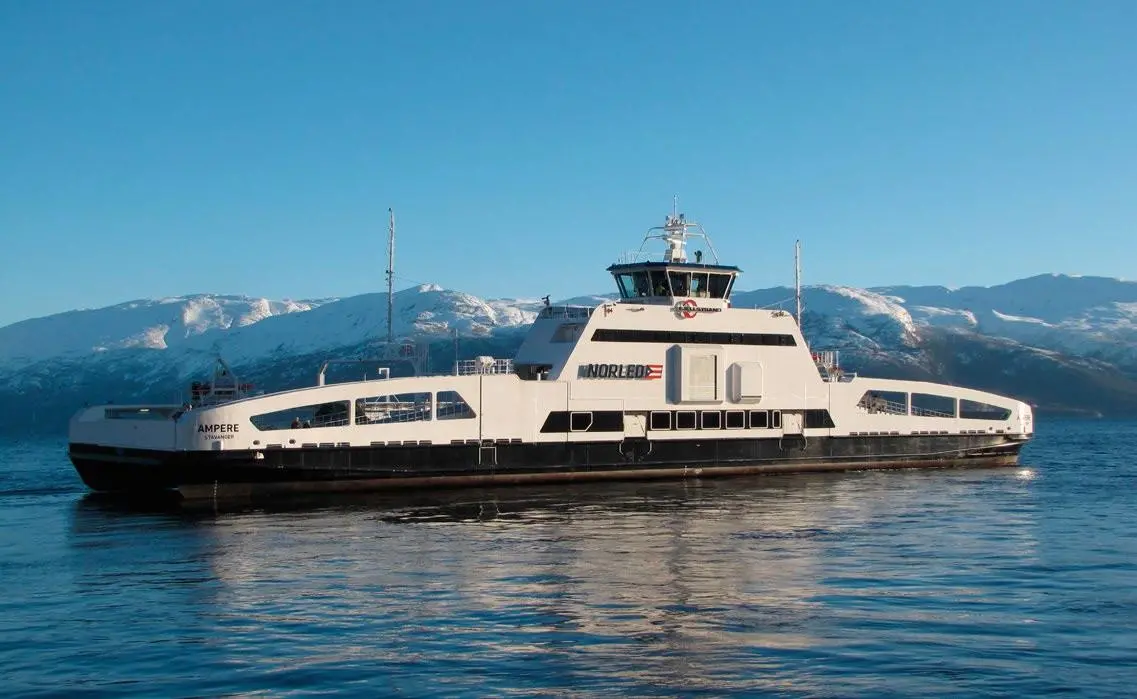
There may be no consensus as yet on which of several potential alternatives will be widely adopted, but one fact is clear: the marine fuel market will become increasingly diverse. Regional factors such as available natural resources and production facilities will play their part – a look at Norway’s role in the advance of LNG is a prime example – but other aspects will also play a key role.
Chief among these will be affordability. Guaranteeing a relatively cheap and consistent power supply will be crucial to the spread of any alternative fuel. Most important will be the price of the fuel – and the price of the new engine technology needed to use it – relative to the cost of oil. As DNV GL notes, when oil prices are high, shipping companies are highly motivated to explore investment in alternatives. Into this equation must also be factored the likelihood of any future ‘polluter pays’ mechanism linking emissions to taxes, fines or payments – something DNV GL sees looming on the horizon, although possibly not until well into the 2020s.
Sustainability, including fuel availability as well as a fuel’s ‘environmental footprint’, will also be a crucial factor in the uptake of alternative fuels. That means looking not just at the emissions attributed to using any fuel, but also at the resources taken to produce, transport, store and use it in an engine. Those resources can be in the form of the well-known and increasingly regulated emissions – greenhouse gasses, SOx, NOx and particulate matter – but also the land, water and energy needed across the production and supply (or ‘well to propeller’) chain.
The third part of DNV GL’s ‘fuel trilemma’ is safety and reliability. While some fuels represent no added risk compared with conventional oil fuel, others might: natural gas, methanol, LNG, biofuels, ethane and hydrogen all have particular challenges in their handling and use. These risks do not just involve safety, but also reliability – in the broad sense both of the potential of the fuel facing opposition from the public or regulators, and the cost implications that the novel design solutions to use such fuels may bring. Added complexity in machinery may have an add-on cost in downtime, repairs, maintenance and (in the event of a breakdown) non-compliance.
Against these three overarching factors, DNV GL has assessed some of the most high-profile alternative fuels of today: LNG, shore-based electricity, biofuels, methanol and hydrogen.
LNG
LNG was first used as a fuel by LNG carriers in the 1960s, taking advantage of the natural boil off gas from their cargo. The first LNG-powered vessel beyond gas carriers was a Norwegian ferry in 2000. In the following decade, another 20 LNG-powered ships were built, many of them operating in Norwegian waters. Since 2010, the growth in LNG-powered ships has accelerated, resulting in 59 ships in operation today (April 2015), as well as another 80 under construction, with planned deliveries within 2018.
The reasons behind the emergence of LNG-powered ships in Norway include a combination of readily available natural gas, a tax on NOx emissions and a financial support scheme for emissions reduction (the NOx fund). Recent developments in shale gas extraction have also resulted in very competitive natural gas prices in North America. Combined with the introduction of SECAs in North America and Europe in January 2015, and the impending North American NOx ECA in 2016, this has made LNG a more attractive option for the region’s shipping industry.
The cost of installing a gas or dual-fuel engine, LNG tanks and related equipment can increase the price of a new vessel by up to 30% compared with conventional propulsion technology. The size of fuel tanks, roughly three to four times bigger than oil tanks, can also impact on the cruising range or the carrying capacity of the vessel. Prismatic tanks, when they become commercially available, are likely to drive down the space requirements to some extent. For retrofitting a vessel, the logistics of taking the vessel out of service for a few months must also be included in the calculation along with the cost of the equipment.
Natural gas is promoted due to its CO2 emission intensity being lower than that of coal or oil, but, on the other hand, methane, the prime constituent of natural gas, is 25 times more potent as a GHG than CO2. Therefore, methane leakage during production, transportation, and use of natural gas may, in principle, offset the benefits gained from fuel switching. The US Environment Protection Agency estimates the leakage at 1.3 %, whereas other researchers suggest leakage rates of up to 3 %, in particular from shale gas production. But ‘methane slip’ is not only found in natural gas production – it is estimated that approximately 0.5 % of natural gas leakage in the US is related to oil extraction.
Most natural gas engines currently operate using the Otto cycle, a principle of engine combustion that premixes combustion air with natural gas before entering the engine. This often results in elevated methane concentrations in the exhaust. A range between 3-6g of methane per kWh of engine power output is typical, corresponding to fuel losses of 2-3 % – and a 24 % increase in GHG emissions.
In Otto cycle engines, this can be reduced by exhaust gas recirculation or after-treatment. In diesel cycle engines, a high-pressure injection, dual-fuel concept can be used, which comes at the cost of a smaller reduction in NOx emissions. Engine manufacturers claim that this technology limits methane slip to 0.2g of methane per kWh (or about 0.1 % slip).
LNG has the potential to reduce GHG emissions by up to 25 %, provided that methane leaks can be eliminated. In practice, some leaks should be expected, and a realistic expectation is for reductions of 10-20 % compared with conventional oil fuels. As a fossil-based fuel itself, LNG is not ultimately a sustainable fuel. But DNV GL notes: “It has the advantage of reducing SOx, NOx, and particulate matter emissions, while offering some reductions in GHG…It could act as a bridging fuel towards a future in which air pollution from shipping is significantly reduced.”
Shore-based electricity
The first fully electric ferry entered service in Norway’s Sognefjord this year, in a cooperation between Siemens and the Norwegian shipyard Fjellstrand. It has a capacity for 360 passengers and 120 cars, and produces no direct emissions as the power is generated from the shore-based grid. The benefits in energy efficiency arise from eliminating combustion engines – the most efficient marine engines today are not more than 50% efficient, whereas a battery may have a charge/discharge efficiency of more than 95%.
The potential for reducing emissions depends largely on the electricity mix: in regions with renewable sources or nuclear energy, both GHG and other pollutant emissions will be low. The cost of operation can be kept low provided that the electricity price is competitive with marine fuel prices.
The main barrier for introducing batteries in shipping is their high capital cost, which is in excess of US$1000/kWh. This initial high outlay has to be recovered through operational savings, due to reduced costs of energy and lower maintenance requirements. In areas with low electricity prices the capital costs can be recovered relatively rapidly, ranging from a few months to a few years. The capital costs can also be expected to drop in the future.
Another potential barrier for implementation is the safety of batteries on board. Different battery chemistries have different challenges with respect to safety. Lithium-ion (Li-ion) batteries are most commonly used today in commercial applications, due to their energy and power density, and their lifetime characteristics. As long as risks are properly addressed, Li-ion batteries are safe to use on board ships.
The electricity grids in ports, where battery charging occurs, will have to be upgraded if battery power is to become a viable widespread fuel alternative. Energy storage systems, such as shore-based batteries, could prove a good solution for avoiding very high peaks in electricity demand when ships charge their batteries. Finally, standardisation of the equipment required will also be important to ensure compatibility between different port installations.
The costs of building the port electrical infrastructure for charging batteries can be a barrier for many ports. These include equipment for high voltage electrical power supply, frequency converters, transformers, control panels, switchboards, and underground cable conduits. A possible solution would be to incentivise ports to invest in this infrastructure by offering emission reduction credits.
The challenge for powering ships is related to the energy density of batteries and other storage solutions, limiting the range of the ships. Until recently it was assumed that it was applicable only for ships travelling over very short distances. However, with the development of the concept ship ReVolt in 2014, DNV GL has demonstrated the potential of a fully electric, short sea shipping, cargo vessel operating over large distances. Development of energy storage technologies may offer new applications in the future.
Bio-fuels
There are many ways of converting biomass or biomass residues into liquid fuels. A relatively simple method for converting biomass into liquid fuel is through flash pyrolysis – heating without oxygen with a short retention time of typically less than 2 seconds at around 500°C. The energy content of pyrolysis oil is about half that of diesel, with a high oxygen content.
Pyrolysis oil may be used directly in boilers and turbines if corrosion resistant materials are used, but in order to use it as an engine fuel and to be able to store it for long periods, upgrading (typically using hydrogen) is required. In a Canadian study of the oil from round wood in early 2014, a 90% reduction in GHG emissions on MGO use was deemed possible. The cost of crude pyrolysis oil produced in Canada and delivered in Europe is comparable to low-sulphur MGO (when the study was performed), although upgraded pyrolysis oil that can be used in an engine would be somewhat higher. By using cheaper biomass residues instead of round wood, pyrolysis oil may be a viable alternative fuel for shipping.
More than a third of the production costs are related to harvesting and hauling the biomass. If these costs can be decreased, for instance by using waste biomass and improving the logistics of harvesting and hauling, there is significant potential for cost reduction. Another major contributor to the overall cost is related to the pyrolysis plant. Economies of scale could prove to be a game changer in this area.
Interest in methanol increased after Stena Line’s decision to retrofit one of its vessels, Stena Germanica, for using methanol as a solution to fuel sulphur requirements. The fuel is readily available in Sweden, and the cost of retrofitting for methanol is much lower than the cost of retrofitting for LNG, due to the properties of the fuel. A number of chemical carriers are also being designed to be able to run on methanol, so that they can use their own cargo as fuel in ECAs.
Methanol is mainly produced from natural gas or coal, but can also be made as a biofuel from pulp or paper. Emissions for production of methanol from black liquor are only slightly higher than the production process from natural gas, without contributing to GHG emissions during the combustion phase. Another interesting possibility for producing methanol with a low footprint is directly from hydrogen by electrolysis run on geothermal electricity and CO2 from the same geothermal source. This is currently being tested in Iceland.
The main challenge is currently related to economies of scale. In most cases biofuel production occurs in relatively small demonstration or pilot plants, and it often proves difficult to scale-up these plants in practice. The relatively limited availability of these biofuels in the foreseeable future implies that they are likely to remain niche fuels, suitable for regional markets.
Hydrogen
Hydrogen has been investigated as a potential energy carrier for several decades. The benefits include: an energy carrier that is independent of energy sources like electricity, virtual elimination of local emissions, and, when used in combination with renewable or nuclear energy, an energy system with significantly reduced GHG and other pollutant emissions. On the other hand, hydrogen is challenging to store efficiently, there are significant safety considerations, and, without renewable energy, the real environmental gains may be questioned.
The cost of producing hydrogen is strongly linked to natural gas price. Hydrogen is somewhat more expensive than MGO for natural gas prices typical in North America, and results in a modest reduction in GHG emissions of approximately 10%. The cost of would be higher if European or Asian natural gas prices were used. On the other hand, GHG emissions can be eliminated if the CO2 produced is captured at its source as part of the reforming process.
The overall energy efficiency of producing hydrogen through electrolysis and using it in a fuel cell to produce electricity and power an electric motor appears to be substantially lower than the efficiency of the charging a battery and using this electricity to power the same electric motor. Charging a battery is associated with small energy losses, in the order of between 5 and 10%. Producing hydrogen through electrolysis has an efficiency of approximately 65%, while additional losses of at least 30–35% should be expected from a well-performing fuel cell.
DNV GL concludes that although hydrogen can, in principle, be used for ships, the increased costs of the fuel and the limited gains in CO2 emissions – combined with challenges regarding storage of hydrogen, safety, and the cost of fuel cells – mean that it is unlikely to play a major role in propulsion in shipping in the next ten to twenty years.
“In all cases, the cost associated with machinery, as well as the expected fuel price, will play a dominant role for ship owners as they make changes to their fleet,” says Christos Chryssakis, senior researcher at DNV GL and one of the authors of the study. “However, safety and sustainability have an impact on affordability. Sustainability, assessed from a lifecycle perspective, will determine the availability of various fuels in the future, and could constrain the energy mix locally or globally.
“Novel design solutions may introduce a level of complexity that affects newbuilding costs and operational reliability. Even well-known solutions such as LNG involve considerable ship design and equipment changes to ensure safe operation.”
As many ship owners are already aware, the future of fuel is complex, and there is unlikely to be just one path.
Related Articles
 ALTERNATIVE FUELS & LUBRICANTS
 FUELS & LUBRICANTS