



AUSTRALIA AND GERMANY PLAN GREEN “HYDROGEN BRIDGE”
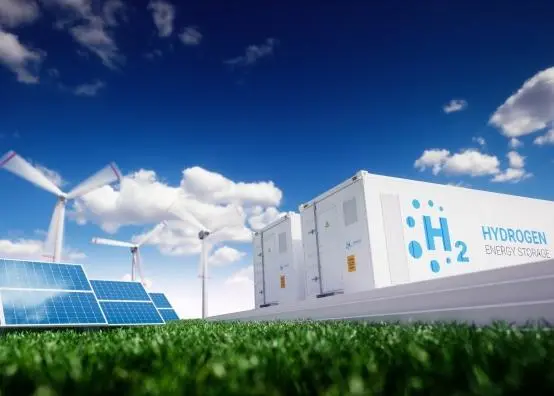
Following a competitive process late last year, the Australian Government has selected a consortium led by the University of New South Wales (UNSW), Deloitte and Baringa Partners as the Australian partners to deliver the “German-Australian Supply Chain Feasibility Study of Hydrogen produced from Renewables.” The move comes after the signing of an agreement between Australia and Germany in September to explore the potential for closer collaboration on hydrogen supply.
The Australian consortium will work with peers in Germany to analyse the entire hydrogen supply chain (production, storage, transport, recovery and use) to establish how Australia can best deliver renewable hydrogen to Germany. The two-year feasibility study will assess current technologies, identify regulatory and logistical barriers and recommend business cases for the development of this two-way trade and investment.
The rationale behind the collaboration is that Australia has abundant renewable energy resources and low electricity generation costs for renewable electricity. As one of the largest energy exporters, the country already has the necessary skills and infrastructure for exporting raw materials.
However, in order to exploit this potential, Australia needs large-scale hydrogen technologies, especially in the field of electrolysis. Germany is currently the market leader in electrolysis technologies, and it will have a high demand for low CO2 hydrogen imports in the future.
Led by UNSW’s Associate Professor Iain MacGill, the Australian team comprises Scientia Professor Rose Amal AC, Professor Sami Kara, Professor Kondo-Francois Aguey-Zinsou and Dr. Rahman Daiyan, from the ARC Training Centre for The Global Hydrogen Economy (GlobH2E).
MacGill notes that Australia has a long history of exporting coal to Asia and more recently LNG. However, this is not the case with Germany, which is more than twice the distance away. Still, Australia has exported iron ore there, and the project is a recognition of the potential for developing trade. “The German modelling and estimates are that they certainly can’t provide all of their hydrogen demand through local production.”
It is not clear which options for transport of hydrogen will be taken up. The hydrogen could be liquified, or it could be transported as green methane, methanol, ammonia or in a liquid organic carrier. “I don’t think we are ready to call winners on it yet,” says MacGill. There may be multiple options taken up depending on how the hydrogen will be used in Germany, but the focus is on green hydrogen given Australia’s abundant wind and solar resources. “One of the things that makes hydrogen so exciting is there is a range of ways to make it and there’s a wide range of potential uses, so that speaks of opportunity. You are not just critically dependent on one particular technology.”
Australia’s Federal Trade Minister Simon Birmingham said the study will build on existing hydrogen collaborations Australia has with other energy trading partners including Japan, South Korea and Singapore “all of which will be critical to building a world-leading hydrogen industry right here in Australia.” The Australian Government has already committed more than A$570 million to back the industry’s development.
Australia hopes its annual hydrogen exports will be worth A$10 billion by 2040 and anticipates the industry has the potential to generate around 8,000 new jobs by 2050, many in regional Australia, with exports estimated to be worth around A$11 billion a year in additional GDP by then.
Globally, the hydrogen industry could be worth US$2.5 trillion by 2050. Both Australia and Germany aim to be climate neutral by 2050.
In Germany, Federal Research Minister Anja Karliczek said that the nation is setting a course for international green hydrogen partnerships so that German companies can market hydrogen technologies “Made in Germany” at an early stage. “Entering the hydrogen economy is good for the climate and creates well-paid new jobs in Germany,” Karliczek says, and the research will cover the entire supply chain from electrolysis in Australia to transport by ship and then its conversion and use in Germany.
The Federal Ministry of Research is supporting the German project partners of the HySupply project, including the German Academy of Science and Engineering and the Federation of German Industries, with over EUR1.5 million. A number of leading industrial companies are involved, including Air Liquide, BASF, E.ON, Port of Rotterdam, Lufthansa, Mineralölwirtschaftsverband e.V. (MWV), RWE Supply & Trading, Siemens Energy and thyssenkrupp Steel Europe.
Germany’s National Hydrogen Strategy calls for electrolysis capacity of 5GW by 2030, and the Ministry has already been supporting research into electrolysis, methane pyrolysis, artificial photosynthesis and fuel cells.
Germany is investigating a number of alternative potential sources of hydrogen supply, including North Africa and Ukraine, where the country is investigating the possibility of supplying hydrogen using existing natural gas supply networks.
Related Articles
 ALTERNATIVE FUELS & LUBRICANTS
 ALTERNATIVE FUELS & LUBRICANTS
 ALTERNATIVE FUELS & LUBRICANTS