



Barnacle fouling threatens shipping efficiency
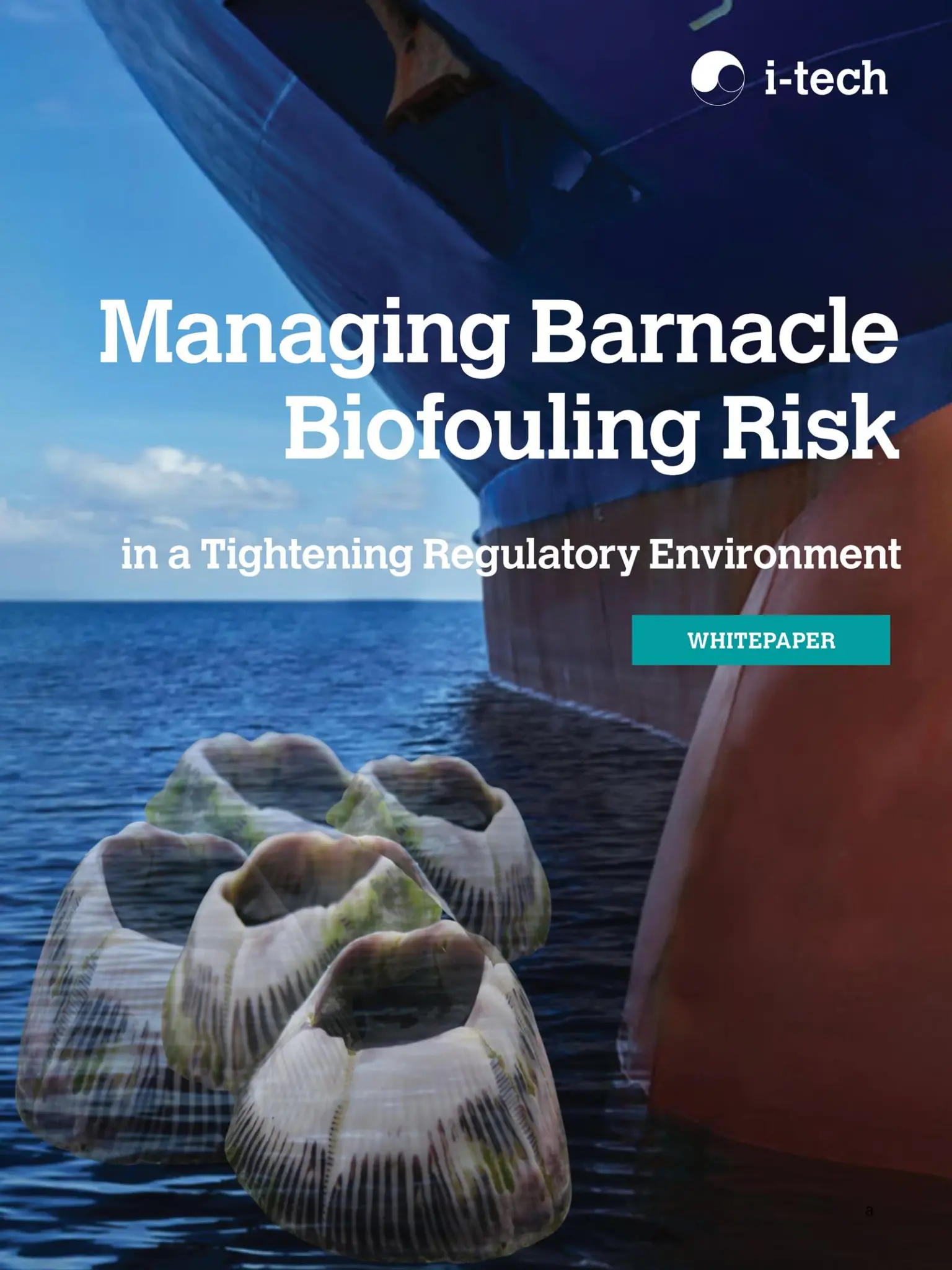
The report, entitled Managing Barnacle Biofouling Risk in a Tightening Regulatory Environment, draws on independent hull condition analysis conducted by the Safinah Group and highlights the growing commercial risks associated with poorly managed hull fouling.
According to the whitepaper, even relatively low levels of barnacle attachment can dramatically affect vessel performance. One academic study referenced in the report found that just 10% barnacle coverage on a ship’s hull could require up to 36% more shaft power to maintain speed, increasing fuel consumption, greenhouse gas emissions and voyage costs.
Per Svensson, sales director at I-Tech, said coating decisions should now be viewed as a core part of vessel efficiency management rather than a periodic maintenance expense.
“Coating selection should no longer be viewed as a periodic purchasing decision based primarily on drydock budget,” he said.
“The wrong coating for the wrong operating profile, or a change in a vessel’s operating profile, can lock in years of avoidable fuel loss, higher emissions and additional maintenance intervention.”
The report analysed hull conditions from 686 vessels inspected in drydock over a ten-year period and found that more than one-third entered drydock with barnacles covering over 10% of the hull surface.
Researchers also warned that changing operational patterns, including low-speed steaming and longer idle periods, are worsening the problem, particularly for tankers and bulk carriers operating in warm waters.
The whitepaper additionally highlights experimental antifouling systems using Selektope, I-Tech’s barnacle-repelling technology, which showed resistance to fouling even when coating surfaces suffered mechanical damage.
I-Tech said prevention remained significantly cheaper and more effective than removing established barnacle growth after fouling occurs.
Related Articles
 ENERGY SAVING DEVICES
 ENERGY SAVING DEVICES
 AMMONIA