



Berge Bulk targets ambitious fleet decarbonization goal
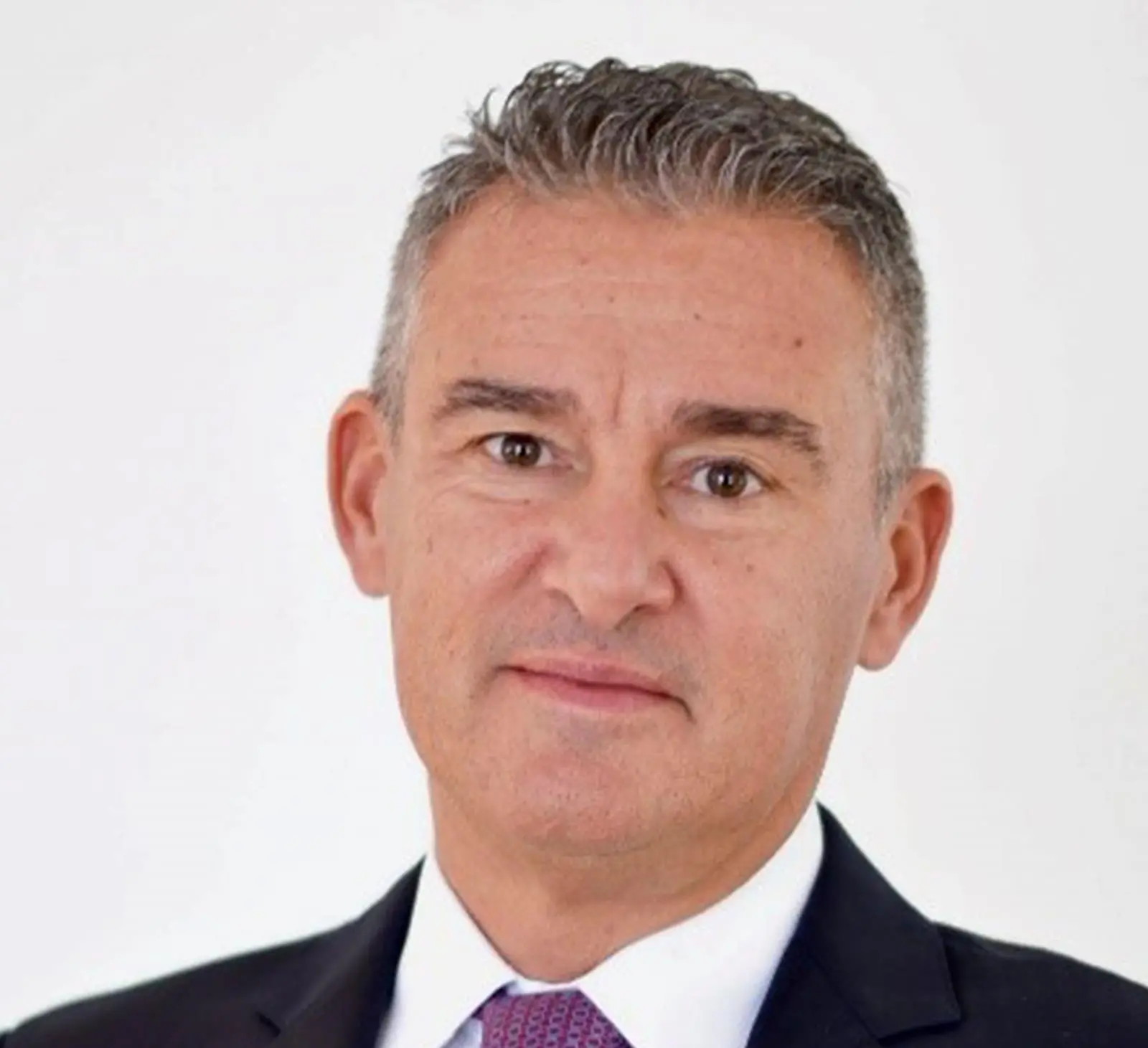
Motorship: Berge Bulk has announced a series of challenging environmental targets, including ambitious targets to achieve carbon neutrality from your operations by 2025.
Paolo Tonon: Bulk shipping is the most fuel-efficient and carbon efficient form of transport per metric tonne carried. That said, we know that our operations do generate significant emissions, and reducing these greenhouse gases and other air pollutants is a critical part of our environmental stewardship strategy.
MS: Looking at the wider bulk market, how far are you responding to pressure from customers for reduced environmental emissions, and how far are you positioning your fleet for potential changes in the end-user environment?
PT: Our customers, the charterers, today are curious and they also feel as much pressure as we feel. In Berge Bulk we own most of the ships in our fleet, and thus we carry the responsibility to retrofit them with technologies that will bring down the CO2 and all other greenhouse gases.
We all know that the rules and regulations which the IMO rectified in the past MEPC meetings are defining where we want to be, but they do not define how to reach the goal. In this respect, there is not a single silver bullet, there are several options out there that require different levels of investment and that carry different rewards and risks. Our industry has a lot to learn about how to bring to life commercially sound and valid solutions. This learning must happen fast. If we compare the time it took to get LNG in other than LNG carrying vessels, we do not have the luxury to wait for so long.
Clarity of rules, and especially global rules, is probably the most important thing we all need in order to proceed fast to target. The other thing is collaboration. This needs to happen on a completely different mode and scale. Now, given that all of this is outside the control of a single ship owner and operator, the amount of work ahead of us is very relevant and urgent.
MS: What is Berge Bulk’s perspective on the proposed extension of the EU ETS to cover 50% of extra-EU voyages? Do you expect this will lead to the diversion of the most efficient VLOCs, such as your Berge Logan, to Brazil-NW Europe routes, or is it too soon to predict the effects on global trade flows?
I thinks is still very early to predict how some of the proposals that have been voiced lately will impact fleet deployment. However from Berge Bulk we are interested in having rules and regulations that secure a level playing field.
MS: Speaking to shipowners and operators in other markets, we have seen the emergence of surcharge mechanisms for net zero consignments. How far is the bulk market from the first net zero parcels, considering the importance of several non-ferrous metals for electrification, for instance?
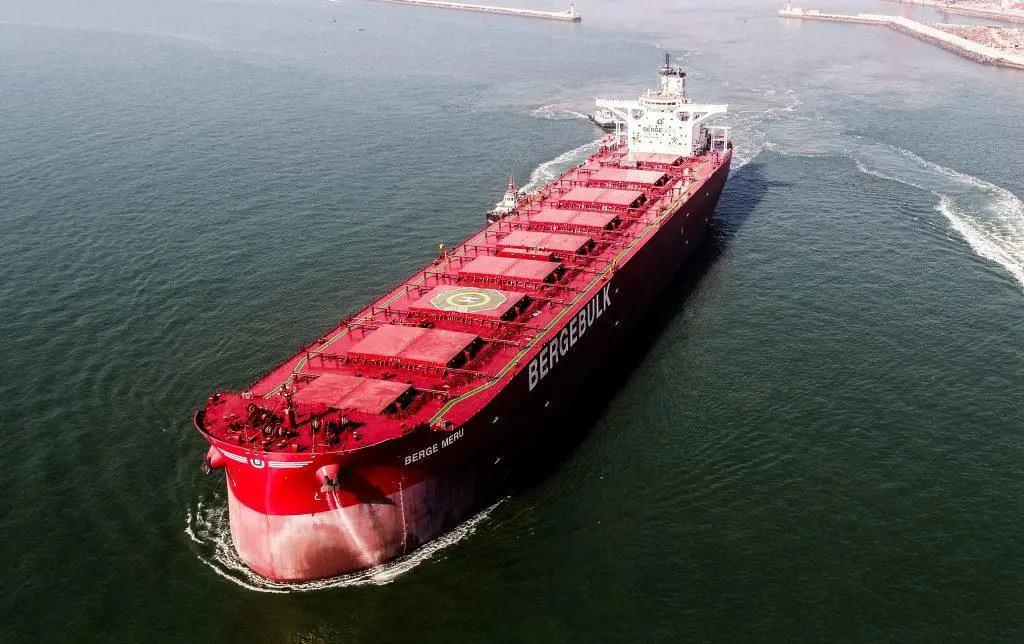
The dry bulk market is behind what we have seen in the container market. Our customers are interested in carbon reduction, but they are not yet so engaged with us in adopting solutions that require additional costs. In Berge Bulk, we have the ambitious commitment to be carbon neutral by 2025 at the latest, and we are proud to be one of the first dry bulk carrier to do so. Leading on the decarbonization roadmap is an important ambition for Berge Bulk. We started already in the past launching two of the most efficient dry bulk vessels ever built: Berge Mafadi and Berge Logan. As such we support regulators to come up with new rules aiming to reduce the effects of shipping emissions.
Earlier this year, Berge Bulk launched our Carbon Neutral Delivery programme. Through this programme, we offer our clients an option to offset the carbon emissions of their voyages with high-grade carbon offsets.
To facilitate the programme, we have built a global portfolio of carbon offset projects that plant new trees and protect against deforestation, projects that produce renewable energy, and projects that work with low-income communities to reduce emissions in their way of life.
These projects are measured and monitored by the highest standards of leading international entities. All of our offset projects are certified to meet either the Gold Standard (GS) or the Verified Carbon Standard (VCS). Upon completion of the voyage, we issue clients a certificate of retirement as evidence that the corresponding number of carbon credits have been retired to offset the voyage emissions.
MS: Turning to your company, you have been an early adopter of clean technology in your fleet, with initiatives ranging from the introduction of LED lighting onboard through to water purification and plastic recycling. For companies interested in following your example, did these initiatives require significant investment?
What is very interesting to know is that some of these initiatives aiming to improve vessel energy efficiency are no brainers. The return of the investment is very encouraging, thus these shall be done independently. Last year, we replaced all our lightbulbs fleetwide with LED bulbs. In total 54,600 lightbulbs were changed. LED bulbs use at least 75% less energy than incandescent bulbs and they last longer, so this initiative not only makes environmental sense, but it also makes business sense.
Other initiative like reducing the amount of plastic onboard are de facto a cost increase, but again our vision, our mission, our values, and our commitment not to pollute our oceans are well above and more important. At Berge Bulk, we are committed to reducing our waste footprint, building a waste-conscious culture among our colleagues, and investing in organisations that are creating innovative, sustainable waste management solutions.
In 2019, we launched a project to install freshwater purification systems on board our ships in an effort to reduce dependency on plastic bottles. 390 water purification units had been installed fleetwide, and over 2,000 reusable stainless-steel drinking bottles were distributed to our crew.
The results of this effort have been encouraging. We have seen a 95% reduction in consumption of plastic water bottle waste. And we are avoiding 500,000 plastic water bottles annually.
MS: Turning to your fleet plans, your Blue Matters strategy reveals that you plan to build and operate a zero emissions vessel by 2030. Can you provide any details on the expected size of the vessel, and how the performance of the vessel will compare with Berge Logan?
There are two main avenues to reduce emissions on a vessel…
(1) improve hull, propeller, engine performances and on top add a number of systems harnessing wind and solar energy that will bring the overall emission level of the vessel drastically down compared to what we have seen on Berge Logan. However, so long as we are depending on carbon fossil fuel there will still be some carbon emissions, so finally we have to top all of that with Carbon Capture and Storage systems onboard. In a logic of circular economy, we shall then have another industry ready to take such waste and utilize it for their own processes.
(2) The other avenue is linked to zero carbon fuels. Those are very innovative fuels like ammonia, hydrogen or nuclear propulsion or green fuels thus produced with a process that do not create CO2 emissions on their own. There is not a clear preferred path today. The best one can do is to keep an eye on all of this happening and engage in a minimum variety of initiatives that support a holistic learning and understanding.
At the end, I am sure we are not going to have one right solution but we are going to have winning players that will be capable to adopt solutions in a quick and less risky way based on the learnings made.
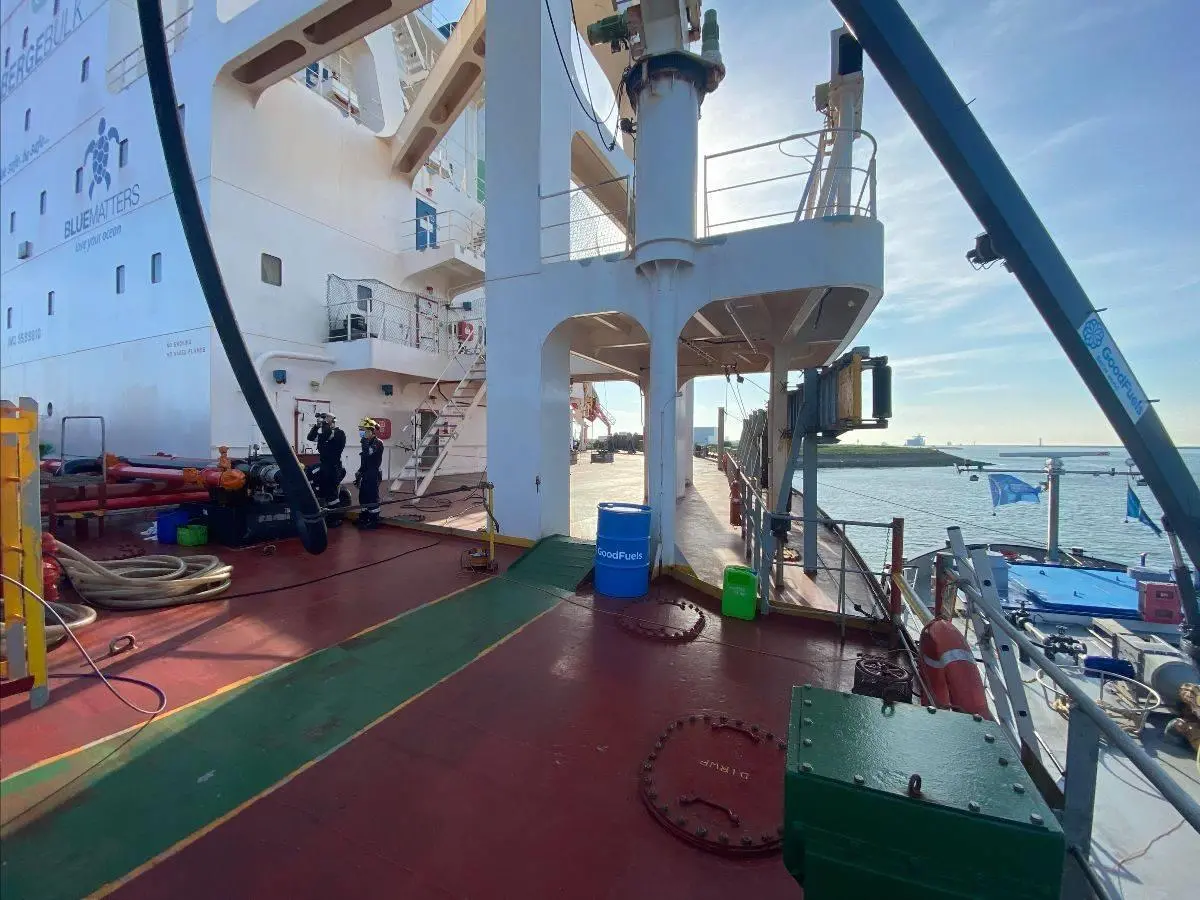
MS: Berge Bulk has shared the results of recent trials of biofuels, with GoodFuels. Do you see biofuels merely as an interim solution to reduce the GHG emissions profile of diesel fuels, and to meet the requirements of the EU’s RED II fuel requirements, or does it have a greater potential?
Indeed, we have been testing Biofuels in a couple of our vessels. As such, biofuels have been existing for a long while and have been used locally (e.g. thermal power plants) where produced as waste from other industry processes. There are very different biofuels that support CO2 reduction from minimum values as 15-20% up to 70%. The main problem here, and similar to a lot of other fuels, is that they have not been developed for shipping in particular. The logistics do not exist. There is not enough capacity to satisfy the need for shipowners nor is there the global bunkering footprint available. Summarizing, requirement wise, these fuels can take you to target but availability has to be secured.
MS: What is Berge Bulk’s perspective on the alternative fuel debate within the shipping community? We have noted that a number of major mining companies have recently signed long-term charter agreements for LNG-fuelled vessels. Is Berge Bulk evaluating LNG as a potential solution?
LNG is a good fuel for reducing CO2, it is definitively not the ultimate solution that will bring you to a zero-carbon solution (unless you consider green or synthetic natural gas). At Berge Bulk we believe that there are other fuels and energy efficiency technologies that will also present alternatives to LNG. They are available today and they are leaving more options open for a following path to a zero carbon vessel.
MS: Would you be able to provide any detail on your view about other potential fuels, including methanol, ammonia or LBG or synthetic LNG?
We are looking at methanol and at ammonia. There is not too much we can say at this point in time since there are a number of aspects, mainly commercial that need to be properly developed.
MS: Would it be possible for you to give some examples about the efficiency savings you have achieved with own digitalisation solutions?
In Berge Bulk we have been developing our set of rules and processes on how to monitor Vessels Performances. While a precondition is to have a tool / platform that visualizes performances and highlights potential improvements, it is equally important to have the routines and the proper ship-to-shore communication that will allow you to capitalize on hypothetical savings. The focus has been there since the beginning in our company and will just increase thanks to the technical solutions we can access. Savings from equipment management and especially from monitoring hull and propeller efficiency are relevant and will always continue to be a strong pillar on how we intend to minimize our CO2 footprint.
MS: Would it be possible to discuss the wider role that you expect digitalisation, in all its different forms, to play in Berge Bulk’s emissions reduction strategy?
Digitalization and decarbonization are two aspects that have to be considered strongly correlated when focusing on the emission reduction goals. The amount of insights on how to optimize the vessels are possible only with a certain level of digitalization. New technologies are today delivered with an increased amount of intelligence and with the capabilities – thanks to connectivity – to be autotuned in the environment in which they work. Much of vessel digitalization is about optimizing the asset from the right holistic level, avoiding unnecessary suboptimizations that pops up more frequently since easier to spot and execute.
Harnessing wind and solar energy require an integrated approach on the vessel power management system. Digitalization in terms of high-frequency data is a new standard that has been introduced with the idea to understand better how the asset is utilized. This is now so relevant because new equipment requires data to be optimized and integrated in the vessel-system.
MS: Given your own background, which straddles OEMs and ship management, how do you think shipping can manage the transition towards greater information sharing to maximise the benefits of digitalisation?
In my career, I have always been in and around shipping and have been sitting on both side of the table, as supplier and customer. What both have in common is the aim of delivering more intelligent products which, with a higher level of digital solution, can provide higher value or require the industry to develop products with certain given inputs.
I believe that shipping is slowly but surely going towards a future where you will see a chief engineer walking into the engine room with an iPad doing all the diagnostic and problem solving / optimizations with a network of partners (including the shipping company as well as third parties). This will be possible thanks to the higher level of digitalization that all the new products carry. This way of working will require a shift in knowledge and capabilities that is not easy to manage at the same speed of new technology released in the market; however, we have a lot to consider before we make decisions. Common standards in the digitalization world are needed, they simplify the introduction of these technologies and how different players can cooperate in delivering a holistic solution to yards and shipowners.
MS: Berge Bulk has a well-earned reputation for being an early adopter of different technologies. Would it be possible for you to provide insight into the range of different technologies that you are currently assessing?
The journey so far is clearly confirming to us that there is not a single silver bullet. Wind technologies, solar, hybridization and increase digitalization make up a very powerful toolbox for a shipowner. A lot of work needs to be put in to tailoring these different solutions for the different vessels, and the different routes on which they are deployed. At the end, the game has to be played in close collaboration with our customers, the charterers, who want to be secured that the services we will deliver to them will still be safe, reliable and at the right price. In all of this, we should never forget to mention regulators as class, flags and port authorities all have a fundamental role in supporting us in de-risking the adoption of these novel (at least for shipping) technologies.
So, I do not think that I can share a clear report on what is best and what is less convenient. The way to decarbonize assets must be very much linked with the way any single company is doing business. One thing I believe is important: get your hands dirty and try things for real, that is the only way to learn something and to support better decision making for the future.
Related Articles
 CARBON CAPTURE
 CARBON CAPTURE
 ALTERNATIVE FUELS & LUBRICANTS