



BOG solution for LH2 carrier design receives AiP
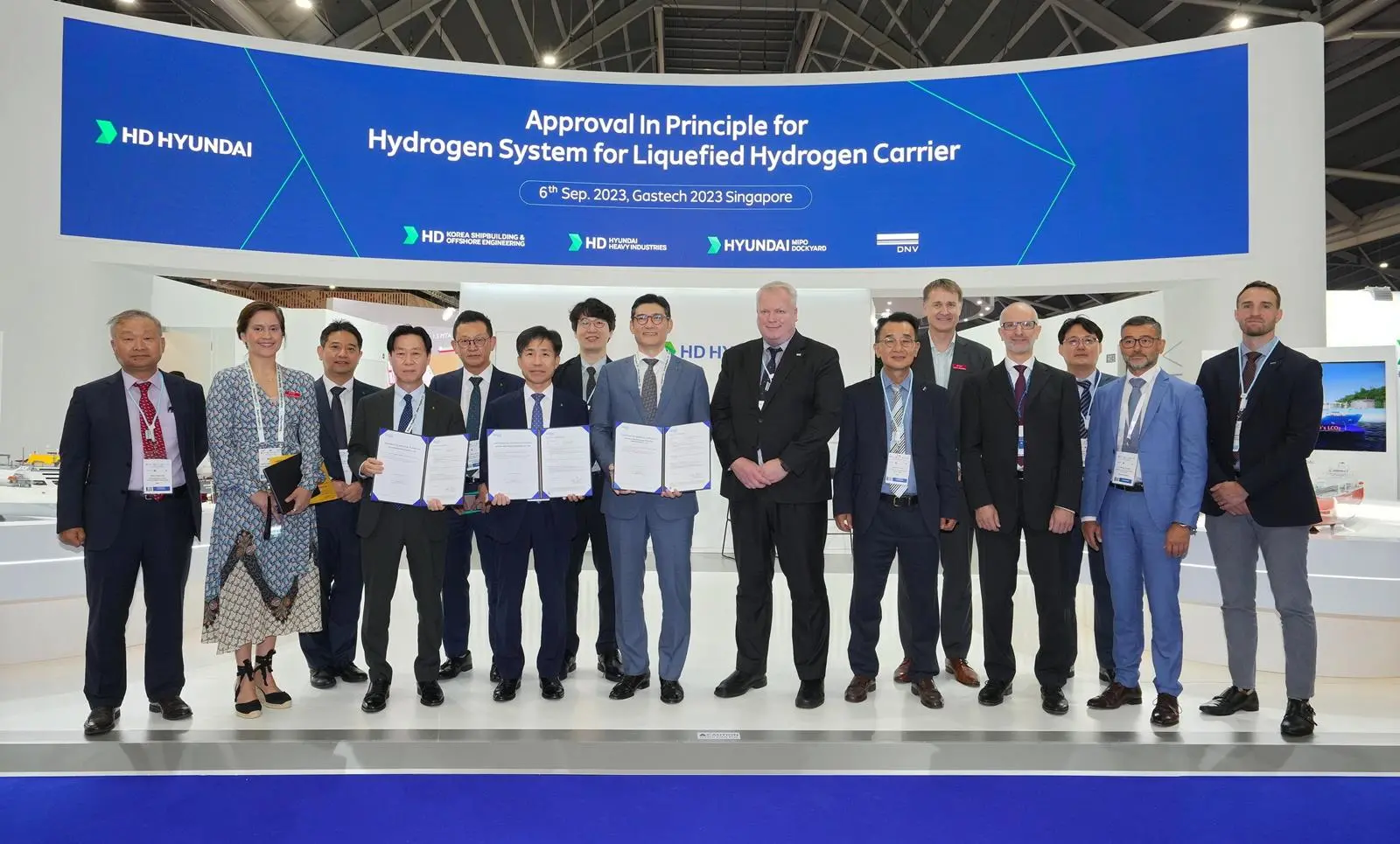
The new system utilises boil-off gas (BOG) from the transportation of liquefied hydrogen to power a hybrid propulsion system, integrating hydrogen dual-fuel engines and fuel cells.
The Motorship notes that the ability to safely transport large volumes of hydrogen in liquefied form at -253°C (only 20°C above absolute zero) is one of the major technological challenges that the project partners aim to overcome to ensure a reliable, efficient, safe and competitive global carbon-free hydrogen value chain. The lighter weight of LH2 means sloshing will not mimic the behaviour of LNG, with consequences for efforts to align the system’s boil-off rate with the gas handling capacities on board the vessel.
The Motorship notes that the use of fuel cells to power the LH2 carrier would consume the boil-off, but the project addresses a challenge for LH2 carriers, which is to design fuel cells that meet the power demand of the vessels. By combining the fuel cells with dual-fuel engines, the solution will allow the boil-off gas to be consumed in the propulsion system, with a reliquefaction system handling the excess.
The system draws on collaboration between HD KSOE and cryogenic gas specialists, such as Linde Engineering subsidiary Linde Kryotechnik and Cryostar, as well as Woodside Energy, on the development of new technologies. The partners are exploring new hydrogen transportation and storage solutions. HD KSOE aims to complete the development of the hydrogen carrier technology that enables large-capacity hydrogen transportation and storage by around 2030.
DNV notes that the introduction of hydrogen as a solution to decarbonising heavy industries, such as steel and cement production, is likely to depend upon finding solutions to such challenges.
Vidar Dolonen, DNV Regional Manager for Korea & Japan, added: “To build confidence and overcome the challenges of hydrogen transport for shipping, we need to bring many different partners together, build on the learnings from other fuels and industries, and adapt technologies to the maritime environment. This is why we are very pleased to be working with innovative partners to help establish new design standards, that can create the next generation of hydrogen carriers and help this emerging segment develop and succeed.”
Dr. Sungjun Kim, CTO at HD KSOE, said: “We are continuously developing world-class technology in liquefied hydrogen following our achievements in methanol, ammonia and CO2 carriers. With our hydrogen system, we will lead technology advances in transitioning to a carbon-neutral society.”
Related Articles
 AMMONIA
 HYDROGEN
 HYDROGEN