



BV studies onboard CCS with Hong Kong shipowner
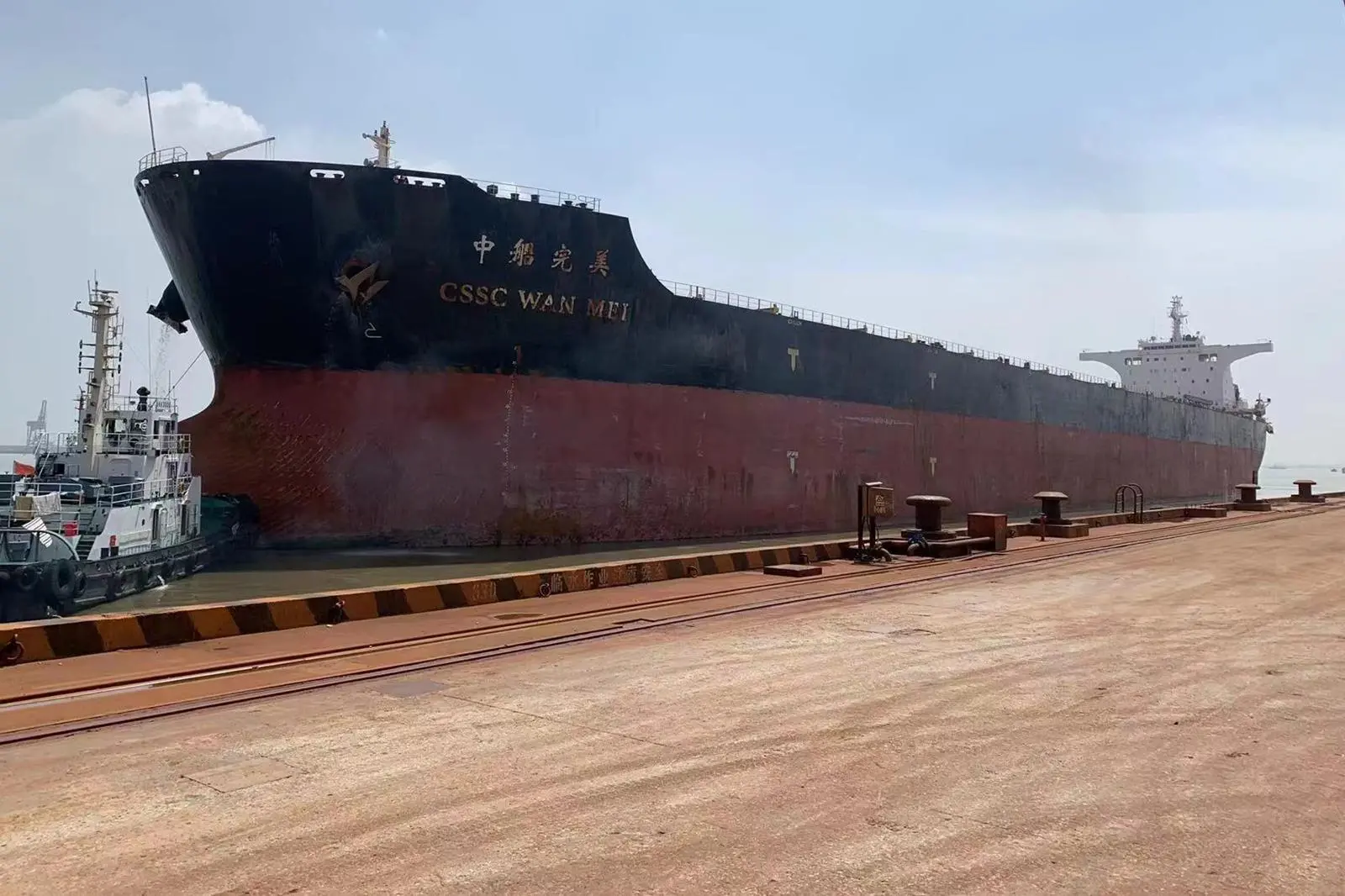
The agreement also includes Shanghai Qiyao Environmental Technology, a subsidiary of Shanghai Marine Diesel Engine Research Institute, and the aim is to help shipowners meet CII requirements.
The study will focus on two types of bulk carriers in operation in the Wah Kwong fleet. Qiyao Environmental Technology has developed a customized design for the CCS units and submitted relevant drawings. BV reviewed the plans to ensure the safety of the vessels and equipment and to ensure that the carbon emission reduction targets are effectively achieved during the operation of the vessels.
Subsequent research work will be conducted for oil tankers.
Qiyao Environmental Technology has completed laboratory testing, achieving a total carbon capture rate of over 85% so far, and the system is in the process of continuous optimization. It is suitable for a range of different ship types and sizes, and design approval is underway.
The main components are an absorption unit, a separation unit, a compression unit, a refrigeration unit and a storage unit. An organic amine compound solution reacts with the CO2 in the absorption unit, separating it from the rest of the exhaust gas. The dissolved CO2 compound solution is desorbed at high temperature in the separation tower, before the extracted CO2 is compressed, purified and cooled into liquid CO2 and stored in a low temperature storage tank.
Carbon capture technology has been used in the land-based industry for many years and the solutions are mature. However, as a marine application, the challenges that must be addressed are safety, layout, energy consumption, and the need to balance cost effectiveness.
Senior Vice President & Chief Executive, North Asia & China, Bureau Veritas Marine & Offshore, said: “The transition to a greener shipping industry is critical. Carbon capture, utilisation and storage (CCUS) technology captured a total of 40 million tons of CO2 in 2021 according to the International Energy Agency (IEA), notably in industrial projects on shore. This makes CCUS one of the options available today that could significantly contribute to achieve carbon neutrality, as well as a promising avenue for reducing emissions from shipping.
“We are very honoured to collaborate on this study. BV’s expertise in supporting CCUS projects, combined with Wah Kwong’ and QIYAO’s technical and strategic capabilities, will help to spur the implementation of CCUS technology in the shipping industry.”
Related Articles
 CARBON CAPTURE
 CARBON CAPTURE
 ALTERNATIVE FUELS & LUBRICANTS