



Casualties cause jitters for insurers
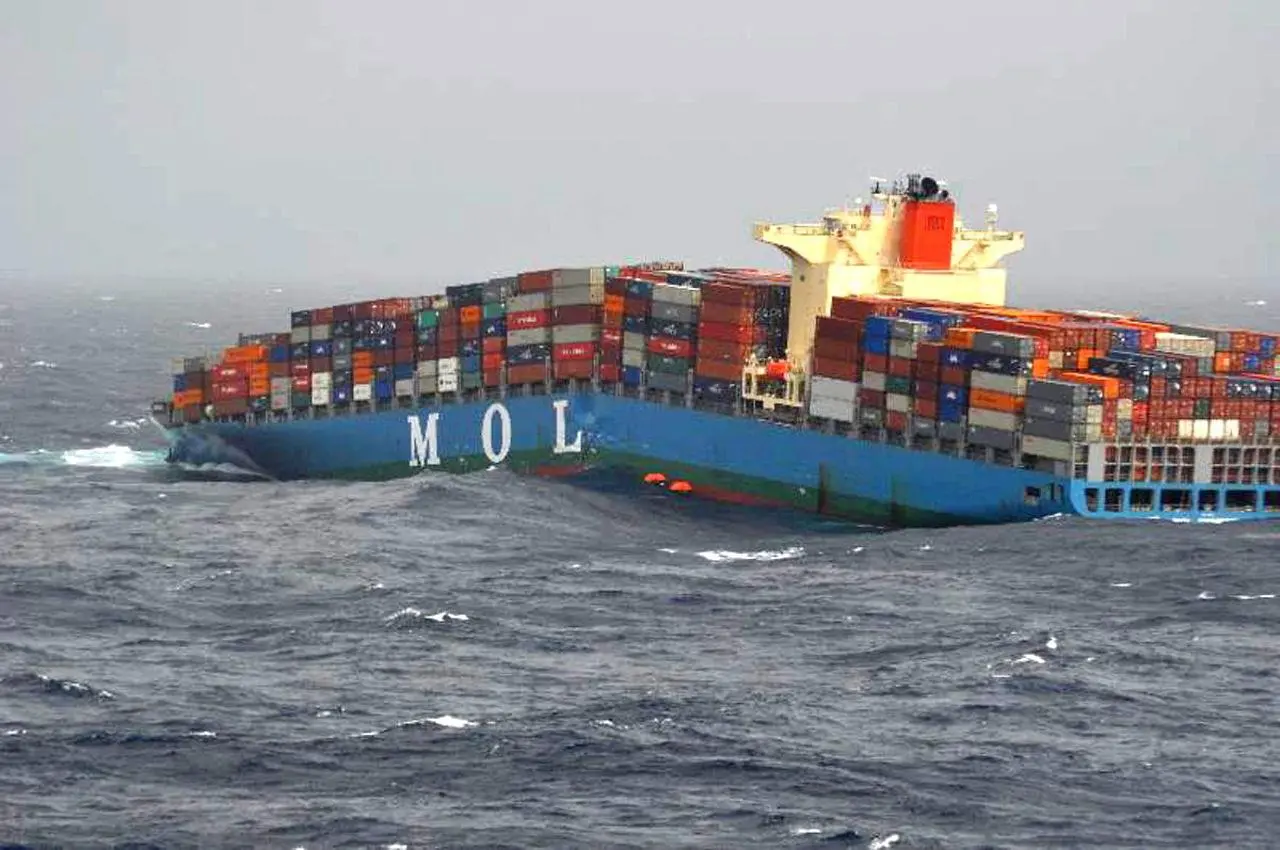
The worst casualty in 2013 at the time of writing is undoubtedly the MOL Comfort (built in 2008). At 8,110TEU capacity, she was medium-sized compared with the 16,000-18,000TEU giants soon to appear; but even so she represents the largest boxship totally lost to date.
The vessel suffered a fatal crack amidships while off Yemen in June. The 26 crew on board escaped and were rescued, but the stern section sank later in June and the forward section in July despite a valiant salvage operation. The cause of the accident therefore remains a mystery, though suspicions of a structural failure led to Mitsui OSK Lines arranging hull strengthening for all the MOL Comfort’s sisterships.
The owner, the builder (MHI) and ClassNK immediately launched an investigation, and preliminary findings by the class society are expected this autumn. Obviously, the testimony of the crew will be all-important in the absence of any other evidence. Was there something seriously flawed in the vessel’s design or construction? All stakeholders need an answer since, it is reported, 14 vessels were built to the MOL Comfort’s design. The investigating task force, which includes Lloyd’s Register as an independent technical consultant, will be under extreme pressure to produce answers.
The disaster was quickly followed by the news that IACS had set up a working group to study the safety of the new generation of mega boxships, delving into all aspects of the sector. IACS chairman Roberto Cazzulo was quoted as saying the industry needed to come to a holistic view of post-panamax safety.
In insurance terms, the MOL Comfort will cost Japanese hull underwriters a total of perhaps $80-83million with some reinsurance in the London market; but the much heavier burden will fall on cargo underwriters, with the potential total put at well over $100million for the reported 4,500 boxes on board.
July was another bad month for the insurance market, and again it was cargo insurers who will suffer most from the fire-damaged 1,740TEU containership Hansa Brandenburg that caught fire in the Indian Ocean. The German-owned, 2003-built geared vessel was en route from Singapore to Durban. Salvors were successful in controlling the fire and getting the vessel under tow. However, it was feared that another Leper of the Seas saga was about to unfold as efforts were made to find a port of refuge. Eventually the ship arrived in Mauritius where unloading of undamaged boxes began.
There have been other containership incidents to worry insurers. Significant among them was the flooding of the engineroom of the 15,500TEU Emma Maersk, the biggest boxship in service, during a Suez Canal transit after the failure of stern thruster propeller blades cracked steelwork. Human error by the crew was ruled out.
This was not an accident, of course, but it is a fact that containerships continue to dominate casualty numbers. A big problem here, with these and all other vessel types, springs from machinery damage / failure, previously noted in this column, which continues to top the list of casualty causation. For example, in one seven-day period in July there were 17 such incidents according to Lloyd’s List Intelligence, followed by a further 14 in the last week of July.
The ship machinery industry sat up when in August it was announced that Port State Control authorities under the Paris MoU and the Tokyo MoU were launching an inspection programme targeted at propulsion machinery. The 45 port states under both MoUs want to ensure that vessels comply with the relevant chapter in the SOLAS Convention relating to upkeep of marine engines, propulsion systems and auxiliary equipment.
In a circular to its members, the Steamship Mutual P&I Club said inspectors would focus on any applicable documents and ensure vessels confirm the safety of propulsion and auxiliary machinery. Crews’ familiarity with safety and emergency procedures will also come under scrutiny. Among other things, inspectors may also focus on boilers, boiler feed systems, emergency lighting, bilge pump arrangement, ballast pumps and emergency fuel stops.
Talking of machinery, Norway’s Gard, the largest of the P&I clubs, issued a bluffer’s guide to ship propulsion earlier this year. It has followed through with a bluffer’s guide to diesel engines, putting the layman in the picture, so to speak, and tracking the progress of the diesel engine since Rudolf Diesel invented it in 1892.
In conclusion, notes Gard, a century after their introduction to merchant ships in 1912, diesels today predominate in powering merchant vessels. However, in those 100 years many types of engines have come and gone. “Whether, in another 100 years, diesels will still be driving the majority of the world’s vessels remains to be seen. What is not so uncertain is that goods will still be traded by sea.”
In another initiative, the club has published Gard Guidance on Maritime Claims and Insurance, “a practical guide for practical people.” It explains, in clear terms which are easily understandable to someone without a legal background or legal training, the issues and problems claims handlers are likely to encounter, especially when faced with a major incident. The guidance covers both P&I and hull/machinery issues and problems, and would be a very useful addition to any shipboard library.
Related Articles
 ALTERNATIVE FUELS & LUBRICANTS
 ALTERNATIVE FUELS & LUBRICANTS
 OPINION