



Catalyst development advancing hydrogen carrier efficiency
“The most important power-to-x fuel is currently hydrogen itself,” says Dr Gunther Kolb, Deputy Institute Director and Division Director at Fraunhofer IMM. “However, before hydrogen can be utilised as an energy source on a widespread basis, there are still some considerable hurdles that need to be overcome in terms of its transportation and storage. These include either high space requirements for its storage or other energetically unfavourable conditions.”
As ammonia can be liquefied at a moderate temperature of -33°C, and its volumetric hydrogen content is significantly higher than that of compressed hydrogen at 700 bar, it is a desirable hydrogen carrier.
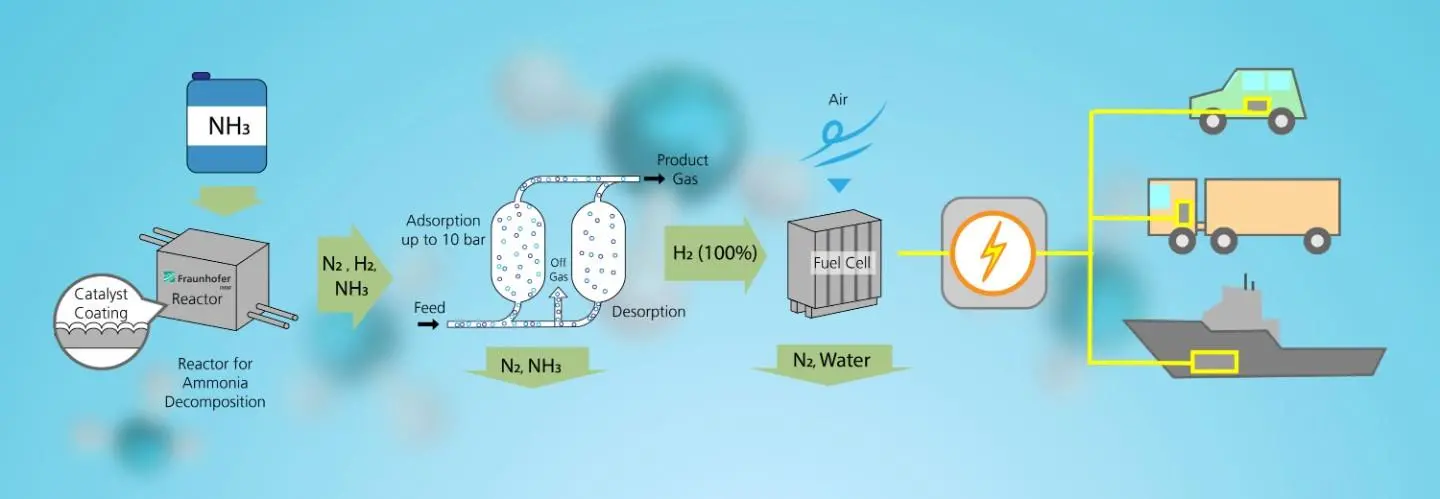
“In a cracking reactor ammonia can be split into nitrogen and hydrogen when suitable catalysts are applied. A mixture of ammonia, hydrogen and nitrogen, known as spaltgas, is suited for homogeneous combustion and can be used as an energy source,” says Kolb. As part of the Spaltgas project, the researchers and project partners are developing a combustion technology that will use the gas mixture in the brick firing process
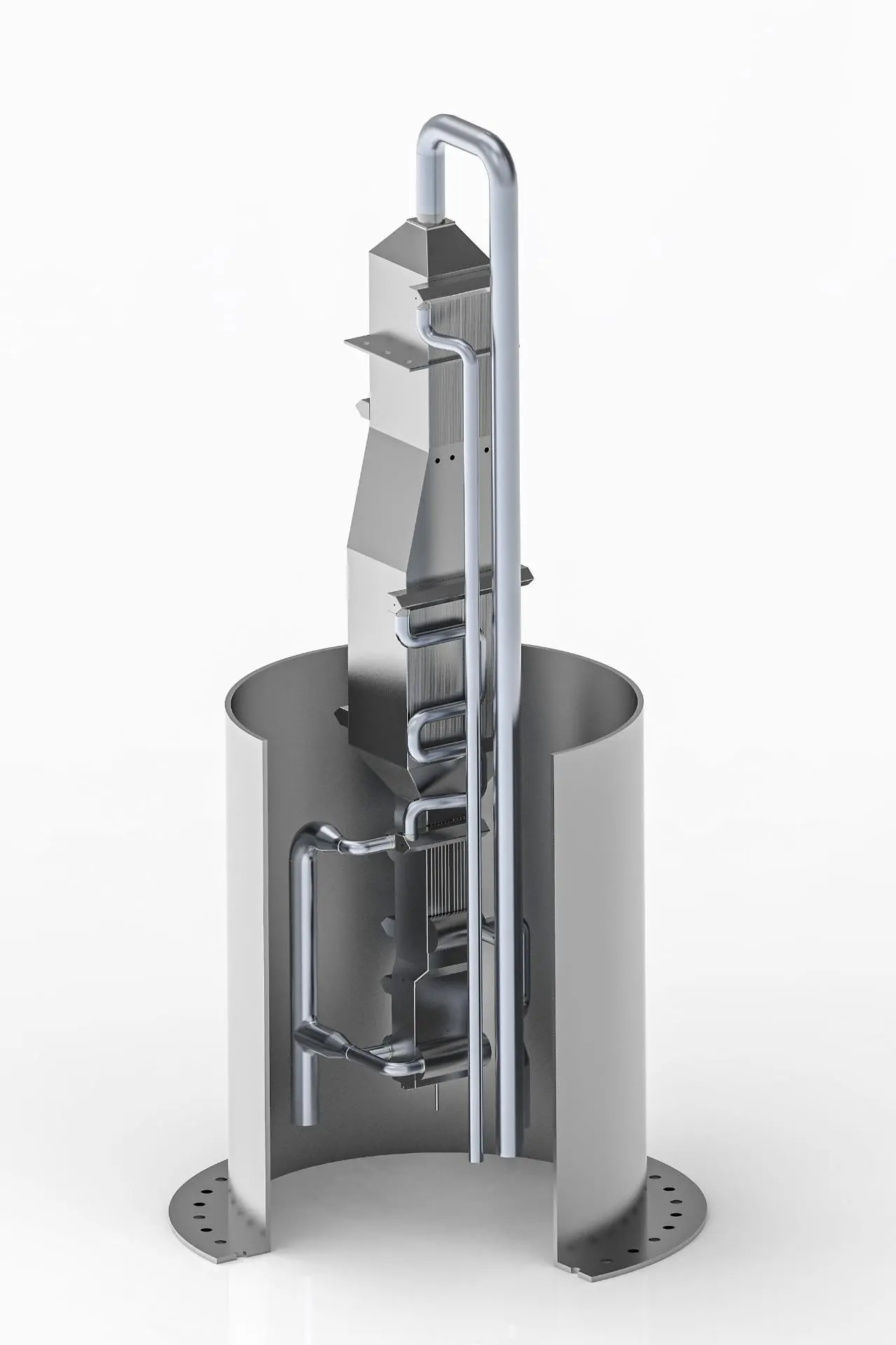
The researchers are also developing another cracking reactor based on new catalyst and micro-structure reactor technology. In this process, pure hydrogen is produced from ammonia through cracking and subsequently purified. The hydrogen can then be injected into PEM fuel cells.
“By utilising the off-gas of the pressure swing adsorption (PSA) applied for hydrogen purification as an energy source for the cracking process, we are able to achieve an efficiency of 90% in comparison to 70% which is achieved when conventional technologies are applied,” says Kolb. In the framework of AMMONPAKTOR project, the researchers have also reduced the size of the ammonia-cracking reactor by 90% compared to conventional reactor-technology. They have also lowered the carbon footprint in comparison to electrically heated reactor concepts by only using the exhaust gases from the cracking process to generate the energy required.
The first generation of the technology achieved the second-highest specific hydrogen production rate ever published, and the current second generation has a throughput of 25 kg/h of ammonia and produces 70 kg of purified hydrogen per day.
Kolb sees maritime applications. Spaltgas, partially cracked ammonia, for example, could be combusted in ship engines. The gas mixture, containing some hydrogen, would aid the combustion of ammonia in the engine, negating the need for pilot fuels such as diesel or biodiesel.
His Fraunhofer IMM team is also participating in the ShipFC project to develop the world’s first ammonia-based fuel cell system for maritime applications. The ammonia required for fuel cells would need to have higher purity levels, and the project partners have demonstrated this along with the ability to reduce NOx from the exhaust gas to levels tenfold below current regulatory requirements.
Methanol reformer advances
Methanol is gaining popularity as a hydrogen carrier in the shipping industry, and Kolb’s team is also developing a methanol reformer to produce hydrogen at the point of use onboard ships. The endothermic reaction to crack methanol requires heat, steam and catalysts. Existing catalysts are made from copper-zinc-oxide powder that is added to the reactor as extruded pellets. In mobile applications, movement leads to catalyst attrition and the reaction rate is low owing to relatively low reaction temperatures.
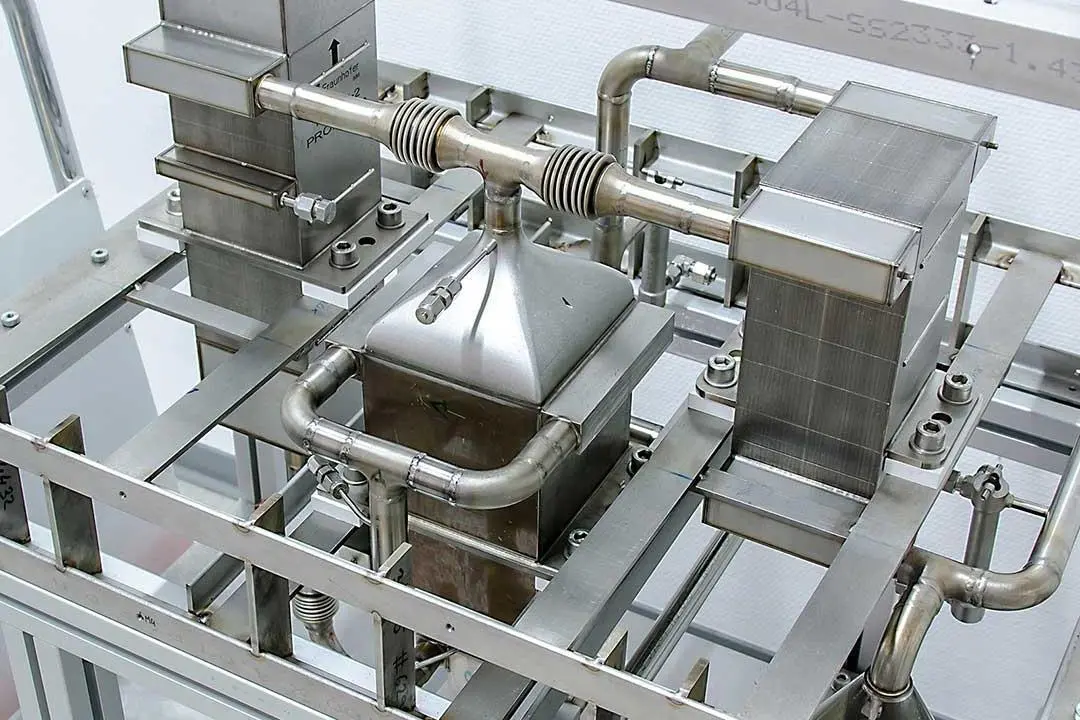
As well as optimising the catalysts, Kolb’s team has reduced the size of the reformer itself to about one sixth of other reactors. The are also opting for catalyst coatings containing precious metals similar to those used in automotive catalytic converters, because there is no attrition with these coatings, says Kolb. The catalysts are highly active and do not produce unwanted byproducts such as CO at partial load.
The research team has also optimised the heat management by developing plate heat exchangers coated with a catalysts and combined into stacks of up to 200 plates. When the exhaust gas flows over the plates, it comes into contact with the catalyst and is also heated highly efficiently in the small channels.
“By utilising the waste heat, we achieve excellent heat integration and high system efficiency,” says Kolb. At present, the researchers have a 35kW prototype running, and a 100kW prototype for maritime applications will be running by the end of this year. Kolb is now aiming for a 200kW system – to suit the fuel supply required for the 200kW maritime fuel cell modules currently on the market.
Related Articles
 AMMONIA
 AMMONIA
 AMMONIA