



CHEK project releases mid-term results of interaction between energy saving devices
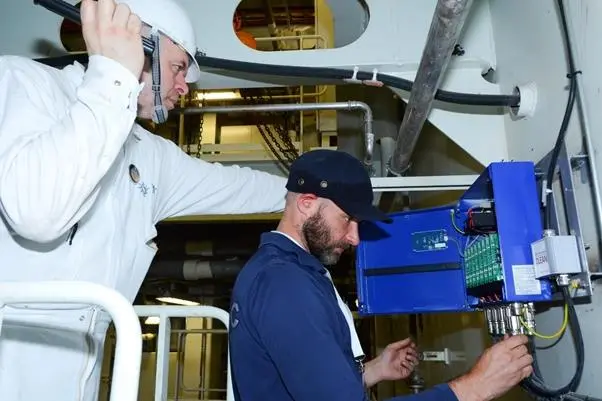
The CHEK project is targeting long-distance shipping with its evaluation of multiple decarbonisation solutions combined on a single vessel. The project, while aiming to inform both newbuild and retrofit, has specifically involved the design of a wind energy optimised bulk carrier and a hydrogen powered cruise ship. The aim of the designs is to reduce greenhouse gas emissions by 99%, achieve 40-50% energy savings and reduce black carbon emissions by over 95% compared to a typical existing, EEDI phase 2 compliant reference vessels.
The three-year project started in June 2021 with project partners include BAR Technologies, Cargill, Climeon, Deltamarin, Hasytec Group, Lloyd’s Register, MSC, Silverstream Technologies, University of Vaasa, Wärtsilä, World Maritime University and Yara Marine Technologies.
A future-proof vessel design platform is being developed by Deltamarin to evaluate how multiple energy saving devices can be combined to maximise efficiency, firstly for the two vessels and then in the future for other vessel types. The modelling includes the interactions between systems and the environment and is being developed across three generations: digital prototype, digital master, and finally digital twins of the vessels. Operational reference data from existing ships, bulker carrier Pyxis Ocean and cruise vessel MSC Meraviglia has been fed to all the model generations, but during the digital twin phase, measured data from the various energy saving devices is received for making the digital models even more accurate.
Both vessels currently have ultrasound antifouling and weather routing installed. The Pyxis Ocean has also been retrofitted with two BAR Tech 37.5 metre high WindWings, and the cruise ship the cruise itinerary is shaped using an itinerary optimisation tool. Simulations and lab testing is underway for a hydrogen engine, fuel flexible gas genset, waste heat recovery, scalable power plant, gate rudder, hull form optimisation and air lubrication.
Cruise ship modelling
A combination of digital modelling and operational data is being developed for the cruise ship design including a new, digital hull and the ship propulsion power is being simulated with realistic weather loads. So far, the results indicate that EEDI is improved by 28%, compared to the project EEDI Phase 2 reference level, without considering the energy saving technologies. These are expected to improve the ship operational energy efficiency by a further 19%, and reduction of hull fouling is expected to lead to further improvements.
“In the digital master simulations, the model regarding machinery was configured by using Wärtsilä’s latest engine generation data, which already showed an improvement in the fuel efficiency, compared to the current baseline model, using the data from the existing Meraviglia ship machinery,” says Mia Elg, R&D Manager at Deltamarin. “The engine efficiency curve for hydrogen combustion was not initially available, but for the digital twin, we have received figures from Wärtsilä from their measurements and we are currently incorporating them into the final simulation round.”
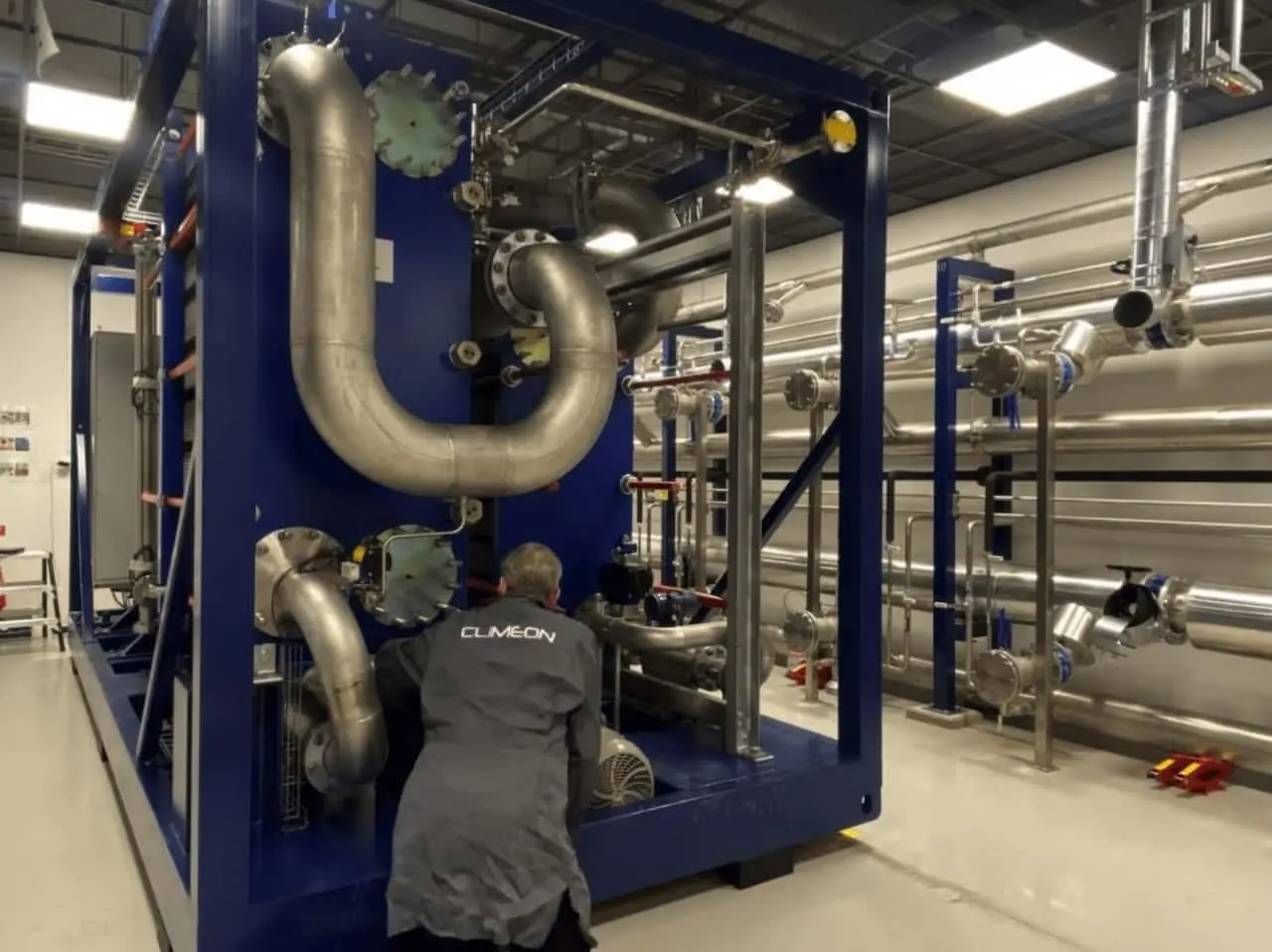
Construction of the final prototype hydrogen engine was completed by fitting one of Wärtsilä’s laboratory test 4-stroke gas engines with modified components and control software suited to 100% hydrogen combustion.
The fuel system consists of two combustion chambers with separated gas fuel supplies. The aim is to produce a near stoichiometric air-fuel mixture, while keeping the mixture lean to reduce NOx emissions and fuel consumption. Upon spark ignition the pre-combustion chamber pressure increases rapidly, forcing the burning charge into the main combustion chamber in the form of jet flames. These ignite the charge, allowing stable and efficient combustion under lean conditions.
Bulk carrier modelling
Six routes have been selected as representative of the bulk carrier’s operational profile, and three engine configurations have been simulated as part of the modelling: a 2-stroke main engine (8800kW), two Wärtsilä’s 4-stroke 31 engines (5200kW) running on MDO, and two Wärtsilä’s 31DF engines (4800kW) with bio-LNG as the primary fuel.
The 2-stroke engine configuration with fixed-pitch propeller represents a typical baseline propulsion system for the bulk carrier. In contrast the fuel-flexible 4-stroke engine is configured with shaft generators mounted on the gearboxes and a controllable-pitch propeller (CPP).
The 4-stroke engine configuration include a single genset: Wärtsilä’s 6L20DF engine (960kW, 1000 RPM). The use of shaft generators and a relatively small share of annual energy consumed in ports means the auxiliary engine is expected to have a relatively small impact on the total energy efficiency. The 2-stroke configuration included three gensets (3 x 500kW, 900 RPM) and no shaft generator.
“Together with Wärtsilä we are developing a very flexible machinery concept, where we have CPP, two “main engines” with shaft generators coupled and also the opportunity to integrate batteries in the power train. The point is that integrating many energy saving technologies in the ships brings much greater variation to the power needs, so compared to traditional cargo ship operation, we need matching flexible machinery,” says Elg. “Of course, these options would be available for 2-stroke machinery as well but it’s not the focus of the study. We have “traditional” machinery as a baseline consisting of one large 2-stroke engine directly coupled to a FPP, and three auxiliary engines. This is also the set up for our real life operational reference vessel, Pyxis Ocean.”
All configurations included exhaust gas heat is recovered from the main engines, and for the 4-stroke configuration the engine high temperature cooling water is assumed to be available for selected ship heat consumers and heat-to-power conversion.
The inclusion of a battery enables higher engine load points to be closer to 90-95% instead of the traditional 60% load before an additional engine is started. The modelling assumes that main engines are allowed to run at 100%, supplying power to the propulsion shaft and shaft generators when the battery is installed. Without batteries, shaft generators are disabled when main engines reach 90% load and gensets take over.
“During the digital master simulations, we did not fully explore the opportunities of the flexible machinery; we simply assumed the same FPP in both cases and just ran the simulations focusing on the pure engine fuel consumption and energy flows, such as waste heat production,” Elg says. The results indicate that the 2-stroke configuration was more fuel efficient. “However, by adding an Organic Rankine Cycle (ORC) waste heat recovery process to the 4-stroke configuration, we see that the ship’s total fuel consumption dropped below the benchmark case. This is both thanks to efficient waste heat utilisation and the shift in engine operation to, on average, a very good engine load. This kind of process synergy and how to analyse lies at the core of project CHEK.”
Kenneth Widell, Senior Project Manager, Smart Technology Hub at Wärtsilä, adds: “When entering the 2-stroke versus 4-stroke discussion, the 4-stroke solution is more compact than that of one, not to mention two 2-stroke engines, hence providing compensation for the cargo space absorbed by the energy saving devices and actually leaving more space for cargo that the current 2-stroke reference. When adding the gate rudder, the entire drive train can be moved towards the aft, freeing up even more cargo space. At the end of the day it will be the total cost of ownership which will decide, not on paper, but in real life.”
With the addition of the WindWings on both Pyxis Ocean and the digital newbuild vessel, the energy consumption is further lowered. The next stage of the simulations will see cooperation between Deltamarin and Wärtsila on a more accurate model in the digital twin that will better match the engine optimal operation points to CPP efficiency. The partners plan to integrate a functional mock-up unit for the digital twin energy simulations which will then have as input the results of Deltamarin’s hydrodynamic interaction model “DeltaSeas.” The mock-up will provide engine related variables, including power train efficiency for the holistic energy model.
“This kind of cooperation between sharing either direct performance results or models or executables such as the functional mock-up unit between the main digital models is at the practical core of project CHEK. We will need much more of this kind of cooperation in the future, with the increasing amount of new technologies applied to the ships,” says Elg.
The modelling results so far indicate that the combination of energy saving technologies has a huge impact. Without hull efficiency improvement results or weather routing, their combined effects are expected to improve energy efficiency by 20-30%, and CO2 emissions on a well-to-wake basis approach zero with bio-LNG operation. The attained EEDI of the bulk carrier, without energy saving devices, is over 8% below the reference figure for EEDI phase 2. Modelling of the WindWings indicate, with limited operation, that daily fuel savings would be approximately 3.2 tons per day.
The Carbon Intensity Indicator (CII) would be over 2% below the reference line from 2026, and the combination of energy saving features is expected to keep the vessel compliant at least until 2040. The energy saving features are almost equal in impact to what would be achieved by running the vessel on LNG (from a tank-to-wake emissions basis).
Hull solutions
Computer Fluid Dynamics (CFD) modelling of hull roughness indicates that, within the context of the CHEK project, a light slime covering the hull increases drag by around 10%. Within the project, the ultrasonic anti-fouling system developed by Hasytec, Dynamic Biofilm Protection Intelligent® (DBPi), has been scaled up for use on large vessels. The system uses AI to enable the transducers to respond to the local environment including measures such as water temperature to determine the optimal combination of frequency and intensity deployed. The impact of the system is being monitored from the demonstration voyages and will eventually feed into the digital twins.
Further drag reduction will be achieved with the installation of an air lubrication system. The impact of Silverstream’s air lubrication system is already incorporated into the modelling. The system has already had independent verification of the fuel saving benefits from other installations, and once installed on the vessels, operational data will be incorporated within the digital twin being developed for CHEK. The gross savings will be applied directly as a deduction to the vessel’s power consumption, while the compressor power will be included in the hotel load.
Combining technologies
Overall, the results of the project indicate the value of specific energy saving devices such as sails or the adoption of shore power. However, interactions are also clear. The sails reduce the need for propulsive power and therefore change engine utilisation, leading to larger total savings than could be achieved singly.
Another case is the ORC heat recovery system provided by Climeon. The modelling indicates that the ORC improves the energy consumption by almost 5% even though it provides less than 3% of the ship’s energy requirements. The energy reduces the ship’s electrical load that would otherwise be provided by shaft generators, so the engine configuration can switch from two engines on relatively low load to one on relatively high load. This improves power conversion efficiency and results in lower fuel consumption.
However, overall the total energy savings achieved was lower than the tally of each individual energy saving measure due to the interconnectedness of onboard processes. For example, the sails reduce engine loads which means less waste heat available for the ORC.
New business model
Yildiz Williams, Lead Marine Consultant, Lloyd’s Register, points to the financial implications of installing energy saving measures when the owner pays for the equipment and the charterer pays for the fuel. She therefore believes that the industry should be evaluating finance sharing models.
“The CHEK project is doing just this,” she says. “The bulk carrier has two sails. One is funded by the European Union as part of the CHEK project, the other one is paid jointly by the charterer and shipowner.
“In the past, an arrangement like this would have been unheard of. However, with the ability to increase efficiency, and reduce costs and GHG emissions, charterers contributing to the financing of additional technologies is absolutely a model for the future.”
Related Articles
 ENERGY SAVING DEVICES
 ENERGY SAVING DEVICES
 AMMONIA