



CMB AND TSUNEISHI PLAN JAPANESE HYDROGEN TUG
The new joint venture adds to CMB and Tsuneishi’s existing project for the development of the HydroBingo, an 80-passenger hydrogen-fuelled ferry. The companies will build the hydrogen-powered tugboat, the HydroPhoenix, with the aim of increasing local demand for hydrogen. They hope to build further sister ships as well as other vessel types, including offshore wind support vessels, and for ports.
In February, CMB and Japan’s ITOCHU and Nippon Coke & Engineering announced a collaboration to produce hydrogen for local consumption by land and maritime industries, initially on the northern island of Kyushu. The anticipated initial yearly production will be 500,000kg of hydrogen per year.
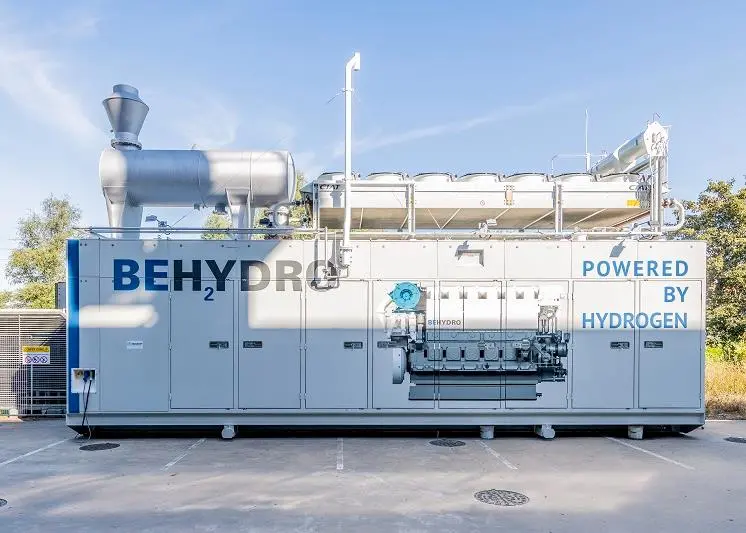
CMB and Tsuneishi are already developing hydrogen internal combustion engine technology for the Japanese industrial and marine market. CMB’s subsidiary CMB.TECH has developed a range of hydrogen-powered engines including the world’s first 1MW dual fuel hydrogen diesel engine developed by BeHydro, is a joint venture with ABC Engines.
CMB plans to scale the BeHydro technology up to produce engines up to 10MW for a wide variety of industrial, maritime and port applications. Additionally, a mono-fuel hydrogen engine is expected to be available by the second quarter of 2021.
CMB’s hydrogen vessel developments in Europe
CMB’s first hydrogen-powered vessel is the shuttle boat, Hydroville, which currently transports passengers between Kruibeke and Antwerp. The Hydroville is supplied with hydrogen from a tube trailer, but a dedicated refuelling station is now under construction. The station will be able to service both vessels and land vehicles and will include an electrolyser to convert electricity and water into hydrogen. Once compressed, the hydrogen will be transferred to various buffers that ensure that a car, truck or ship can refuel. The site will also contain two trailer docks to facilitate hydrogen transport.
Following on from the Hydroville is CMB’s dual-fuel Hydrocat design, the result of a joint venture between CMB.TECH and Windcat Workboats. CMB acquired Windcat Workboats earlier this year, and the first hydrogen powered crew transfer vessel, the Hydrocat, is expected to be operational as early as June 2021. The construction of hydrogen refuelling stations in dedicated Windcat ports is also being investigated.
CMB’s first hydrogen-fuelled tug, HydroTug, is expected to become operational in the Port of Antwerp this year. HydroTug will be powered by two 2MW BeHydro dual-fuel engines and will feature 396 Type I, 350 bar hydrogen storage cylinders for a total storage capacity of 405.5kg of hydrogen.
A 1MW BeHydro engine produces as much energy as one 3MW wind turbine or 36,000 solar panels.
Related Articles
 ALTERNATIVE FUELS & LUBRICANTS
 ALTERNATIVE FUELS & LUBRICANTS
 ALTERNATIVE FUELS & LUBRICANTS