



Coating uses carbon nano-technology for durability and performance
The coating is basically a liquid epoxy resin containing carbon nano tubes (CNT), which are evenly distributed in a liquid resin. The tubes, known as Baytubes from German polymer company Bayer MaterialScience, reduce viscosity and work as a tough reinforcement to the coating.
As delivered, the Baytubes come as lumps or agglomerates, which are difficult to disperse in liquids. However, AMC has formed a partnership with Finnish company Amroy, which has a patented method of dissolved the lumps into separate tubes spread evenly throughout the epoxy system. AMC says it has obtained exclusive rights to the Amroy technology in marine coating system, and its products represent the first application of Baytubes in marine paints.
The nano-tubes are about 20 nanometres in diameter and several hundred nanometres long (a nanometre is 10-9m, or one millionth of a millimetre. According to AMC, spreading out 20g of CNT will yield an area as large as the surface of a soccer stadium. Therefore, a small addition of these strong, tiny carbon tubes will improve the abrasion resistance by at least 100% compared to traditional, solvent-borne epoxy systems.
Carbon tube reinforcement further offers improved fatigue and dynamic mechanical properties. The company points out that most surfaces on a ship are exposed to many adverse influences, including vibration and continuous movement. For example, ballast tanks experience salt water, moving steel surfaces and temperature changes which all represent considerable challenges to the adhesion properties and wear resistance of the protective coating. The carbon tubes will help provide a stable, flexible surface coating without having to compromise on mechanical properties.
A further benefit comes from carbon’s UV-stabilising effect, which long-term tests have shown AMC’s coatings to be able to withstand prolonged exposure to tropical sunlight with less yellowing than conventional epoxy coatings. As the epoxy used in AMC’s marine coatings, which are to be marketed under the ‘Green Ocean Coatings’ name, is solvent-free, this brings further environmental benefits as well as helping to achieve pore-free and smooth surfaces after curing. The nano-reinforced coatings are also said to offer superior barrier properties, so are suitable for both hull and deck applications.
However, it is in anti-fouling paints that AMC sees great potential for the technology. The company says that modifying the binder systems with other polymers and nano-particles, it has been able to optimise the friction and hydrophobic properties in applications where the coatings are exposed to extreme wear and abrasion as well as dirt and chemical attacks. Not only are the hydrophobic modified surfaces repellent to dirt, including slime and marine growth, but show great promise with reference to the so-called ‘Lotus Effect’. In nature, the leaves of the Lotus flower are noted for very high water repellency and self-cleaning properties.
AMC says that following the international ban on tin-based anti-fouling biocides, there is a growing interest in anti-fouling coatings with superior wear resistance, and which can be scrubbed. The company expects that its combination of new biocide technology and existing nanotechnology will create a significant impact in this niche field. As with other high-technology anti-foulings, the low resistance will bring benefits in reduced fuel consumption, and thus lower CO2 emissions.
AMC has operated a test station for its Green Ocean Coatings anti-foulings in the Oslo fjord area for some years, and further stations are being established in Europe and in Asia, where AMC is cooperating in its research with the National University of Singapore.
The first sea trials took place in 2006, when AMC applied an experimental nano-modified epoxy coating formulation to a small planning-hull boat. The tests showed a speed improvement of several knots. Further development of the formula, with tests on different types of vessels, suggested that a speed increase of 6% to 10%, or a corresponding improvement in fuel consumption, would be a realistic expectation.
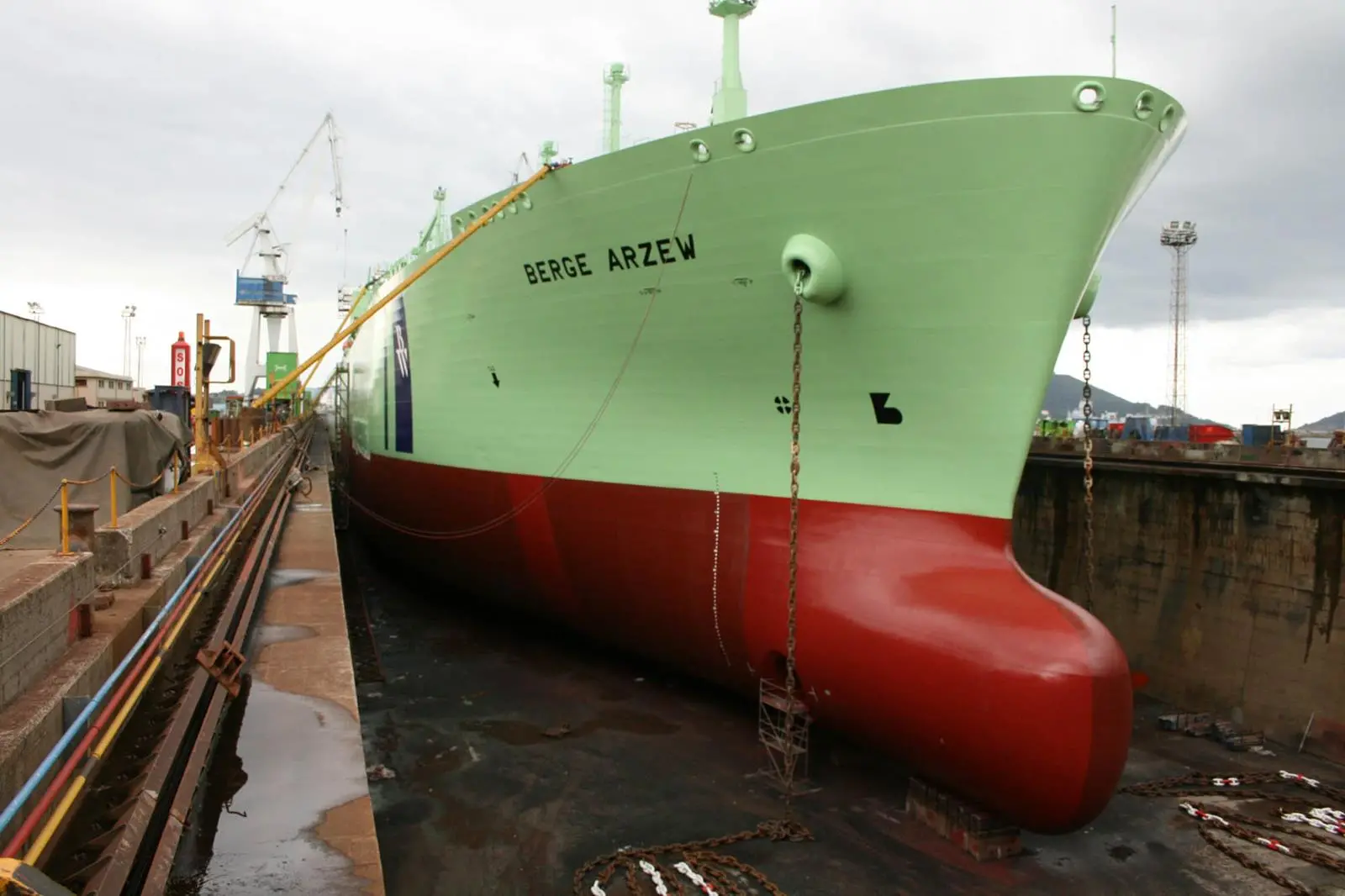
In mid-2009, AMC partnered with BW Gas in the application of its Green Ocean Coatings to large areas of the subsea and topside of an LNG carrier, Berge Arzew. This is the first ship to test AMC’s anti-fouling formulation, and results are said to be positive. AMC has also co-operated with Norwegian coastal passenger ferry company, Torghatten Nord, and tested several types of coatings to ferries with promising results.
After trying application by brush, roller and component spray, AMC found that two-component spray methods gave the best results, though the traditional one-component spray worked well.
AMC and its partners are working with Norwegian research institute, SINTEF, in an EU research programme under the name MUST along with several other large European institutes and companies including Daimler, Fiat, EADS, Chemetal and Sika. The aim of MUST is to develop new nano-container technology for inhibition of corrosion and for anti-fouling prevention. AMC’s development work is partly sponsored by Innovation Norway and the Norwegian Research Council
AMC says the international launch of its Green Ocean Coatings is imminent. Paal Skybak, managing director, AMC, says: “We want to deliver the greatest value to users, not only by developing an economical and ecologically friendly coating but also by advising on the best way to apply it.”
Related Articles
 PROPULSION
 GENERAL NEWS
 HYDROGEN