



Consultant Interest Revives Amid Need For Flexibility
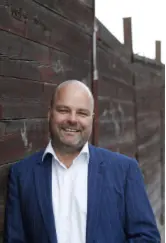
“There is often little room for fl exibility in these designs to modify them,” he said, referring to ones offered by yards, “such as lengthening them or adopting them to use an alternative fuel.”
This effectively mean that these ships often lack a strategy for a second life for them, something that is made more complicated by the fact that the choice of which fuel should be used in the later life of the vessel cannot be stated at this point.
“Perhaps the only thing we know that it will not be cheap to operate with HFO after Fit for 55 takes effect – it will add hundreds of millions of US dollars to the fuel bill (of shipping),” Orgaard said, referring to plans of the European Union to drastically reduce emissions to the air and which include shipping.
“Flexibilities are, therefore essential, in the design. Access to the original drawings is an important part of this, but shipyards often only give the owner a pdf of them, which cannot be edited,” he continued.
Consequently, some owners have started to develop designs of their own and then approach shipyards to launch a tender process. This was the case some seven to 10 years ago, so that one can see a certain cyclicality in these matters.
Changed landscape in ordering
One of the reasons that contributed to many owners’ decision to accept a design from a shipyard was a tight availability of building slots at major passenger ship builders. The cruise industry in particular expanded before the pandemic at a pace that had never been seen before, with more than 100 ships on order at the beginning of 2020.
It was easier for an owner to secure a slot by accepting a design from the shipyard rather than invite tenders from builders in that market situation. However, the Covid-19 pandemic has significantly altered the picture. Although no orders have been officially cancelled, the time frame to deliver the orderbook has been significantly extended and cruise ship builders have been forced to slow down their rate of production as a result.
It is possible that the cruise lines that accepted designs of shipyards did not necessarily see clearly what kinds of requirements their ships would need to meet in the future and consequently underestimated the challenges that would lie ahead.
At a recent gathering of the ferry industry, Orgaard presented a ropax ferry design from 2017 that used HFO and was fitted with scrubbers. He told his audience that this would probably be the last ropax project with HFO that he would ever present at such an event.
The pace of development in the technical sector in general and in the one regarding future fuels in particular is marching on at a very quick pace and only a handful of owners are likely to be able to keep track of these developments in detail.
“It’s no about a blame game, the future remains unpredictable. Still, it’s possible that an owner may blame a decision made in 2021 for problems that arise in 2035,” Orgaard pointed out.
Logistics ashore and on board major challenge
While ferries usually shuttle between two ports – although the crossing can take anything from a few minutes to more than 24 hours – cruise ships roam around the world. This means that the question of future fuel strategy is far more complicated for them and comes down to a handful of key challenges.
“The biggest challenge for cruise ships is the supply of fuel where it is needed and the logistics – both onboard and in the supply chain,” Orgaard summed up, pointing out that new fuels would take up more space onboard than oil.
It is becoming clear that batteries are becoming an increasingly attractive option to power ferries. Until recently, they could power a large vessel for some 40 to 50 minutes, whereas the figure is now in the region of two hours.
Projects such as Stena Elektra, the newbuildings of KiWi Rail and the Dover – Calais route newbuildings of P&O Ferries are either based on the use of batteries or have the future use of them factored in the design.
Hydrogen is a potential solution to power ferries that operate on longer distances, but generating the fuel in a clean way poses a major challenge. “When you transfer electricity from a wind turbine to hydrogen, you lose 60% of the energy. But if you put it in a battery, you only lose 10%,”
Orgaard pointed out. Infinite, clean nuclear energy would be needed to produce methanol for use in fuel cells, but until this option becomes available, challenges loom large. Ammonia and methanol are both potential solutions to drive large vessels in the future, but in smaller ships, such as many ferries, methanol or fuel cells and batteries could offer attractive solutions.
Fuels cells and batteries can also work well to meet the requirements of Safe Return to Port: while the first named should provide power for the voyage, batteries can be used to help to power the vessel to reach port in an emergency.
What is best for ship should lead design
OSK-ShipTech has identified five core pillars that it will have to meet to be able to serve its clients and deliver designs for ships that are future proofed as far as possible. The first one is to find out the size and operational profile of the projected ship. The second pillar is to appreciate that what is best for the ship should always be accepted as the way ahead – even if this meant a difficult decision to the owner, the shipyard, suppliers – or the designers themselves.
Familiarisation with the business model of the owner forms the third pillar in the project while remaining flexible to tackle the questions that come up sets the fourth pillar. Finally, the company has to act as a magnet for talent. “When yiou attract the right talent, you attract the right projects that again attract the right talent,” Orgaard pointed out.
The second pillar – putting an optimal design of the ship in the centre of the project – is often the most demanding one of the five key pillars. “But if you don’t make the right choices, you jeopardise the entire project. The green agenda is a huge part of the finance of a ship project,” he noted.
Traditionally, the green agenda has focused on what comes out of the funnel, but it is widening to include the life cycle of the vessel, from construction to recycling. OSKShipTech has teamed up with Danish environmental performance experts ReFlow and developed a system that allows the comparison of CO2 emissions of various materials that can be used in the construction and fitting out of a ship.
One fifth of the emissions through the lifespan of the vessel come from the materials used in construction, but there are vast differences in the CO2 emissions between materials used in interior design. As owners look at the total cost of ownership, this new platform will help them in assessing how to reduce emissions at the construction stage of their ships.
Future proofing ships continues to have its challenges, but flexibility of design to allow even major technological changes is a vital element to achieve this objective. A bird’s eye look at emissions will offer further help.
Related Articles
 INTERVIEWS
 CONVENTIONAL FUELS & OILS
 GENERAL NEWS