



CryoVac obtains AiP for liquid hydrogen carrier
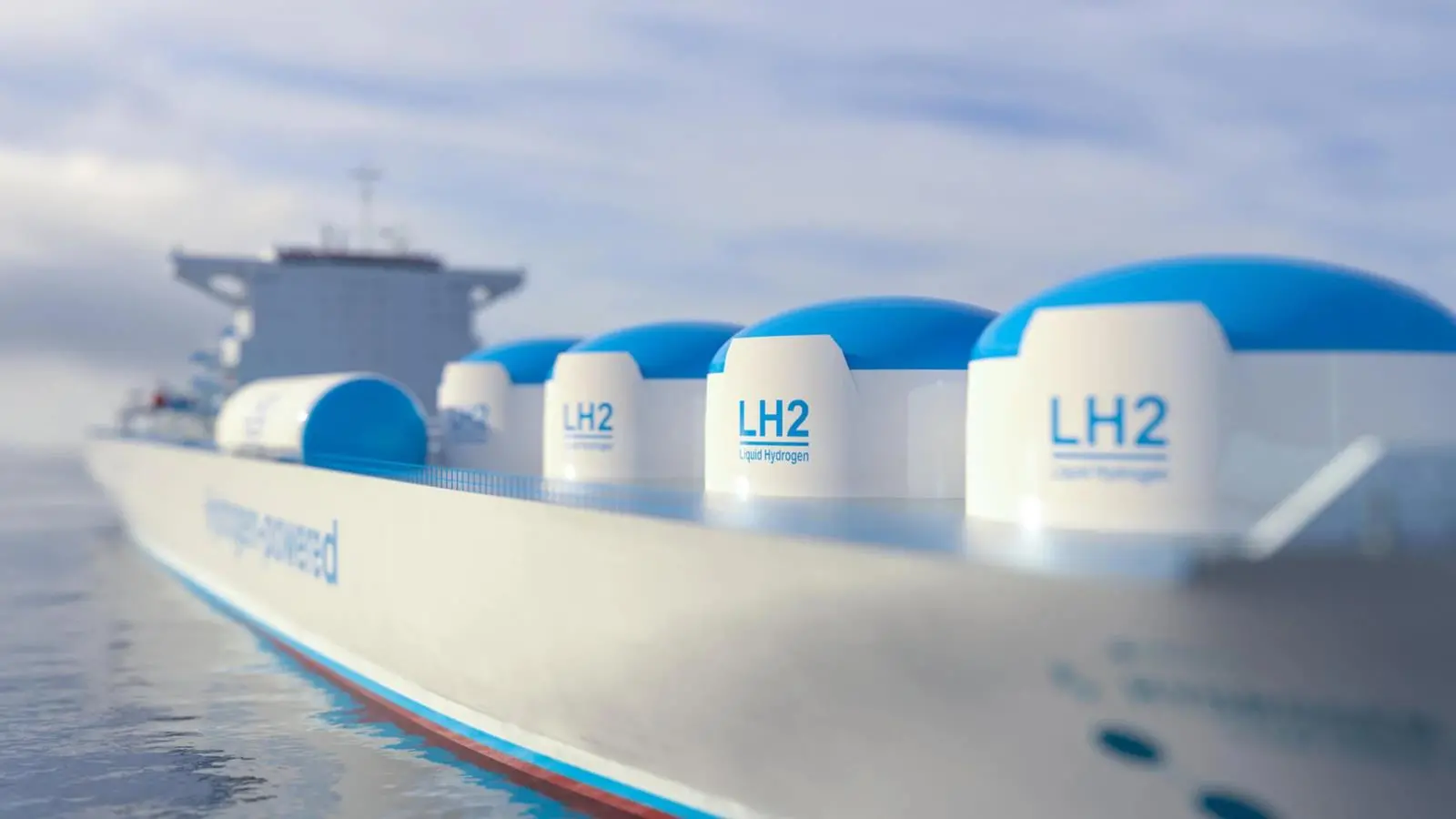
CryoVac, headquartered near Oslo, has developed a vacuum insulation system to address the challenges of storing and transporting liquid hydrogen, which must be maintained at an ultra-cold temperature of −253°C. Such low temperatures pose safety and material challenges, as steel can become brittle under these conditions, potentially compromising tank integrity.
The company’s solution, branded CryoPan, uses hexagonal vacuum insulation panels welded into continuous surfaces. This design offers robust insulation while minimising hydrogen boil-off, the process where stored hydrogen evaporates due to heat ingress. The tanks themselves are prismatic, based on existing ship storage designs, and are housed within an insulated compartment to ensure safety and efficiency.
“Our system enables simple prismatic tanks to be adapted for LH2, providing strong insulation and a very low boil-off rate without compromising steel strength,” said CryoVac CEO Aage Bjørn Andersen. He emphasised that DNV’s approval is a key step towards commercialising the technology and engaging with shipowners and designers aiming to lead in liquid hydrogen shipping.
The endorsement from DNV, a global authority on ship safety and technology, highlights the system’s compliance with maritime standards. “It is exciting to see solutions like CryoVac’s, which offer an innovative way to store and transport liquid hydrogen,” said Trond Berntzen, a senior representative at DNV Maritime. “Projects like this are crucial for developing safe and sustainable technologies for the future.”
Looking ahead, CryoVac plans to design a large-scale hydrogen carrier ship with a capacity of 45,000 cubic metres of liquid hydrogen. The vessel would not only transport hydrogen but also run on it, showcasing a zero-emission alternative for maritime shipping.
“There is increasing global interest in safe and cost-efficient methods for transporting liquid hydrogen,” said Andersen. “We aim to fill this technology gap and collaborate with shipowners and hydrogen producers to establish a global supply chain.”
Related Articles
 AMMONIA
 HYDROGEN
 HYDROGEN