



Cummins builds new marine partner network
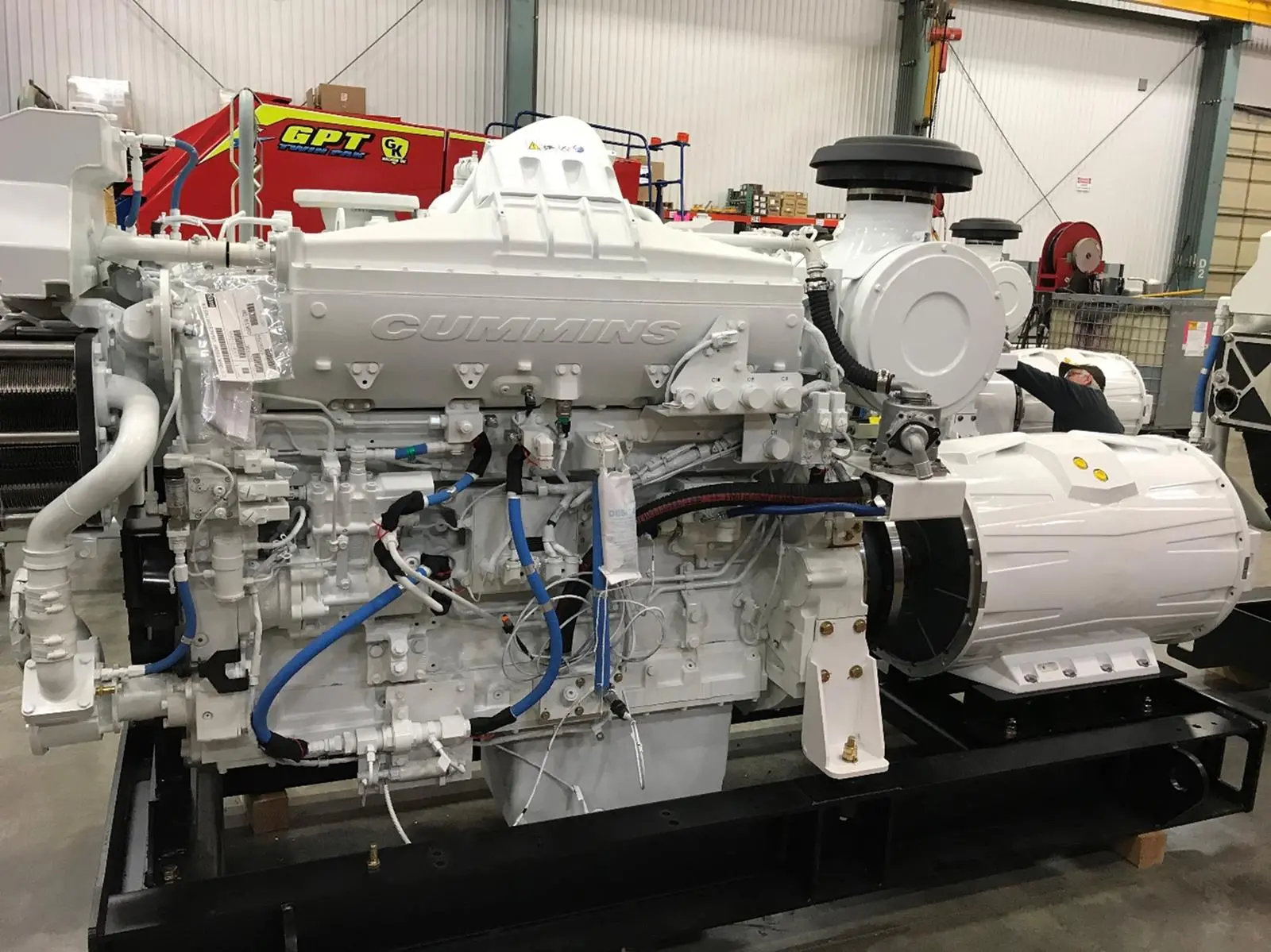
The partners will develop a set of standard solutions for marine propulsion including both engines and fuel cells along with variable-speed diesel gensets and energy storage packages.
In December, Cummins signed a framework agreement with Energys, an Australia-based hydrogen and fuel cell company, to work together on fuel cell powerhouse packages for marine and power generation, and it has now also signed an MoU with energy storage solutions provider Leclanché. This MOU enables Cummins and Leclanché to offer customers a wide range of hybrid, battery-only and fuel cell package solutions in marine and rail applications using a variety of power sources such as engines, hydrogen fuel cells, battery packs and racks, as well as other components.
The three relationships are helping Cummins achieve its Destination Zero strategy – the company’s plan to reach net zero emissions across its products by 2050. To support that goal in the marine industry, the company recently renamed its New Power segment Accelera.
Scott Malindzak, Cummins Director Global Marine Product Management, says that Danfoss’s power electronics, inverters and traction motors work well with Energys’s DNV-approved fuel cells and Leclanché’s energy storage systems. The standardisation the companies are aiming for will overcome the industry’s current challenge of bringing together componentry from different suppliers. Instead, the companies will work together and build systems ahead of time to ensure all the right pieces are in place and work well together. Although each vessel is unique, the commonality of the building blocks will ensure that their teams will have the knowledge they need ahead of time.

Malindzak says the partnerships will also satisfy the industry’s need for a global sales and service footprint. “We are able to pull these things together, not just for the upfront integration but also for back-end market support.”
Most demand, at present, is coming from Europe and the US, but Malindzak says they are ready to support other regions as well. “The industry is moving fast and potentially at scale towards decarbonisation, and these technologies are ways to get there. It’s either short-term, for bridging technologies, or longer-term decarbonisation. We see fuel cells taking more time to hit scale due to the cost of hydrogen and the cost of the fuel cells themselves. This could slow down adoption, at least initially, but we recognise we have to be on that journey now. There’s a lot of leaning to come with these systems once they get into the real world and operating.”
Both Cummins and Danfoss have already active in the hybrid marine power sector. Cummins has provided the power system for DCV Driftmaster for the US Army Corps of Engineers. A 3,000hp (2,388 kWe) main propulsion system has been combined with a 3.4 MWh energy storage system and a Danfoss generator (EM-PMI540-T4000).
In 2024, the short-sea ferry operator Molslinjen will introduce two 100% electric ferries, and Danfoss power converters feature on both vessels, powering battery power conversion on board as well as the vessel charging systems onshore. In addition, Danfoss drives will deliver precision control to the electric propulsion motors.
“This partnership is another step forward in Cummins’ Destination Zero strategy – our plan to reach net zero emissions across our products by 2050,” said Rachel Bridges, Global Marine Director, Cummins. “The respective products of Cummins and Danfoss’ are an ideal match, because both companies are focused on energy optimization, efficiency, and clean solutions. By providing a joint solution, we will be able to multiply our impact by bringing products and solutions to the market that are fully optimised for the marine industry. Our customers are looking for streamlined ways to meet complex regulations and decarbonisation goals, and together with Danfoss’ Editron division, we can help the marine industry.”
Looking further into the future, Malindzak sees Cummins targeting methanol for combustion. “When considering the use of methanol in our engines, it’s no big secret, changing fuels will ultimately change the performance of the engine. One way to mitigate this is hybridisation, add in battery power to make up for what you have potentially lost when you switch to fuels like methanol. That’s not in our portfolio right now, but it’s part of our forward thinking.”
Related Articles
 2-STROKE & 4-STROKE
 2-STROKE & 4-STROKE
 2-STROKE & 4-STROKE