



DESIGN STANDARDISATION COULD INCREASE THE ATTRACTIVENESS OF NEW FUELS
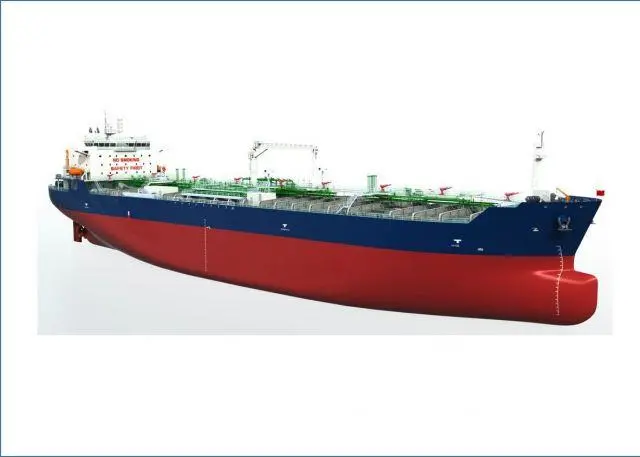
SDARI will focus on the ship concept development and design while RINA will verify compliance with the applicable rules. While the selected ship type is an MR tanker, the project, which is the first to investigate using both methanol and ammonia for this type of vessel, aims to increase understanding of the application of both fuels and identify opportunities for expanding the concept to other ship types including passenger vessels.
Giuseppe Zagaria, Director of RINA’s Excellence Centre in Shanghai, says a standardised approach can reduce costs and make the solution more feasible. Experience with methanol and ammonia as cargo will help inform the transition to bunker fuel, he says, although there will be new risks to evaluate, such as the different physical properties of the fuels and the possible consequences of a fuel leak. More space will be required to store the new bunker fuels, which both have a lower power density than traditional fuels.
MAN Energy Solutions continues to take a modular approach to refining its ME-GI (gas injection) and ME-LGI (liquid gas injection) engine technology and adapting it to a range of new low-flashpoint-liquid fuels. The engines are based on the conventional, electronically controlled ME-C engine with dual-fuel injection integrated as add-on parts. Due to differences in new fuel properties, the ME‐LGI injection system components and auxiliary systems are different from those of the ME‐GI engine, and MAN notes that the carbon-free nature of ammonia means that ammonia combustion physics will be different as will the fuel supply system. As ammonia is a toxic and potentially corrosive chemical, a complete system from fuel tank to engine is being developed, although it inherits its main features from the supply system for liquid injection. The future installation of an ammonia-combusting engine can be adapted to the customer, for example as a dual-fuel, modular retrofit solution for existing electronically controlled engines, as an ammonia-ready engine or from newbuilding.
“We encourage industry-wide partnerships for decarbonising the marine market,” says Brian Østergaard Sørensen, Vice President and Head of R&D, Two-Stroke Business at MAN Energy Solutions. “While two-stroke engine technology will likely retain its influence within deep-sea shipping for the foreseeable future, ammonia and methanol are fuels with a lot of potential as clean, zero-carbon fuels and with whom we have a lot of experience. We look forward to adding our expertise to the project.”
The project partners are taking a holistic approach to the tanker design. “We don’t just see a ship,” says Zagaria. “We look at the ship within the whole supply chain. We will raise the bar for risk assessment by taking into account operational parameters and by conducting risk analysis on all the operations that a ship undertakes.”
This fits well with shipowners’ perspectives, he says, particularly on financing the transition to new fuels, and sharing the knowledge gained by the design project will give shipowners the technical perspectives they need. “The project will give us new tools, new ideas and open up the door for further development.”
Decarbonisation is the most disruptive transition challenge facing the shipping industry, says Zagaria. As it is a completely new future scenario, the marine sector cannot do the job entirely alone and will need support in the form of new infrastructure and new fuel production technologies. He foresees a future with both combustion engines and fuel cells playing a major role.
“RINA’s ultimate goal is to help the marine sector move towards a hydrogen solution. Along this path, we are already seeing ships, depending on ship type, using different energy sources, and we believe that even the same ship, in the future, may use different energy sources for propulsion and onboard utilities as part of a complex operating profile.”
This will lead to new procedures and the need for crew training. “The human element is a very important piece of decarbonisation.”
The project with SDARI and MAN Energy Solutions is just one of many that RINA is involved in to support the industry as it achieves the level of decarbonisation required by the IMO.
Related Articles
 ALTERNATIVE FUELS & LUBRICANTS
 ALTERNATIVE FUELS & LUBRICANTS
 ALTERNATIVE FUELS & LUBRICANTS