



DFDS in Danish-led PEM FC-powered RoPax project
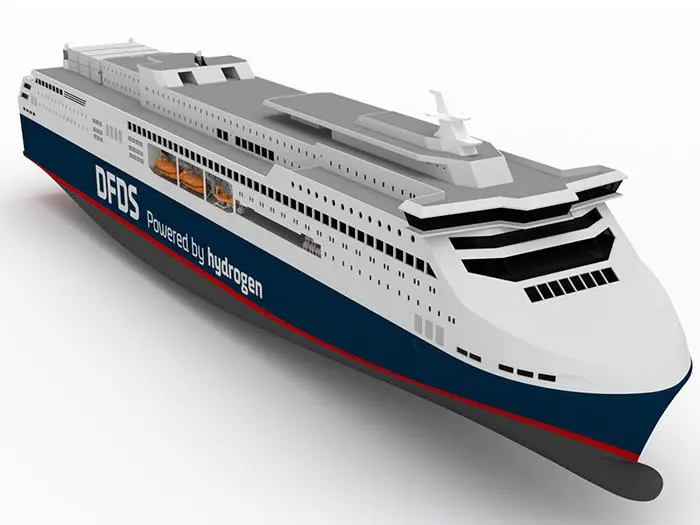
Partners in the project include ABB, fuel cell manufacturer Ballard Power Systems Europe, consultant naval architect firm Knud E Hansen, wind power generator Orsted, Lloyds Register and Danish Ship Finance.
While the external appearance of Europa Seaways, as the projected ship is known, bears a certain resemblance to the large ropax ferries that Knud E. Hansen, the Danish consultant naval architects on this project, produced for Finnlines some time ago, the vessel design is radically different.
While attention will focus on the power and propulsion system, Europa Seaways also includes a significant increase of lane metre capacity to 2,300m compared to the two cruise ferries that operate between Copenhagen and Oslo at the moment, said Mads Willeso, senior manager of innovation and partnership at Copenhagen based DFDS.
The fuel cell propulsion plant is at an early stage of its development, but Willeso noted that its projected 23MW output is far higher than the 1MW to 5MW which are currently on the drawing board or on order. The fuel cells will produce electricity from hydrogen that is stored in tanks onboard the vessel and replace the conventional diesel engine power plant, including auxiliaries, and the systems required to support them.
Weight of the new type of installation is one of the key aspects in the design, because hydrogen tanks will need to be placed on the weather deck aft of the accommodation block as they would take up a lot of valuable space under deck. The weight of the tanks plus the 40 to 50 tonnes of hydrogen that will be stored in them needs to be factored instability calculations of the ship, Willeso told The Motorship. The composite tanks will be supplied by tank manufacturer Hexagon Purus.
Although diesel engine installations are quite heavy, Willeso said that the new type of power plant will probably weigh roughly as much as a conventional one: converters and battery packs that will be needed in the hydrogen based system are very heavy as well. Consequently, the projected ship’s deadweight will be roughly the same as if it had been fitted with a conventional power plant.
DFDS intends to bunker the vessel only at Copenhagen, which means that the compressed hydrogen tanks will have to contain enough fuel for the round trip, which is about 700 nautical miles and takes 48 hours, which will also affect the size of the tanks. Willeso said that their exact size will also depend on the design speed of the vessel, which will be determined later.
From an operational point of view, the new vessel will differ markedly from the present tonnage on the route as far as bunkering is concerned. The two cruise ferries can make several round trips before they need fresh bunkers, whereas Europa Seaways will need fresh bunkers every other day. The hydrogen will be produced in the Copenhagen area by using an electrolyser plant, which will receive its energy from offshore wind farms.
The battery pack onboard is expected to be used to support fuel cells in providing peak power, said Jostein Bogen, Global Product Manager, ABB AS Marine & Ports in Norway, as well as providing ramp assist to fuel cells and peak shaving. “The final size of battery pack is not yet settled. These parameters will be important to calculate the battery capacity, as well as what will be the available charging power in port,” he told The Motorship.
“The partnership has applied for support from the EU Innovation Fund. As there are no ferries of this kind in the world today, the development of the ferry will also require public involvement. However, if the project develops as projected, the ferry could be in full operation on the route as early as 2027,” DFDS said in a statement.
Related Articles
 ALTERNATIVE FUELS & LUBRICANTS
 ALTERNATIVE FUELS & LUBRICANTS
 ALTERNATIVE FUELS & LUBRICANTS