



Diesel continues to gain ground over steam
The Motor Ship, September 1962, noted this view, but in its role as a flag-bearer for the marine internal combustion engine, said that the Diesel engine was being increasingly adopted for passenger vessels on economic grounds, the 35% to 50% greater fuel costs associated with steam turbines proving the decisive factor. Even so, this was offset by higher maintenance costs – about 10% more for Diesel engines – and extra weight, although the editorial reminded us that this was more than offset by the extra bunkers that had to be carried for ships travelling any distance. As far as capital cost was concerned, our predecessors suggested that Diesel plant enjoyed an advantage below about 10,000bhp, though at greater power, costs were equal.
The same issue mourned the passing of Shell’s tanker Auris, the first merchant ship with gas turbine machinery, which had been sold for scrap. This was seen as the end of an era, heralding the end of a class of machinery that had showed such promise. But this was countered by the thought that “inevitably, at some day in the distant future, a prime mover will be introduced that because of its efficiency or economy of operation and maintenance will replace the Diesel engine.” 50 years on, that day has not yet been reached, although LNG propulsion is seen by many as having the same impact on Diesel power as Diesel had on steam a century ago, and LNG-fuelled gas turbines look like a distinct possibility. “Is the gas turbine dead?” asked The Motor Ship. “Perhaps just sleeping.” Maybe they are correct.
Talking of LNG, the September 1962 issue provided a slightly surreal look into the future with a pair of articles on carried of liquid gaseous cargoes, and the design of gas tanks. Both were based on conference papers presented by French engineers; in fact the French seemed to be taking a leading role in these matters. The technical depth of these articles, indicating the amount of research that had been undertaken and the breadth of issues considered, means that they by no means look out of place beside the presentations at our own Gas Fuelled Ships conference. With LNG as fuel in the spotlight, and with gas carriers one of the few currently-thriving areas of sea transport and shipbuilding, it’s rather sobering to see that little is really new in our industry.
Another precursor to present-day shipping – and one which we have mentioned before – is the use of hoistable vehicle decks, such a vital component of the ro-ro and ro-pax ships of today, not to mention purpose-built car carrier vessels. A Swedish-built, Norwegian owned ore and general cargo carrier, the Ingwi, had been converted with vehicle decks, suspended from the deckhead on chains, to allow it to carry new cars exported from the BMC factories in Britain. The ship was intended to carry new vehicles to North America and return with a grain cargo. In an area now dominated by the Scandinavians, it is worth noting that the deck panels and frames, and the associated handling system, was developed by a British company, Fisher & Ludlow.
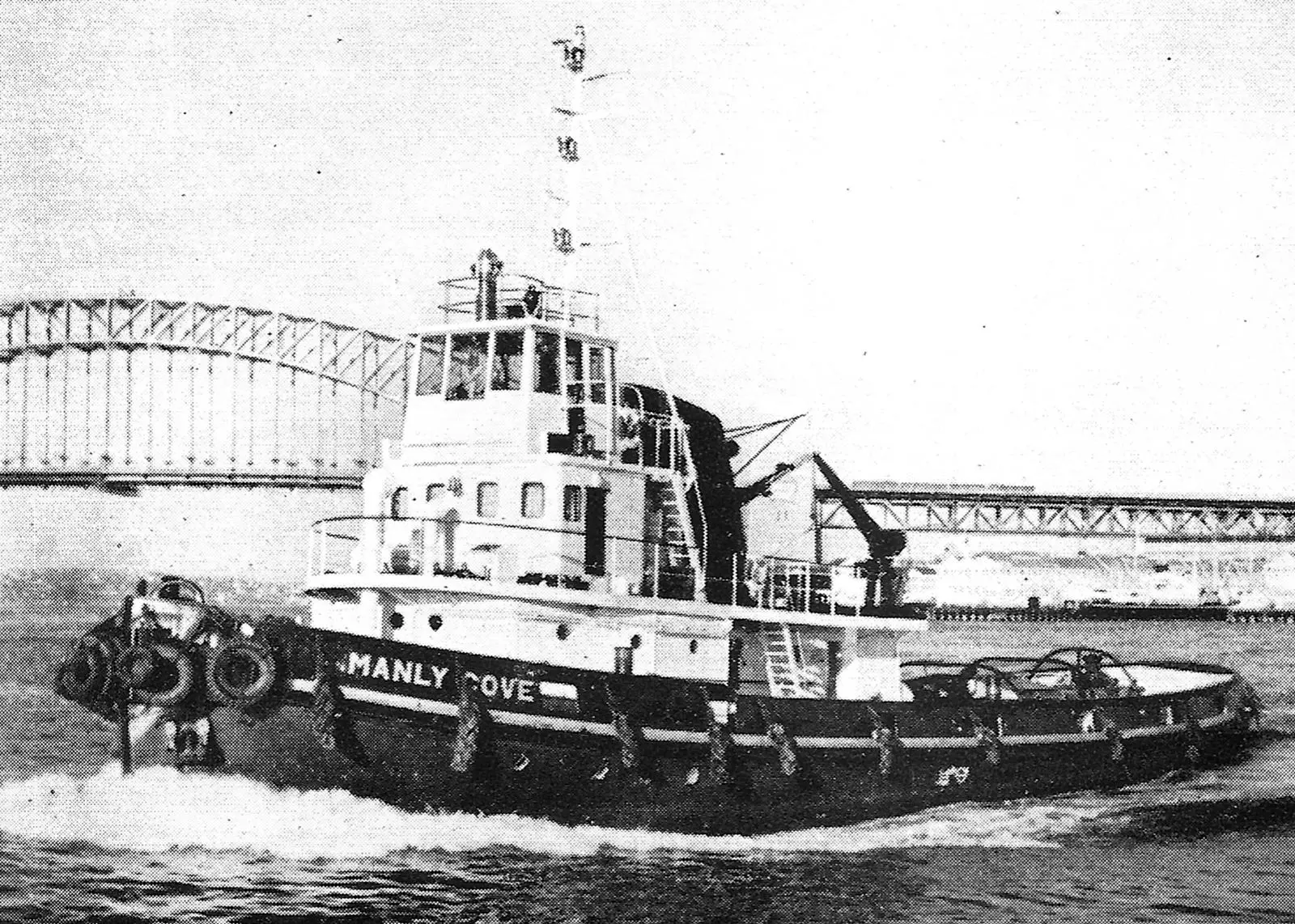
Tugs once again featured strongly in The Motor Ship 50 years ago, with an article on conversions of several Australian tugs from steam power to Mirrlees Diesel engines, which increased bollard pull from around 10t to over 21t. Another steam-to-Diesel tug conversion, this time carried out in the Netherlands, was described. This was notable for having a two-speed Hindmarch-MWD gearbox installed between the two Ruston engines and the propeller. This gave a high speed for transit to its salvage operations, and a lower speed for the salvage and towage work itself.
A Polish two-stroke engine, built at the Ceglieski Poznan works, was described. Although Poland had a successful shipbuilding industry, it had relied on licence-built designs and this was the first all-Polish engine design. The nine-cylinder engine, with chain-driven camshaft and three Napier turbochargers, was of 55cm bore and 100cm stroke, developing 5,000bhp at 150rpm. The article noted that it bore some resemblance to the Mitsubishi UEC design. It was installed in a 6,000dwt cargo liner, being built at Szczecin for the Polish Steamship Co.
Finally, Lloyd’s Register of Shipping had installed a computer to assist with ship design calculations. With 60kb of internal storage, it was said to have the power of much larger machines. As I am now using a pretty standard laptop with 4GB memory and a 750GB disc to type these words it shows how far this area of technology has advanced.
Related Articles
 50 YEARS AGO
 50 YEARS AGO
 50 YEARS AGO