



Digitalisation solutions and hydrogen broaden GTT’s focus areas

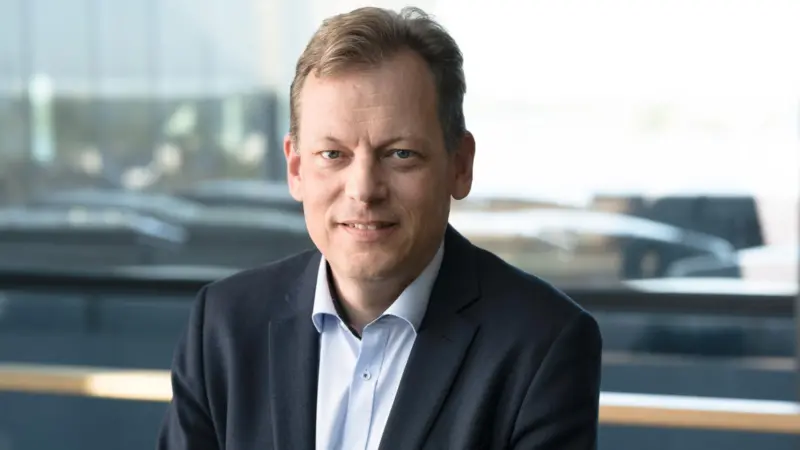
GTT is planning to establish three separate pillars to underpin the business, including its core LNG business, a new focus on hydrogen solutions and its digital business, Anouar Kiassi vice president of Digital & Information at GTT said.
The three verticals will pursue independent growth strategies, but will also benefit from technical and commercial synergies within the Group.
From the perspective of GTT’s digital services, this will build on the steady growth in the range of services that it offers to its customers since the middle of the last decade, Kiassi added.
While GTT has invested in enhancing its own digital capacities over this period, it has also made a series of acquisitions. In 2017, GTT acquired a Singapore-based fuel analysis and monitoring company, Ascenz, and this was followed by the acquisition of Marorka in 2020, which had an established energy monitoring and optimization systems service installed on over 600 vessels.
Kiassi noted that the two constituent businesses which form the core of GTT’s digitalisation solutions had been early movers. “You could call them kind of pioneers”, Kiassi said.
Ascenz was one of the first companies if not the first companies to introduce digital solutions into the bunker measurement market, and Marorka began producing environmental emissions analysis for its customers well before current environmental regulations came into effect.
Kiassi became animated when he discussed how integrating GTT’s core expertise in LNG containment systems with these wider digitalisation solutions created additional benefits for customers.
“One of the big opportunities our solutions offer is to help improve the operational performance of our customers assets. I think our customers intuitively understand that how a ship is operated over the course of a term charter, or even a voyage, can make a big difference in a ship’s efficiency.
However, the variables involved in managing a vessel efficiently during a voyage are much greater than minimising unnecessary acceleration and deceleration during a long autoroute journey, Kiassi explained.
Route optimisation is an important part of the story, and forms a part of GTT’s offering, but there are wider considerations about ensuring assets on board are operated efficiently.
GTT had experience in offering advice in areas as diverse as hull and propeller performance, trim optimisation, and optimisation relating to LNG fuel transportation.
One aspect of the solution was that it would allow ship operators to optimise for different variables, ranging from fuel consumption to shortest transit time to environmental emissions.
Kiassi noted that while fuel consumption would typically be the important KPI for customers, there may be some scenarios where a ship operator may prioritise CII, if “you have a catastrophic CII score and you’re reaching the end of the year, for example”.
The variables considered by the solution also included specific voyage routing optimisation to minimise the impact of sloshing on membrane containment vessels, as well as the loss of LNG cargo during transit as a result of boil off. This was an area where GTT researchers had world leading expertise and insights.
“When it comes to vessels that can be fuelled with LNG or vessels that carry LNG as cargo, we are convinced that we have the most comprehensive understanding on how all these things work.”
GTT Sloshing Sensor
GTT’s ‘Sloshing Virtual Sensor’ is developing a digital twin solution for sloshing activity assessment to optimise the LNG membrane tank maintenance frequency.
The solution will allow the survey frequency for membrane containment tanks aboard LNG carriers
to be extended, subject to the approval of the request for a Tank Alternative Survey Plan by GTT, the classification society and the flag state.
A joint project with Lloyd’s Register and Lloyd’s Register and Shell International Trading and Shipping Company Limited (STASCO) demonstrated that the Sloshing Virtual Sensor could predict the impact of sloshing on the inside of a membrane containment tank and the pump tower on board an LNG carrier.
Digitalisation for LNG containment
In fact, Kiassi noted that the scope of GTT’s digital solutions was expected to extend into streamlining the management of the company’s existing containment solutions.
Kiassi noted that as ships integrate more and more energy saving devices to improve their operational performance, this is adding greater and greater complexity to the coordination of all these systems.
“The more we add systems on board to optimise the overall energy performance of the system, the more you will need intelligence to hide the complexity. And the crew will be for sure overwhelmed with all the systems they will have on board, they might have carbon capture, they might have LNG, they might have sub coolers, they might have wind sails, they might have air lubrication, they will have plenty of things.”
Kiassi provided a little more detail, discussing the expected increasingly close interaction between the containment system and connected sub-systems.
“Although we refer to the containment system as a passive system, the management of the system’s thermal dynamics requires a lot of active systems on top. GTT is developing some of these actually for [a major container vessel operator], such as our recent Recycooler system.”
Kiassi explained that managing the interaction between active systems alongside the company’s traditional membrane containment technology would also require the development of automated control systems.
“This is an area that we are actually moving into, which is to look at how you automate the active systems, how you control them, and how you ensure that the passive and active work together perfectly. We expect that digitalisation will act as the brain.”
Machine Learning and AI
Looking further ahead, Kiassi noted that advances in data analytics were also leading to the development of new solutions.
“The overall vision is really that there will be plenty of solutions to optimise the environmental and energy efficiency of the vessel. The reason why we engaged into this digital journey is to really help make all these things work together as efficiently as possible.”
The ability to produce machine learning (or IA) hybrid models, combining data and physics, and simulate thousands upon thousands of different situations opens up the door to endless applications, Kiassi explained.
The uses of these models could range from techno-economic modelling to calculate the overall environment emissions of a design modification over the lifecycle of a vessel against its impact on an asset’s total cost of ownership, through to simulations of the impact of product refinement on a modelled fleet of vessels over their operational life.
In 2020, GTT speed up the integration of artificial intelligence analytics for energy systems in its existing products by the acquisition of the French AI company, OSE Engineering.
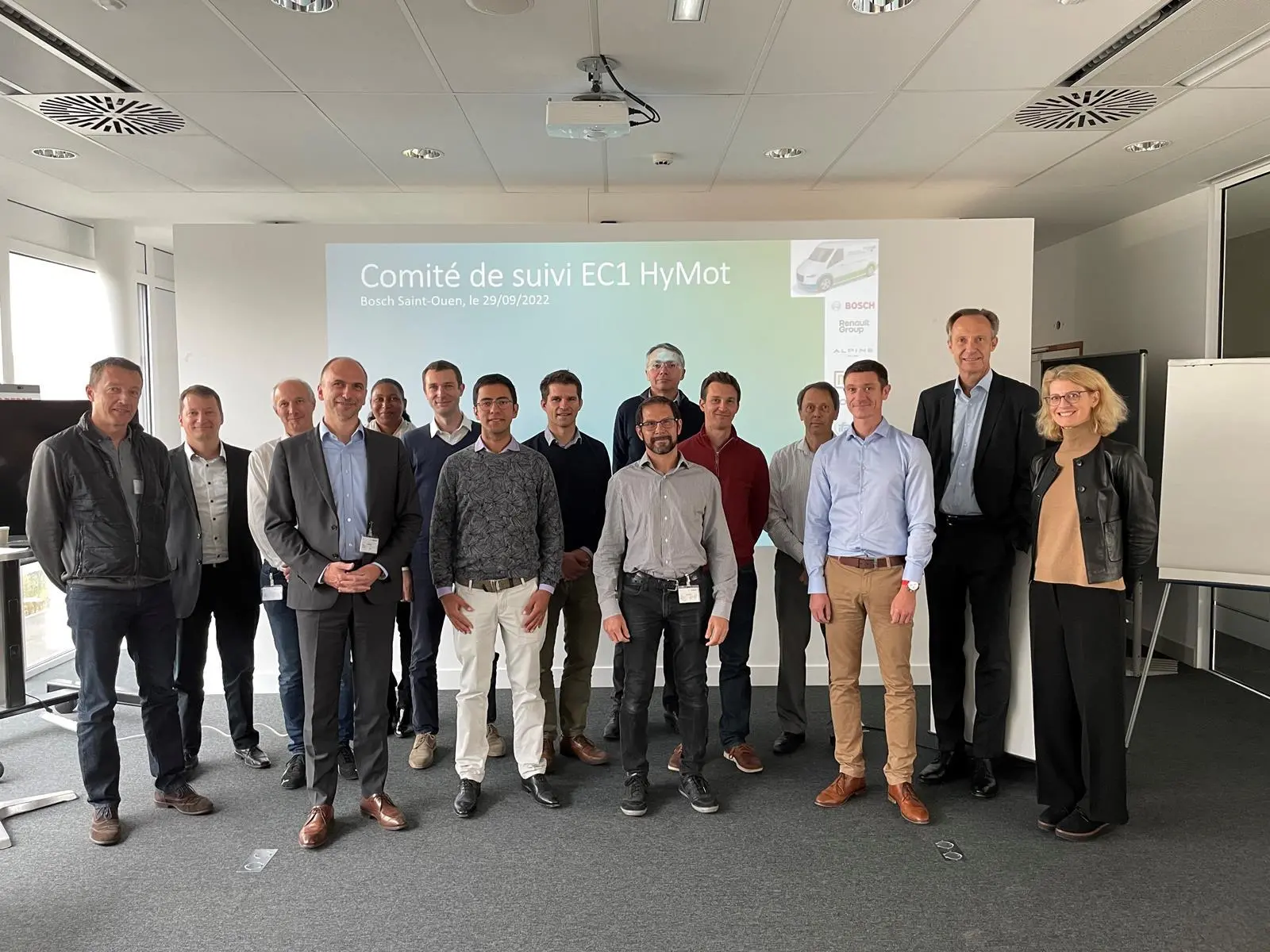
OSE Engineering is participating in several new projects on behalf of GTT, including a pilot project into the development of a hydrogen fuelled lightweight utility vehicle, and a separate pilot project into the development of a wind-assisted vessel operating on alternative fuels that will incorporate a carbon capture system.
Related Articles
 INTERVIEWS
 CONVENTIONAL FUELS & OILS
 GENERAL NEWS