



DNV awards AiP to HD KSOE for electric propulsion LH₂ carrier
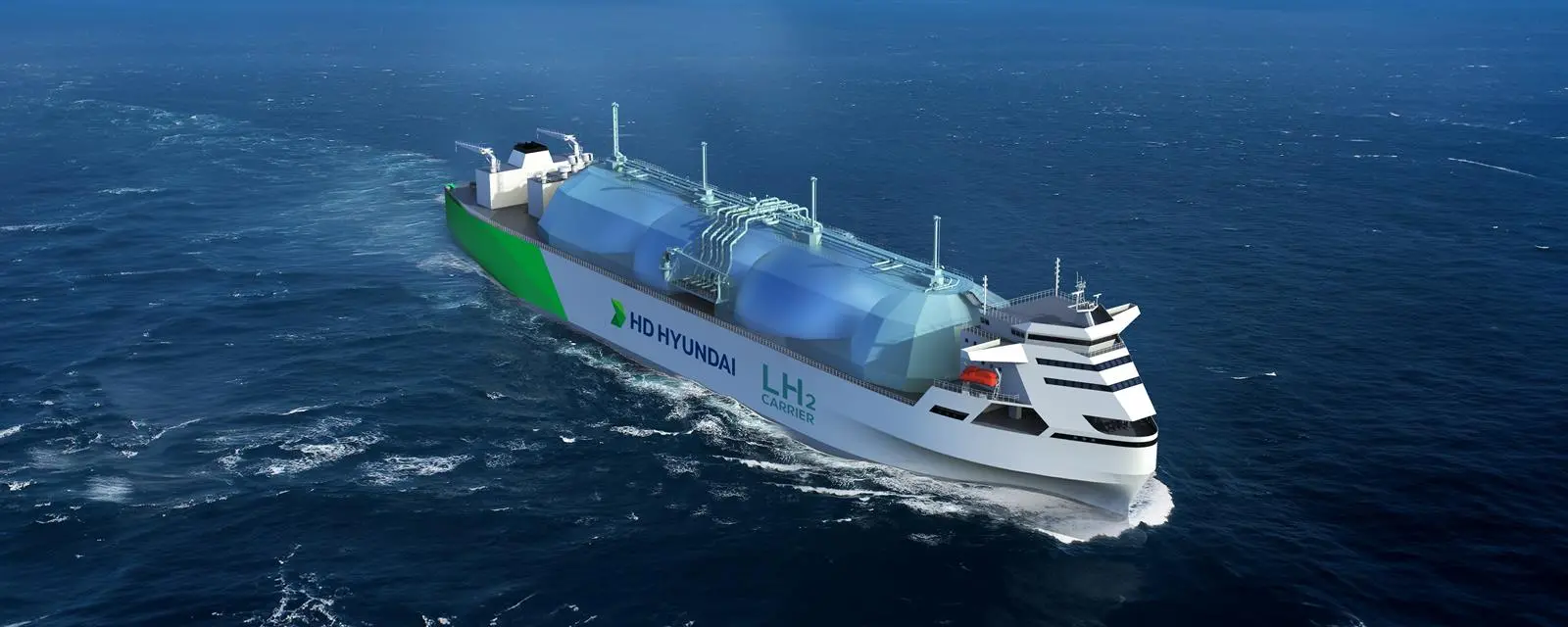
This significant milestone is part of a wider collaboration involving key industry players, including HD KSOE, Woodside Energy, Hyundai Glovis, and Mitsui O.S.K. Lines (MOL), aimed at establishing a large-scale, integrated maritime transportation value chain for liquid hydrogen.
HD KSOE’s design concept features new large-scale liquid hydrogen tanks, developed by HD Hyundai, equipped with advanced vacuum insulation technology. The carrier is powered by an electric propulsion system driven by Hydrogen Dual Fuel HiMSEN engines, allowing for flexible operation between diesel and hydrogen. In addition, the vessel’s newly optimized hull design and cargo handling system aim to enhance operational efficiency and provide greater commercial flexibility.
The AiP from DNV confirms that HD KSOE’s LH₂ carrier design concept meets the requisite safety, environmental, and technical standards for the safe and efficient transportation of liquid hydrogen. As part of the approval process, DNV also conducted in-depth Hazard Identification (HAZID) and Environmental Impact Identification (ENVID) studies to evaluate and mitigate potential risks associated with the vessel’s design and operation.
“This AiP from DNV is a critical validation of our efforts to develop a reliable and cost-effective LH₂ carrier,” said Chang Kwang-pil, chief technology officer of HD KSOE. “Achieving this requires a collective effort across the LH₂ shipping value chain, and we are committed to driving innovation through collaboration.”
Julie Fallon, executive vice president of Technical & Energy Development at Woodside, praised the progress made, stating: “This collaboration is a key step in building cost-effective, large-scale liquid hydrogen shipping solutions to meet our customers’ needs.”
Tae Woo Kim, senior vice president of Hyundai Glovis’ Shipping Business Division, emphasized the importance of the process: “Through this collaboration, we have identified hazards, assessed risks, and reviewed mitigation measures. This will guide us in ensuring the safety of lives, cargo, and the vessel.”
Jotaro Tamura, managing director of MOL (Asia Oceania), echoed these sentiments, noting that MOL joined the project in early 2024 and looks forward to contributing its extensive shipping expertise to the development of a hydrogen supply chain.
Vidar Dolonen, DNV’s regional manager for Korea & Japan, concluded: “This AiP represents another important step towards realizing a global hydrogen economy. DNV is proud to support the development of safe and efficient long-distance LH₂ transportation solutions.”
As the maritime industry moves towards decarbonisation, the development of such hydrogen carriers is seen as a crucial component in supporting a global transition to cleaner energy sources.
Related Articles
 ALTERNATIVE FUELS & LUBRICANTS
 ALTERNATIVE FUELS & LUBRICANTS
 ALTERNATIVE FUELS & LUBRICANTS