



Don’t compare LNG with green ammonia: SEALNG
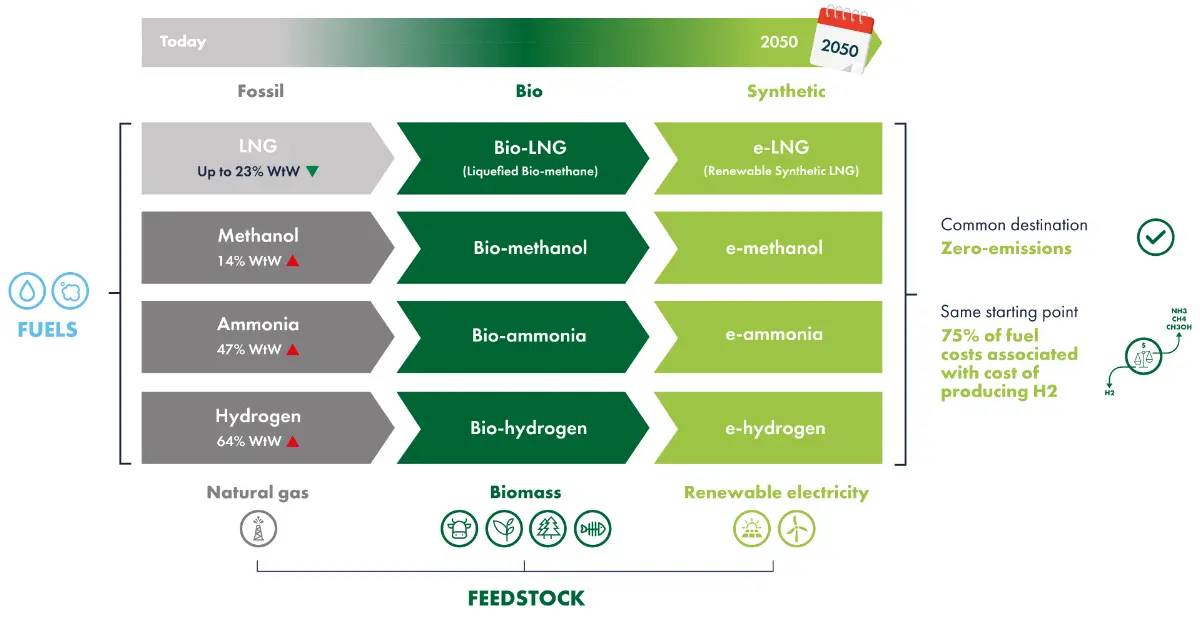
Discussion of alternative fuels too often compares the green versions of ammonia and methanol with fossil, or grey, LNG, says SEA-LNG. These green versions of ammonia and methanol are still some years away from commercial readiness, and should rightly be compared with green versions of methane, such as bio-LNG or e-LNG (renewable synthetic LNG).
All alternative fuels share a common pathway, starting at fossil-based versions and ending at low and zero-emission hydrogen-based, synthetic fuels. These synthetic fuels will only become widely available when sufficient renewable electricity and electrolysis capacity comes online to produce them. This is likely to occur incrementally as fuels are gradually decarbonised by blending with increasing amounts of low and zero-emission drop-ins.
Natural gas, and sometimes coal, is the feedstock for almost all methanol, ammonia and hydrogen production. While LNG offers significant greenhouse gas emissions reduction when used as a marine fuel compared with VLSFO, fossil methanol, ammonia and liquid hydrogen have far higher emissions on a well-to-wake basis because of the large amounts of energy needed for their production. This will delay their adoption until a synthetic or biogenic version is available.
Committing to solutions which rely on alternative fuels that will not be available at commercial scale in a renewable form for the foreseeable future, means owners locking in higher-emission and higher-cost decarbonisation pathways. LNG as a marine fuel delivers immediate GHG benefits and a lower risk, lower cost, incremental pathway to zero emissions.
Figure 1: all alternative fuels share a common pathway
Steve Esau, Chief Operating Officer, SEA-LNG, said: “The industry needs to consider the pathway to decarbonisation, not just the destination. There are consequences to delaying the shift from fuel oils, which will cause faster rising cumulative emissions. Shipping needs to assess fuel pathways based on how they can deliver decarbonisation benefits now, and in the future, and also the likely cost of these pathways.”
Figure 2: comparing alternative fuel pathways for a dual-fuel 14,000 TEU container ship
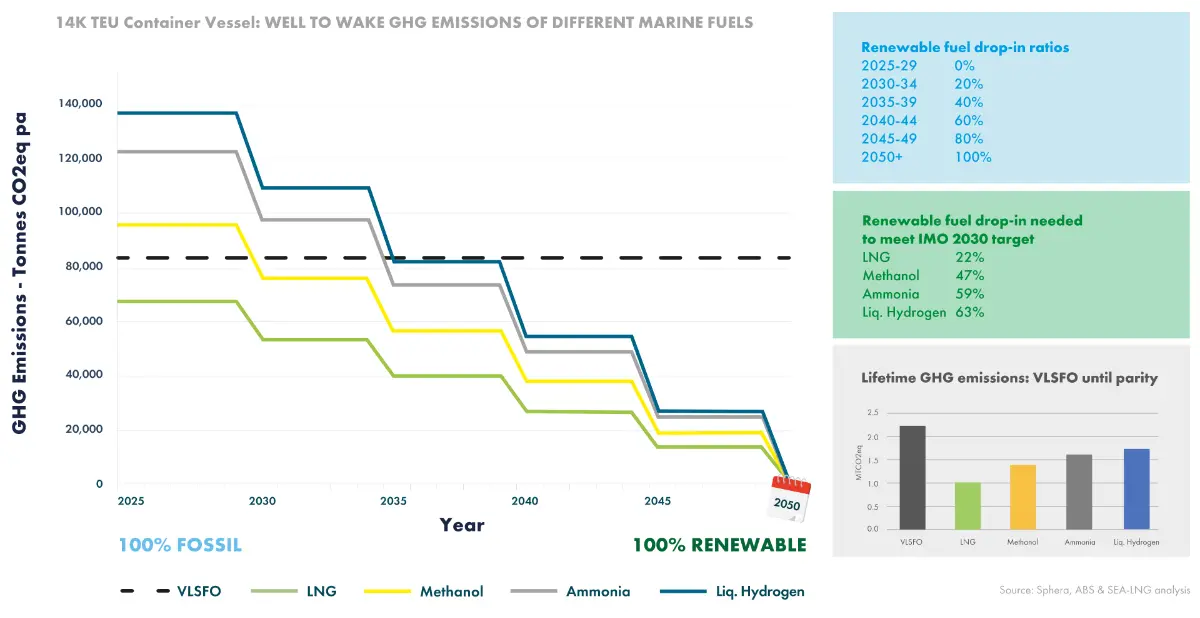
SEA-LNG provides the example of a dual-fuel 14,000 TEU container ship, operating from 2025, with a 25-year lifespan. Over its operating life the different fuel pathways are compared against a VLSFO baseline, assuming increasing levels of drop-in renewable fuels as they become available at increasing scale from about 2030 onwards.
LNG offers immediate GHG reductions and decreasing to zero-emissions by 2050. Methanol and ammonia pathways start from a worse place than LNG, because emissions are, respectively, 14% and 47% higher than VLSFO.
Owners and operators choosing methanol and ammonia pathways will be forced to continue using VLSFO, which offers lower emissions initially than their chosen fuels. This will postpone emissions reduction for several years.
For methanol and ammonia to achieve emissions parity with fossil LNG they will require blends of approximately 30% renewable methanol and 50% renewable ammonia.
Related Articles
 AMMONIA
 AMMONIA
 AMMONIA