



Dutch prepare for LNG technology revolution
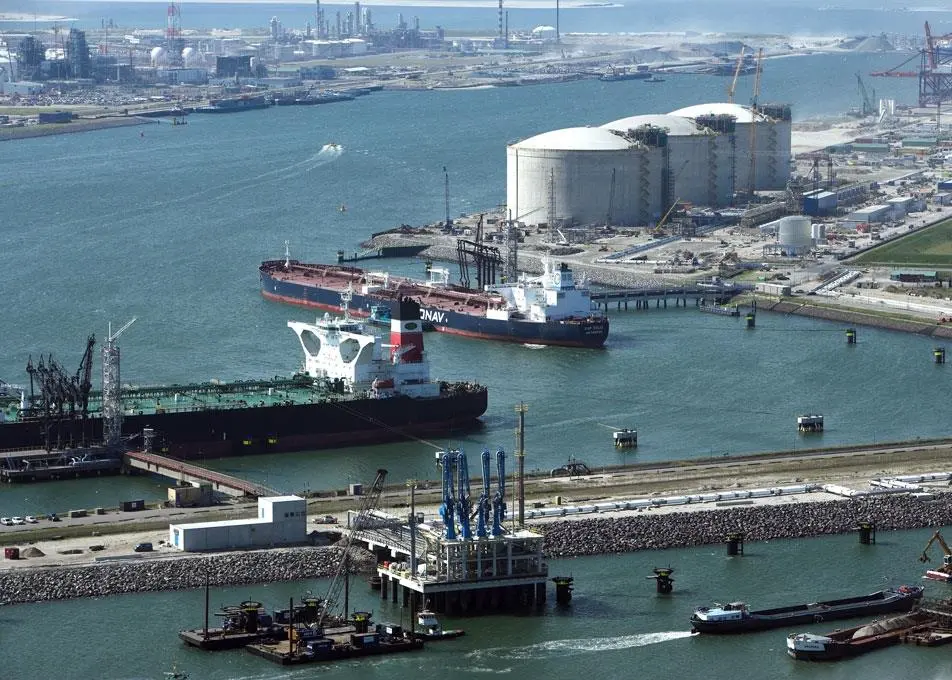
Bold projections have been made for the potential of LNG as a marine fuel. Using LNG reduces NOx and CO2 emissions from ships, as well as allowing operators to meet restrictions set in ECAs today, which tighten from 2015 onwards.
With the clock ticking, the coming legislation and the potential for LNG fuel as a viable choice is expected to be a key focus at Europort 2013, to be held in Rotterdam in November 2013. The LNG option offers a clear alternative to low-sulphur MGO, which is already favoured by some owners for use within ECAs. Its attractions offer even more promise beyond 2015, particularly if not enough distillate is available to meet market requirements and alternative ‘scrubbing’ technologies to continue burning heavy fuel oil remain insufficiently mature.
However, there are significant obstacles to be overcome, including developing the necessary bunkering infrastructure to support LNG as an alternative to heavy fuel oil and distillates, and completion of regulations on shipboard storage of LNG.
Encouraged by government backing and in line with the hub status of Dutch terminals along the Northern port range, companies based in the Netherlands are taking a lead in promoting LNG as a marine fuel. Many are set to give a first-hand account of their ground-breaking progress in as part of the Europort Advanced Technology Conferences.
For the Port of Rotterdam itself, LNG as a fuel has already been earmarked as a strategic growth opportunity, with the port predicting that it will become a LNG bunkering hub by 2030. With this in mind the port has formed a new partnership with the Port of Gothenburg looking to promote LNG fuelling, and aiming to have LNG bunkering facilities in place in both locations by 2015. Rotterdam is looking at similar deals with other ports, with a view to creating an end-to end-network of LNG bunker opportunities.
Maurits Prinssen, Project Manager at the Department of Port Planning & Development/ Shipping of Port of Rotterdam, says: “Commitment at the European level is needed for this and the partnership with the Port of Gothenburg will be a very important strategic alliance. We believe that Europort 2013 will offer the ideal networking opportunity for key industry players to exchange knowledge and experience as the industry faces a turning point on fuelling.”
A leader in terms of firm commitments to LNG as a fuel has been Deen Shipping, which has been operating the inland waterway barge Argonon for almost a year. The 110m long, 6,060dwt tanker has been designed to burn an 80/20 mix of LNG and diesel.
Company owner, Gerard Deen says: “The first 12 months of running this barge have been an extremely positive experience, and this has convinced us that LNG is the fuel of the future for inland shipping. Operating the Argonon has demonstrated that LNG as a fuel is very clean, cost efficient and reliable compared with marine gas oil.”
Argonon has two standard Caterpillar 3512 engines that use the 20% diesel to ignite the gas mixture. These engines have been modified by Pon Power so that the combustion air is enriched with natural gas. Argonon also has two gas turbines to power the electrical system.
Dutch expertise is also at work in its shipbuilding sector, where the Peters Shipyard, in Kampen recently confirmed receipt of an order for two new LNG-powered tanker barges from Interstream Barging, which will be chartered by Shell Shipping. The 110m long vessels will operate along the Rhine as far south as Switzerland, with the first due delivery to Shell in spring 2013.
Damen group’s Bodewes Binnenvaart shipyard recently teamed up with the inland shipping company QaGroup to launch the LNG inland waterway vessel ‘Ecoliner’ concept. Permission to use LNG as fuel on this BV-classed vessel has been granted by the Central Commission for the Navigation of the Rhine and the United Nations Economic Commission for Europe (ADN-UNECE).
A recent Lloyds Register study, LNG-fuelled deep sea shipping – the outlook for LNG bunker and LNG-fuelled newbuild demand up to 2025, uses a base case scenario envisaging 653 LNG-fuelled newbuildings entering service worldwide with LNG bunker demand reaching 24 million tonnes in the period to 2026.
The LR report suggests that European ports and terminals are well placed to develop opportunities for LNG as a fuel in the run up to 2015, given the high frequency of calls made by short sea ships operating predominantly or permanently in ECAs. A different study from the Danish Maritime Authority projected consumption of LNG as a marine fuel as reaching 4 million tonnes annually in the Nordic region alone by 2020.
The infrastructure to support shortsea trade could then offer the potential for LNG fuelling to ‘cascade’ eventually into deep sea trade, LR observes. However, LR points out that the key driver – demand – is highly dependent on the relative price of LNG to competing fuels, such as HFO and MGO.
Related Articles
 ALTERNATIVE FUELS & LUBRICANTS
 FUELS & LUBRICANTS