



Ecomar Propulsion trials hydrogen electric vessel
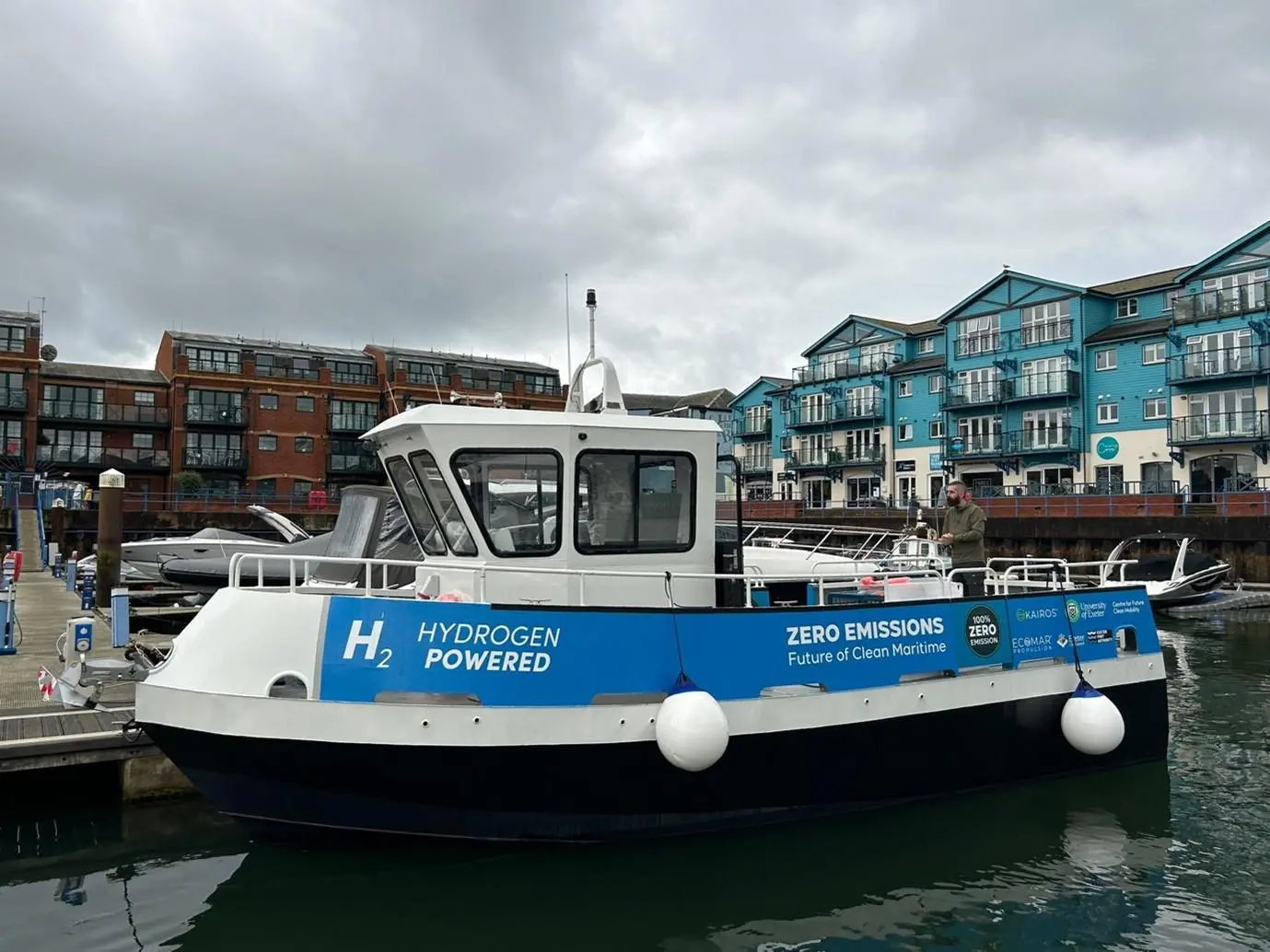
MV Dirac (pictured), named in honor of British physicist and Nobel laureate Paul Dirac, has been launched at Exmouth Harbour and is now in the final phases of fitting out.
Ecomar Propulsion engineers are currently completing the installation of Dirac’s cutting-edge power systems, an advanced setup that combines lithium-ion batteries with hydrogen fuel cell technology to significantly extend the vessel’s range. Notably, this installation is being carried out while the vessel is afloat—demonstrating the agility and practicality of Ecomar’s approach.
The vessel’s innovative design features twin 250kW Ecomar Kairos motors and a 180kWh lithium-ion battery system, complemented by portable hydrogen fuel cells supplied in BOC Genie cylinders. The compact cylinders allow flexible, on-demand refuelling, bypassing the need for costly infrastructure upgrades at the port.
Grahame Forshaw, Harbour Master at Exeter Port Authority, highlighted the practical advantages of the fuel setup: “Hydrogen refuelling with portable bottles is an economical solution for ports, avoiding extensive infrastructure investments. The hydrogen bottles are as manageable as standard gas canisters, and the batteries can be charged directly from the pontoon, making the shift to clean energy remarkably straightforward.”
In collaboration with the Centre for Clean Future Mobility at Exeter University, data will be gathered from Dirac’s operations to further refine the vessel’s propulsion system. The Centre’s Director, professor Chris Smith, noted the significance of the trial: “MV Dirac represents years of work supported by the government’s Clean Maritime Demonstrator Call, allowing us to showcase a robust hydrogen-battery hybrid propulsion system. The insights from operating Dirac on the River Exe will support future clean maritime initiatives.”
MV Dirac is based on a NATO Combat Ready Boat platform but has undergone extensive redesign to integrate its eco-friendly propulsion technology. As Ecomar Propulsion’s CEO, Eugene Bari, explained, “We named her Dirac because she embodies the best of British engineering and innovation. Launching this vessel here in the South West, with its deep maritime tradition, is particularly fitting.”
The Port and Ecomar team will continue to adjust and optimize Dirac’s systems as she undergoes an extended series of trials over the coming months. Once commissioned, she is expected to handle a full range of port operations, potentially replacing combustion-powered vessels in routine service.
Bari emphasised the broader goal: “Our work with Exeter and other forward-thinking ports aims to demonstrate that the transition to clean maritime energy is not only achievable but also advantageous for the communities and businesses around our waterways. Britain has the opportunity to lead in decarbonising maritime transport, and we look forward to engaging with local communities around the River Exe to discuss the vessel’s performance and address any questions they may have.”
Related Articles
 AMMONIA
 HYDROGEN
 HYDROGEN