



EEDI will encourage alternative propulsion technologies
Because of their high block coefficients, hydrodynamic options to improve their efficiency are limited without having an impact on their cargo capacity, which would itself have an adverse effect on EEDI. Instead, ducts and other flow improving devices, together with a focus on propeller design, are among the options likely to become popular.
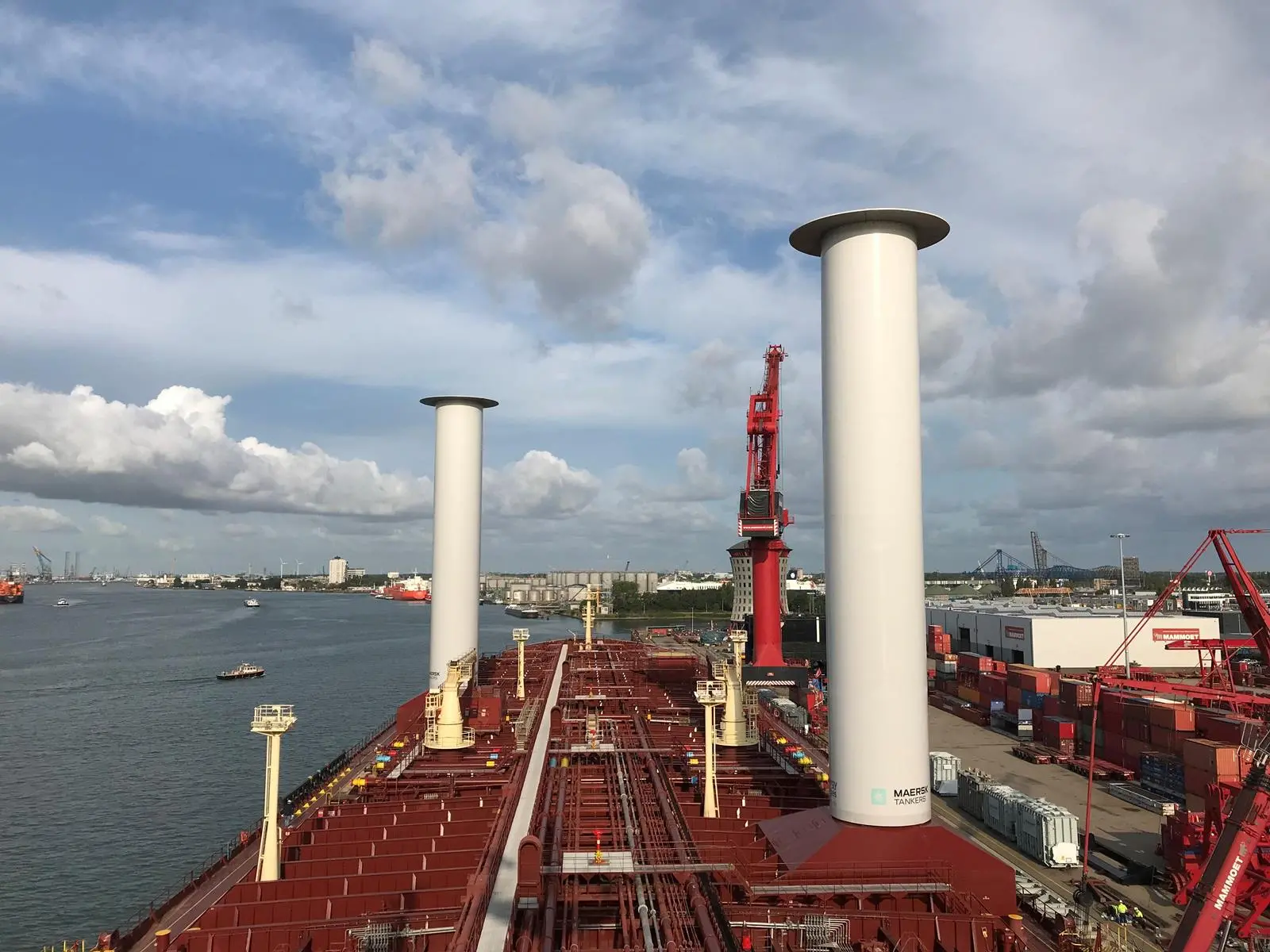
He also expects to see more interest in technologies such as wind assistance, citing the experimental Norsepower Flettner rotors that were fitted to the 109,647dwt product tanker Maersk Pelican in August 2018 and which Maersk Tankers’ chief technical officer, Tommy Thomassen, said in a webinar in June this year had made a valuable impact on fuel consumption.
A key consideration is to reduce the installed power, so there are likely to be more integrated generators in the shaft line to generate auxiliary power more efficiently, which will reduce the ship’s EEDI. If these are combined with a battery energy storage reserve, these generators could be used as motors to provide additional power in adverse conditions, he said.
Hybridisation “is a highly probable way” of balancing what he described as the contradictory demands of minimum power requirements for safety while reducing installed power to meet EEDI targets, he said.
Related Articles
 BATTERIES, SUPERCAPACITORS, FUEL CELLS AND OTHER ENERGY STORAGE TECHNOLOGY
 BATTERY HYBRIDS & FULL-ELECTRIC VESSELS
 BATTERY HYBRIDS & FULL-ELECTRIC VESSELS