



EFFICIENCIES WILL ENCOURAGE THE DIGITAL SWITCHOVER
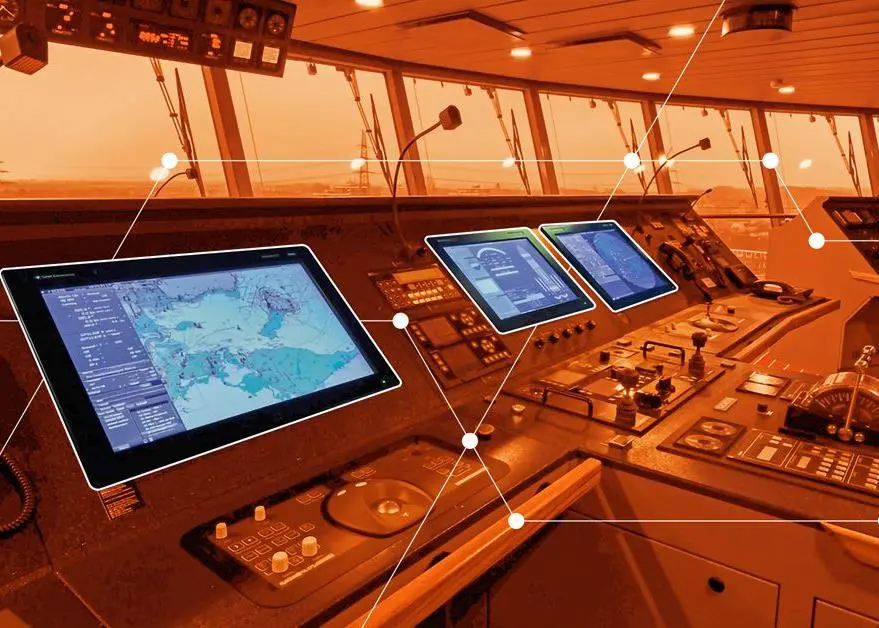
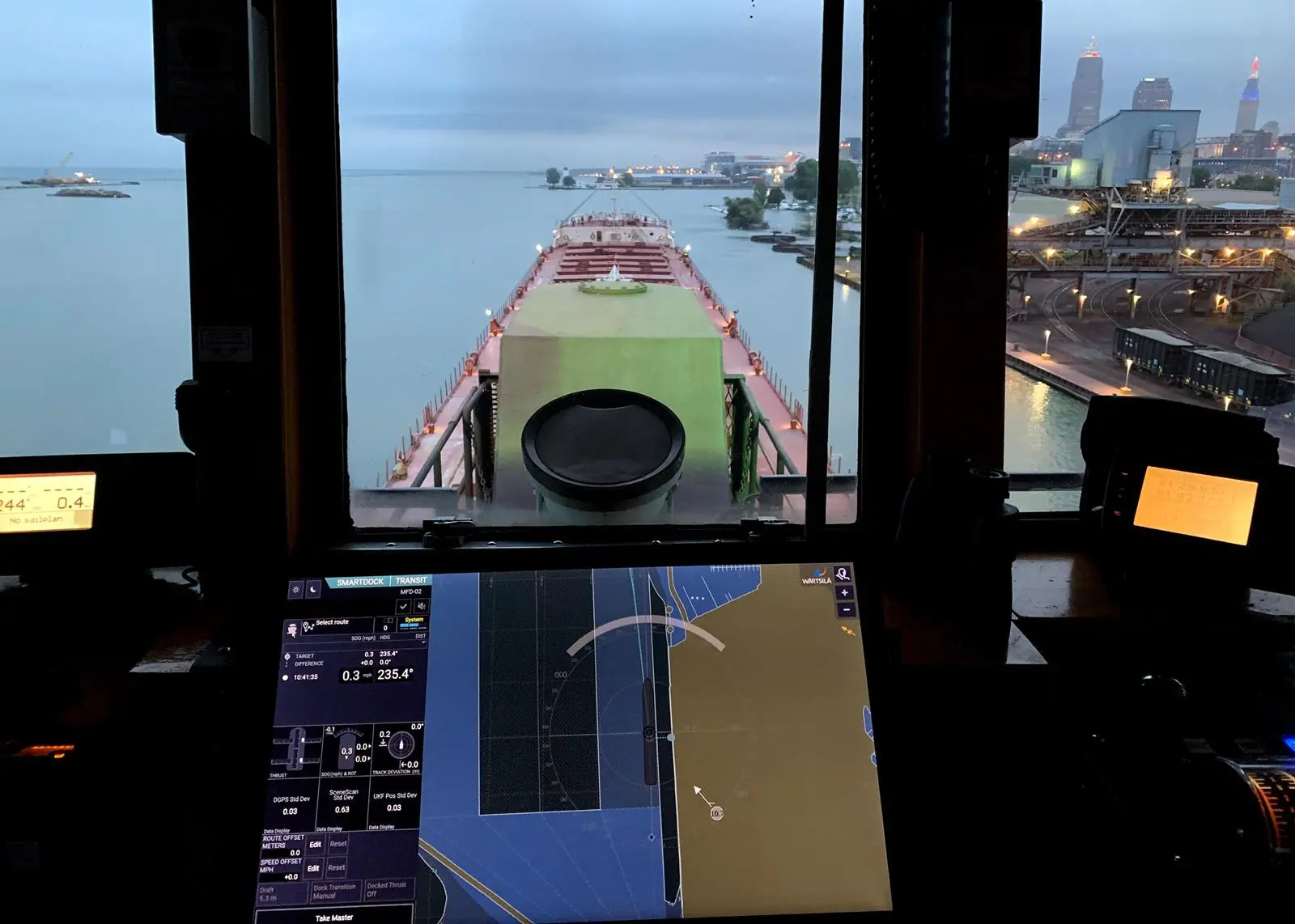
When most people consider the effects of the digital revolution on the maritime industry, digital documents or blockchain might be closer to the front of their minds than marine propulsion. Yet the potential effects of such improvements on mechanical and analogue systems are no less far reaching.
In fact, given the potential for digital solutions to improve the efficiency of engines and their fuel consumption, the potential savings for shipowners exceed those of streamlined back office operation. By extracting insights from key data from these systems, vessels will also be able to lower their emissions to meet the demands of regulators and charterers.
While the potential efficiency savings offered by such solutions have attracted interest, the adoption of digital solutions in engine rooms has been steady rather than spectacular. Not all owners have been convinced, while other owners have chosen to take a ‘wait and see’ approach until final product versions are released.
Engine designer and technology developer WinGD has responded by incorporating digital technology into product developments as standard. Luca Sala, Senior Manager Product Strategy at WinGD explains with the company’s WinGD Integrated Digital Expert (WiDE) has now been “installed on several vessels” since its release in 2018.
WiDE allows the collection and analysis of ship and machinery data in order to proactively predict component anomalies to offer support through live troubleshooting and diagnostic advice to the crew.
Sala explains that WiDE gives better visibility to how the engine is functioning. “It enables crew to be more effective at their job and gives proactive advisory to the crew.” The advantage of having such as solution is that you can “learn from the fleet” and update how vessels operate quickly.
WinGD has received positive feedback from customers that have installed WiDE with one highlighting that it has seen improved performance monitoring, reduced time for trouble shooting, improved maintenance planning and has empowered crew onboard in the way they work.
The steady pace of technology adoption onboard vessels may be slower than some would like but its advantages mean it is likely to continue in a phased way over the coming years. However, shipping’s conservative nature may have been a strength when it comes to adopting these new technologies.
Sala notes that the industry will see more hybridisation integration in the transition period as digital technology starts to be adopted. A key element of having all these technologies onboard will be how they communicate with each other. “You can reduce up to 25% on the overall operating costs by integrating efficiently different technologies by using a digital master system to ensure every component is working properly and at the same time operate them as one solution.”
Jarle Blomhoff, Team Leader Systems Engineering, DNV comments about the rollout of technology, that it first needs: “Enablers to have things in place so that things can be digital, such as sensors, infrastructure and central data. These will also need to be standardised and secure.”
Fuel optimisation is a key area of development for digital solutions as the cost savings offer shipowners clarity about the potential value of solutions. Dr Marlies Koch, Customer Experience Leader. Group Digital, MAN Energy Solutions SE adds that: “Fuel savings are an important part and are realised today, but the actual savings depend on the used fuel type/price, the operating mode, etc.”
However, Dr Koch also explains that it is important to also consider other factors when looking at cost saving such as engine type, age and operating condition of the engine, as these can affect the type of cost savings that can be achieved. Another advantage of tools for vessel optimisation is that they aid in the “prevention of unplanned outages (leading to off-hire, drydocking, etc), by replacing low-cost spare parts early on, preventing major repairs later, which is also a big lever,” Dr Koch adds.
Bringing it all together
However, one of the challenges that has been particularly highlighted over the recent year is the lack of connectivity onboard vessels and steps to how the industry will overcome this is still unclear. “Practically there is no existing connectivity standard – we see frameworks for standard-setting (i.e. ISO 19848 or 19847), it still remains open, how these translate and are adopted into practical solutions”, comments Dr Koch.
Currently we are seeing more solutions that are coming on to the market that will need connectivity to be able to maximise their full potential. “The need to connect is present, may it be OEMs, owners, managers, licensees, etc. – as each party has only a share of the data, that they ideally need to share to get the most insights”, Dr Koch says.
“Mid-term some Cloud2Cloud solutions will gain a critical mass to organically force new partners to its standards, so we will see a consolidation”, Dr Koch adds.
Overcoming the challenges
Technical challenges still lay ahead mainly with connectivity. As Dr Koch explains that: “Establishing the connectivity cabling/hardware/firewall and satellite configuration itself is a challenge with vessels that ad-hoc change routes and where time in port is short.”
Sala also highlights that there is also a need to create trust in the solutions and that by working with customers and other industries bodies will help to create that trust in the industry.
However, Norwegian-based ScanReach are also looking at this with the solutions that they are providing to the industry. ScanReach has seen substantial growth from entering the market as a start-up to now becoming a full-grown business with its technology implemented on 40 vessels.
Its main service is as a wireless IoT company which has seen that there is a need in the maritime industry for better connectivity onboard vessels. Initially ScanReach introduced to the market its life saving solution Personnel Onboard (POB) Control that allowed crew to traced onboard in an emergency such as a fire.
This solution was developed by using wireless technology. Jacob Greg Eide comments about the development of the technology that: “the cost factor of re-cabling a ship is too high. So we looked to wireless.” From this ScanReach has now moved from being a technology provider to a solution provider with its wireless platform. It offers three solutions to the market which are its ConnectPOB, ConnectFleet and ConnectFuel.
With its ConnectFuel product Eide explains that owners can monitor fuel consumption at any time. “Vessels can see a 5% saving just by imposing certain thresholds”, he comments. From systems becoming more connected, more data will be harvested that will also allow shipowners to get a better view of how systems are operating and to make more critical decisions or how systems are operated.
Dr Koch also adds that: “Data will be the basis to develop new insights and today we do not know, which data will be of importance tomorrow, connectivity and storage are becoming ever cheaper and these help to enable retention of as large a pool of historic data as possible.”
There is lots of value in data, if the right data is extracted and will give shipowners further insights into operations. “Data will be the basis to generate insights both for serving the customers today with optimizing their OPEX, but also going forward in improving engine design to be even more reliable, flexible, efficient and with an ever-lower environment footprint”, Dr Koch explains.
Data sharing also needs to be done in the proper way, Sala comments. How to manage data and support digital solutions is a discussion that is happening in the maritime industry.
It’s all about safety
While digitalisation is a highly topical subject, and encompasses a wide range of solutions, it also offers safety benefits for ship owners and operators. Through the adoption of digital technologies, safety is expected to increase due to better monitoring and processes that it will bring. Safety concerns remain paramount in the introduction of digital solutions.
An area that is also getting more interest is that of cyber security, with the implementation of digital products and also the recent pandemic, shipowners are now becoming more aware of the need to protect their digital assets from hackers. Blomhoff highlights that the industry is now thinking about cyber security and currently there is “little cyber security around the engine room” and notes that as more digital solutions get installed onboard there is a “higher probability of attack”.
IMO launched its IMO2021 cyber security resolution that aims to help shipowners tackle this new threat. The rules have been based on the IEC International 62443 code with maritime amendments. Blomhoff notes further work needs to be done in educating the industry.
DNV is currently working alongside an engine manufacturer that is looking to address this. WinGD has also been looking at its own cyber resilience when it comes to it digital solutions and take a three-stage approach to its cyber security. The first is in the infrastructure of the business, the second is in the operating systems. WinGD is looking at having the first embedded system approved. The third stage is at company level, to make sure that people, processes and procedures are all compliant.
Related Articles
 ENERGY SAVING DEVICES
 LNG
LNG
 ALTERNATIVE FUELS & LUBRICANTS