



Emissions measurement goes back to the future
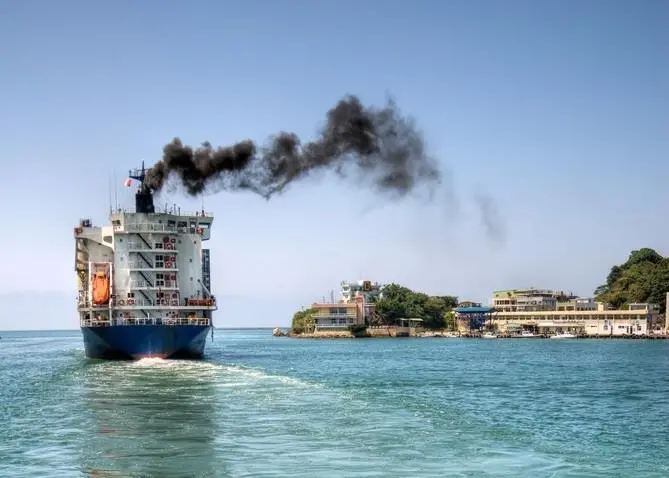
With fuel prices remaining volatile, the challenge of maintaining profitable operations is becoming painfully familiar and survival in this market demands streamlining. Today, the business case for incorporating sustainability measures that generate significant efficiencies is compelling for any industry, and none more so than shipping.
However, despite the absolute and pressing need for optimum efficiency, there is a chasm between those companies that are already adopting sustainability into their business and manage the substantial risk that carbon emissions represent and others that view SEEMP as just another piece of paper. For the overall benefit of the industry, this is a gap that can and must be bridged, with the support of experts and taking into account the lessons learnt from aviation regarding market-based measures and the potential for adopting green technology to secure a competitive advantage, as the automotive sector has done.
Ultimately, the message that must resonate across the industry is that using less energy saves you money. However sustainability is still sidelined on the boardroom agenda, perhaps as a result of the lack of a clear regulatory path or pre-occupation with short-term survival. Another key reason is often apprehension about the cost of change and a lack of certainty around how to make sustainability scalable. But in this case there are actions that can be taken now to provide a clear view of individual companies’ (and therefore the industry’s) emission levels and shape future regulation.
With the next MEPC session at IMO approaching, and given the EU’s recent signals that carbon emission control areas (CECAs) are on the table for discussion, shipping could be exposed to further carbon risk in the form of penalties and costs unless action is taken to measure and manage emissions. Existing IMO regulation including EEDI, SEEMP and EEOI, provides a foundation on which to build – and it is important that shipping does go beyond these requirements. SEEMP in particular is a great example of regulation that provides a foundation for compliance with a monitoring and reporting process. But developing this further by ingraining the principles of measurement and monitoring emissions and using this across your organisation is the next step – a form of ‘SEEMP Plus’ – and one that will provide much-needed transparency. Measuring your carbon footprint to understand your starting point and monitoring reduction methods on an ongoing basis is essential.
It is time to take emissions reduction back to basics and measurement is at the heart of this. Standardising measurement is essential for shipping to make progress in reducing its carbon footprint. UNFCCC and EU guidelines already provide the foundation for a methodology to work with, citing completeness, consistency, cost-effectiveness, transparency and faithfulness as the principles for any effective monitoring and reporting process.
Embedding measurement and therefore emissions reduction as part of a process within an organisation demands a level of expertise and whilst there is a steadily growing awareness of regulation, abatement measures and principles, shipping is still very much undergoing an education. Expert guidance is therefore often necessary to enable you to create a comprehensive database of your historical emissions that will provide the basis for ongoing monitoring on a daily basis.
Conducting a full on-board energy audit to assess each vessel’s operational pattern, establish energy consumption key performance indicators and identify potential energy saving opportunities itself opens the doors to genuine savings. A thorough cost benefit analysis of the various technical and operational measures that will deliver optimum emissions reduction can then be carried out to ensure that the most relevant measures for your organisation and fleet are used. Evaluating your baseline carbon footprint and using this data to set realistic reduction targets that can be met cost-effectively is at the heart of any emissions control programme. Finally, an outsourced provider can also deliver valuable training for onboard and onshore personnel of SEEMP and its procedures, which will be crucial to truly implement energy efficiency measures and achieve reductions across your organisation.
Ensuring that SEEMP is not seen purely as a piece of paper will take time – incorporating this type of process requires behavioural change and a cultural shift across the industry. However by acting now to instill the significance of measuring energy efficiency as a part of daily operations, shipping stands a far greater chance of being able to compete with the other supply chain industries that make up the global transport network. Aviation and road transport offer an insight into the future of shipping. By creating a roadmap for ourselves that takes into account shipping’s own unique criteria whilst ensuring that future regulation is viable relies on the transparency of data that can only be achieved through measurement and ongoing monitoring and reporting.
Monitoring is fundamental to making progress on emissions reduction, and whilst the industry appears to be in agreement that a formal process is needed, making this a reality by adopting measurement as a part of daily operational life will be the next emissions reduction milestone. Taking a broader view, there are significant short term commercial benefits that result from taking early action on sustainability; a business case that can help deal with tough economic times today but also secure shipping’s sustainability for tomorrow.
Related Articles
 ALTERNATIVE FUELS & LUBRICANTS
 FUELS & LUBRICANTS