



Engine control systems ready for flexible future
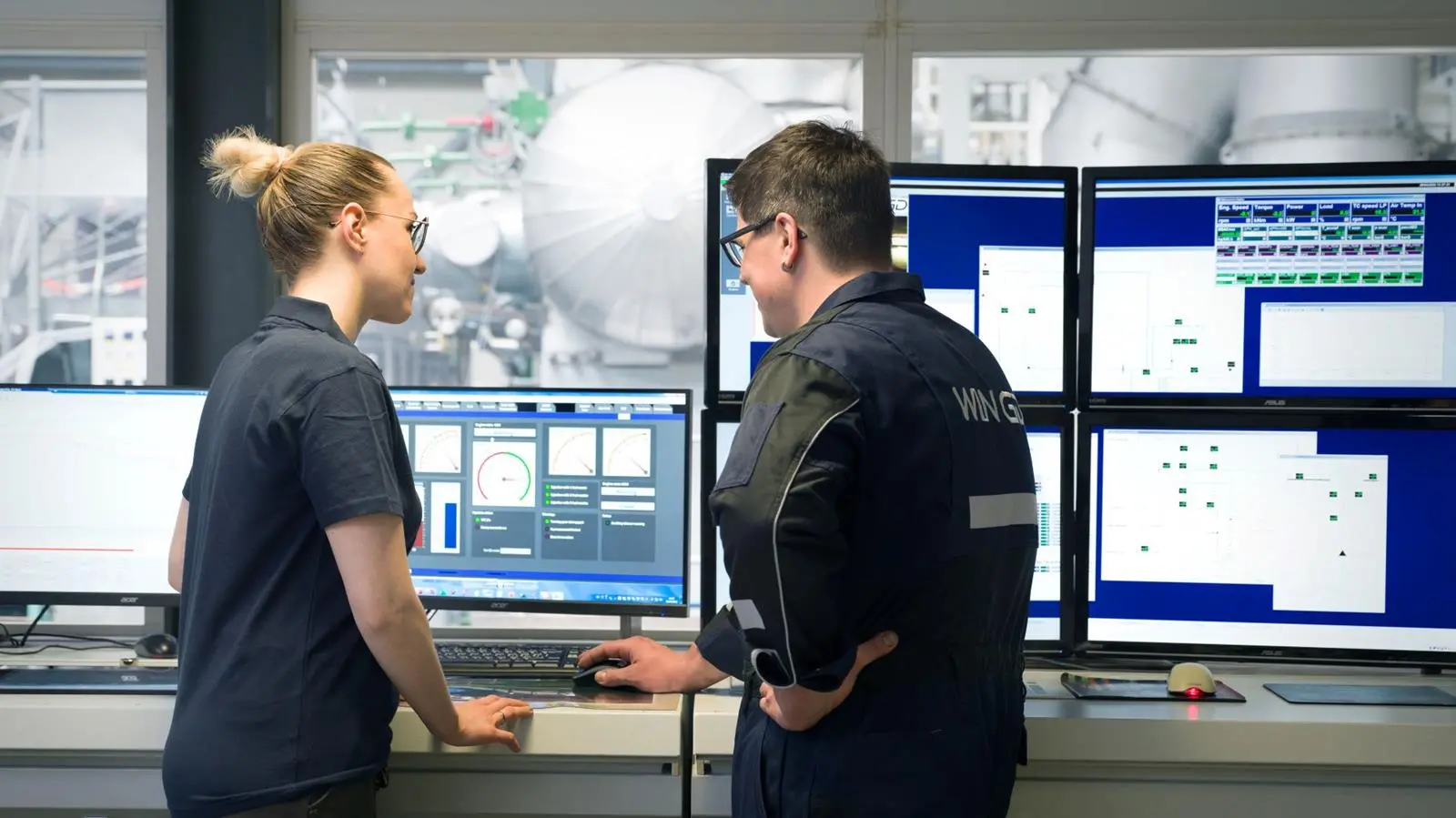
WinGD introduced its new WiCE engine control system in 2019 to meet the rising demands for enhanced control and diagnostic capabilities. Key features include a modular design of the hardware components that, for the 2-stroke engine, include the MCU (main control unit), CCU (cylinder control module) and GTU (gateway unit). A much more powerful Ethernet bus structure was applied to provide a data collection platform suitable for more powerful monitoring and diagnostic systems.
Luca Sala, Senior Manager Product Digital & Portfolio Strategy at WinGD, says the platform will be used on all future technology, including X-DF2.0 dual-fuel engines and any future upgrades for all WinGD engines, and it can also be retrofitted to existing engines. “It’s very important that we look to the new future, both from a newbuilding and a retrofit point of view, because when you introduce a new fuel, you automatically have a different combustion mechanism and potentially different after treatment. With dual-fuel ammonia or methanol engines, for example, you need a more powerful control system that is able to switch between fuels in case of an emergency.”
WiCE also anticipates greater use of hybrid power sources and energy storage in conjunction with the main engine. To maximise efficiency potential from an array of power sources, the vessel’s energy management system will need to be able to connect to engine control systems, placing even higher demands on monitoring, diagnostic and connectivity capabilities.
Sala explains that WiCE already collects many thousands of data points every second. By using WinGD Digital Integrated Expert (WiDE) with WiCE, operators can collect and analyse even more engine data, including in-cylinder pressure, without any additional cabling. This enables very accurate performance monitoring of the engine and means that any potential anomaly can be acted on immediately, ensuring engine performance is always optimal.
“If you combine WiCE and WiDE with a voyage optimisation functionality, the ship manager will have much more accurate performance forecasts for the voyage and direct insights into the status of the main engine. We have created a very flexible and powerful platform that can be used to build functionality and to integrate with other systems around the main engine.”
WinGD is constantly working on integrating expert analytics based on the company’s unique design knowledge to synthesise and evaluate the data collected, so that it will be simpler and faster for crews to interpret and act on. “We do that with a robust control system platform combined with a very strong data sharing process.”
Wärtsilä’s Unified Controls
Wärtsilä’s Unified Controls (UNIC) system is now in its second generation, and this may be its last. Markus Mesimäki, General Manager, Automation System Lifecycle Automation, says the engine maker is moving away from the concept of discrete generations and moving to a continuous lifecycle concept.
“Earlier, our updates have primarily been hardware-based – we have introduced a new hardware platform, but in the future, we would like to move forward from that to more software-based, continuous automation system updates which would be far more convenient for our customers. The timing of these software roll outs would be heavily dependent on the value we can provide with them. We want to give our customers new functionality rather than just an update that replaces obsolete hardware.”
The modular system architecture would continue to serve as the software platform as long as the new approach is adopted. The platform’s model-based design principles and application functionality have proven their robustness and will continue as part of the system’s foundation. This proven and robust infrastructure functions as the stepping stone for any new functionality introduced, says Mesimäki.
Meanwhile, with its modular architecture, for upgrades such as fuel type changes, the existing automation system is easily rebuilt with additional control modules and functionalities. The capacity of the second generation of UNIC, introduced in 2016, enables the introduction of new functionalities for full flexibility in real-time operation, such as enabling smooth changes between fuel types.
Like the new lifecycle approach, the current second generation of UNIC takes care of all control and monitoring functions for both newly built engines and as a retrofit for older Wärtsilä engines as well as catalysts and other auxiliary systems.
Related Articles
 2-STROKE & 4-STROKE
 2-STROKE & 4-STROKE
 2-STROKE & 4-STROKE