



Engine pressures, operator problems, paints, the environment – and dual fuel
Taking a rather different stance was a Mr Jackson, research director at engine company Doxford. He took our predecessors to task for their – in his view – misleading advocacy of higher engine pressures. They had, he said, criticised Doxford engines for their low mean indicated pressures, namely 135lb/in² (about 9.3bar in today’s units). Not so, said Mr Jackson, his engines ran at similar pressures to many others, and, in any case, high pressures are “not in the best interest of the diesel engine.” He continued by saying that “increased ratings will lead to higher specific fuel consumptions and greater piston ring and liner wear.” What would he make of today’s low-emission marine diesels, which despite their considerably greater pressures, beat their ancestors hands down in terms of economy and longevity?
A paper from a Scottish tug operator will strike a chord with many of today’s technical superintendents. This suggested that the choice of machinery should rarely be decided on technical merit or first cost. Claims by engine builders about quality and operational efficiency were seldom borne out in the real world. The author thought it surprising that engine builders, who were fully aware of the current manning problems, should produce machinery that is far from fool-proof. The equipment may work to specification in the designer’s test house, driven by qualified personnel, but typical engineroom crews are unappreciative of lubricators, pressure gauges, exhaust gas pyrometers and their like. Not only onboard personnel are to blame – lack of care at installation brings problems of torsional vibration, leading to failures. The author suggested most machinery breakdowns were directly attributable to design weaknesses, operator ignorance or negligence, poor repair procedures, or latent defects.
In today’s MARPOL-dominated world, it seems strange that ships existed without sewage treatment plant or oily water separators. But in 1962 these were novelties. Hamworthy Engineering had announced that it was to build a Canadian-designed anaerobic sewage disposal system, in response to demands from environmentally-responsible owners wishing to be one step ahead of the regulations – there was a view that legislation on waste disposal to the sea would come into force. And UK company Rellumit had obtained Ministry of Transport approval for its oily water separator, working by capillary action rather than today’s separator- and filter-based products, but even so achieving 15ppm oil in water, similar to the current minimum IMO standard.
Another article made the case, in some technical depth, for treatment of newly shot-blasted steelwork with zinc-rich epoxy primers. A number of caveats indicated that this was a somewhat controversial view, and the authors acknowledges that this primer would not suit all cases. However, they were convinced that laboratory tests would prove that this was the way to go.
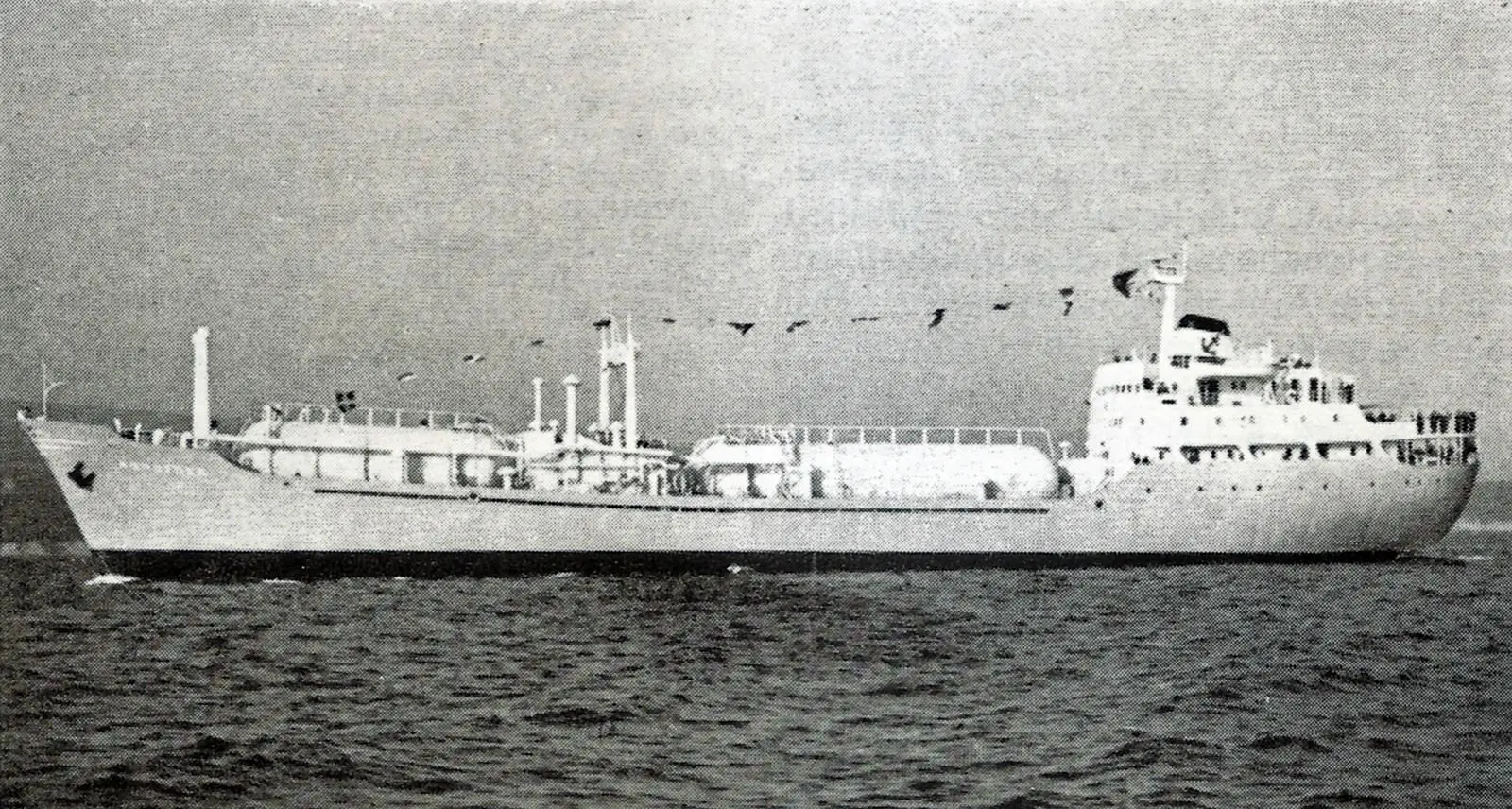
A short article looked at French shipyard La Ciotat, which had delivered its third newbuild gas carrier since 1955, and had another in build. Our predecessors noted that a considerable market was foreseen for gas carriers. Although the La Ciotat ships were powered by normal diesel engines, there were plans for three turbine-propelled LPG tankers to be built in the UK, which would be capable of burning either boiler fuel or ‘blow-off’ gas. And both Burmeister & Wain and SEMT Pielstick were working on developments of their diesel engines to enable similar ‘dual fuel’ operation.
Nothing is really new.
Related Articles
 50 YEARS AGO
 50 YEARS AGO
 50 YEARS AGO