



EU doubles down on carbon capture strategy
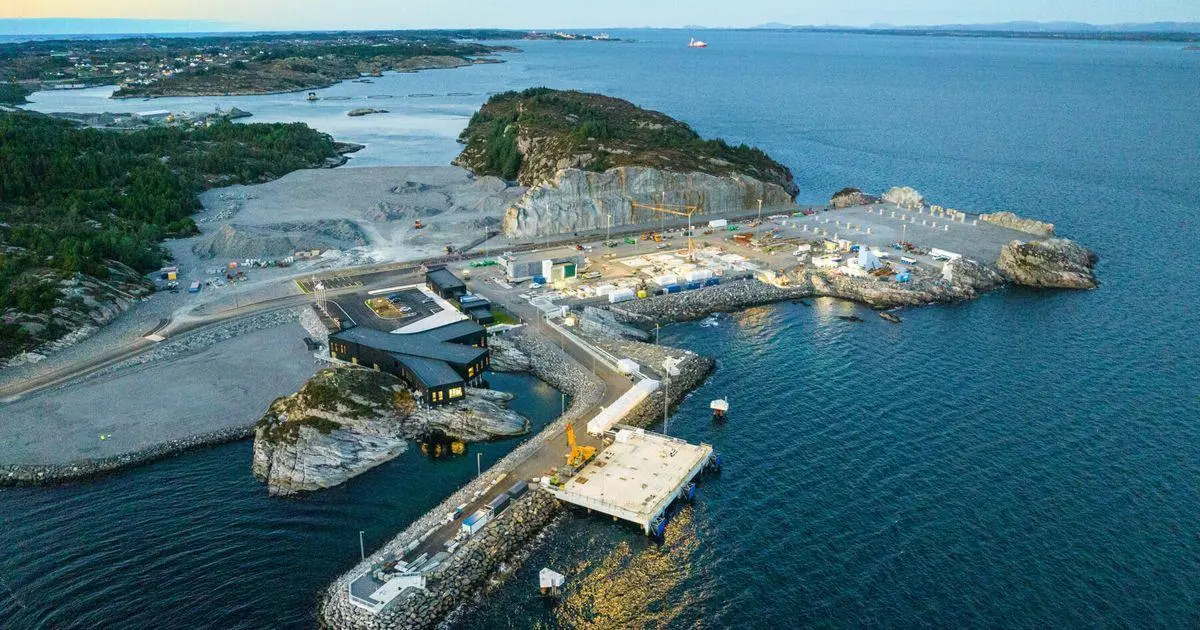
The announcement was made as part of the EU’s Industrial Carbon Management Strategy, which was launched alongside wider plans to establish a 90 percent net zero reduction target by 2040. The latter plan introduces an intermediate target between the bloc’s 55 percent reduction target by 2040 and the net zero target by 2050.
The strategy envisages expanding CO2 capture targets from 50 million tonnes per year (mtpa) to 280 mtpa by 2040 to 450 mtpa by 2050.
The strategy encompasses three main approaches:
- Capture of CO2 for storage (CCS): where CO2 emissions of fossil, biogenic or atmospheric origin are captured for permanent and safe geological storage (sequestration);
- Capture of CO2 for utilisation (CCU): where captured CO2 is used to substitute fossil-based carbon in synthetic products, chemicals or fuels (such as conversion into e-methanol);
- Removal of CO2 from the atmosphere: where biogenic or atmospheric CO2 is captured by technological means and put into permanent storage.
The Motorship has focused its editorial coverage on CCS, such as the Norwegian-led Northern Lights offshore sequestration project, and the technical possibilities of CCU, owing to its potential relevance to the future production of e-fuels, in recent years. We have not covered the technical possibilities of technologies such as Direct Air Capture, or EcoSpray’s Direct Ocean Capture technologies until now.
The strategy envisages that CO2 should become a tradable commodity for storage or use within the EU’s single market by 2040, with the creation of economically viable regional value chains by 2040.
Further, the strategy proposes that up to a third of the captured CO2 (over 90mtpa) will be used for utilisation purposes within the EU by 2040, rising to around 200mtpa by 2050.
This in turn will require the development of a CO2 transportation network, including new and repurposed natural gas pipelines, as well as specialist ships, and gas transportation by road or rail.
The European Commission’s Joint Research Centre (JRC) has produced very high-level estimates of the cost of developing CO2 transport infrastructure, estimating that the length of CO2 pipeline required could reach 7,300 km by 2030 (at a cost of EUR12.2 billion), rising to around 19,000 km and EUR16 billion in 2040.
The estimates do not distinguish between the costs of installing and operating offshore pipelines and a network of liquefied CO2 carriers. The Motorship notes that recent advances in liquefied CO2 storage technology, as well as the possibility of lowering transportation costs per tonne of CO2 by deploying larger-capacity LCO2 carriers, may well improve total cost of ownership (TCO) comparisons against subsea CO2 pipelines, until CO2 sequestration volumes ramp up.
The sequestration plans will require the development of a fleet of medium-sized LCO2 carriers to transport captured CO2 away from the Mediterranean and the Baltic towards the North Sea, where the EU envisages utilising offshore subsea storage located in EU member state and Norwegian waters.
However, the European Commission’s plans openly recognise that issues surrounding market and cost structure, investment incentives for new infrastructure, tariff regulation for transport assets and ownership models remain to be resolved. The Commission plans to begin preparatory work on a future CO2 transport regulatory package in order to provide more certainty for investors.

There remain a number of regulatory obstacles to overcome before carbon capture can be introduced successfully, both in terms of consistency with existing EU rules, such as the ETS scheme, as well as the EU taxonomy, as well as with future interactions with the electricity, gas and hydrogen sectors.
International ship owners and vessel operators who are monitoring the European CO2 market may well be keen to minimise the divergence between the different regulatory systems being introduced or consulted upon in different jurisdictions.
Related Articles
 CARBON CAPTURE
 CARBON CAPTURE
 ALTERNATIVE FUELS & LUBRICANTS