



EU Projects And Commercial Interest For Kongsberg
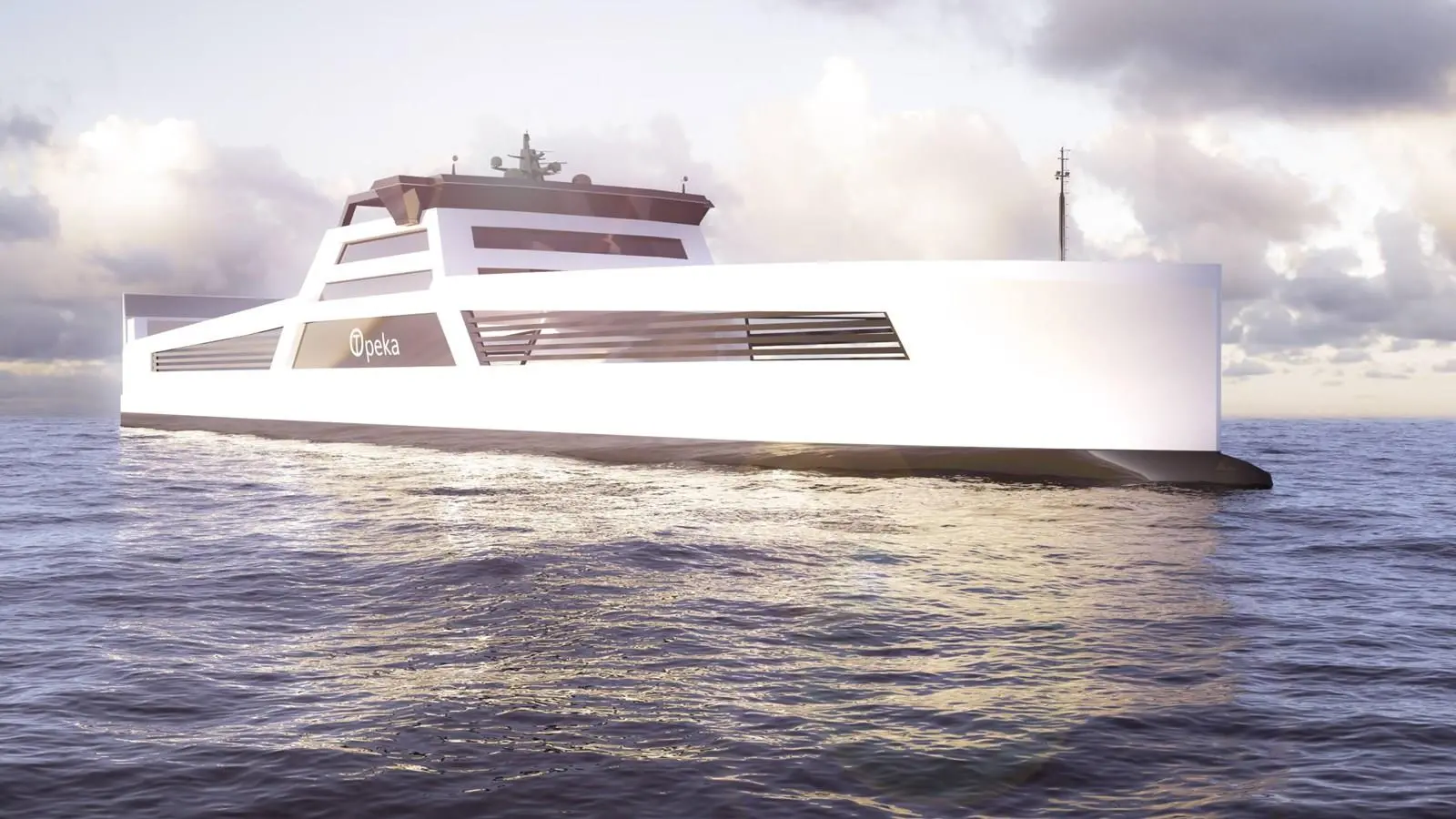
The project began in January 2021, and the ship is due to be operational in 2024. Among the 14 partners involved in the project are Ballard Power Systems Europe, of Denmark, which will provide the fuel cells themselves, and Norway’s Kongsberg Maritime, which is the vessel’s systems integrator.
Speaking to The Motorship, Kongsberg Maritime’s head of external funding and partnerships Ketil Paulsen explained that the scheme followed the third phase of a project, HySeas, that was to develop a zero-emissions ship to operate in Scottish waters, in which Kongsberg was also involved as systems integrator.
That project will finish in March 2022, Paulsen said, and HyShip will benefit from work that Kongsberg and Ballard have already done for HySeas which has resulted in a complete full size drive train that is due to be officially declared operational on 1 December. In fact it has been running in test conditions for some time during its commissioning phase, Paulsen said.
It includes six 100kW fuel cells and load banks, so that it can be run at full speed and will be used to model a complete trip as it would have been performed by the vessel planned in the HySeas programme, including manoeuvring at each end of its trip. The yard that was to have built the ship for HySeas has since closed, and that project’s website says that “it is hoped to move on to build that knowledge and knowhow into a ferry” to operate in the Orkney Islands.
Designing a control system around a fuel cell energy source is very different from that needed for a diesel generator, Paulsen explained, since a generator provides high-volage AC current while a fuel cell delivers lower voltage DC. There are no regulations yet available to refer to when designing such a system “so we have been working closely with classification societies to have approval in principle” he said.
Safety is critical, he explained, not only because of the hydrogen but also because the fuel cells need to be kept cool. And although the fuel cells and batteries are provided with their own safety systems, Kongsberg has integrated them into a complete safety system for the whole vessel, including taking into account the presence of passengers on board.
For the HySeas and HyShip projects, one particular design feature had to be considered carefully. For most fuel cell installations on ships, their hydrogen tanks aren mounted on deck but for these vessel concepts, both the fuel cells and their fuel tanks are intended to be below deck, “and that brings quite another challenge with regard to safety”, Paulsen said, because the design has to ensure that if any hydrogen should leak from the system it will not become trapped in any pockets in the ceiling.
Commercial interest
Aside from its EU projects, Kongsberg has seen increasing commercial interest in fuel cell systems, especially for short sea vessels using hybrid solutions involving fuel cells, batteries and dual-fuel diesel generators burning LNG and marine diesel.
A typical request is for about 3MW of fuel cells that will allow a ship to operate in a zero emission mode when entering a port and while at the berth if no shore power is available. “Some owners are looking one step further”, he said, and are planning to use fuel cells for their main power source once hydrogen bunkering becomes available, with the engines as back-up.
None of these proposals has yet come to fruition because of the lack of hydrogen bunkering facilities, he said. And energy companies want to see some demand before investing in infrastructure, so the EU or national governments must provide funding or some financial instruments to solve this dilemma, he said.
Kongsberg is continuing to develop its fuel cell technology
One area of research is exploring how to optimise batteries and fuel cells in a peak-shaving arrangement and another is exploring ways to prolong the cells’ lifetime. If batteries are operated with small duty cycles, they will last longer than if they are subjected to large duty cycles, Paulsen said “The same is true for fuel cells so if you run them in an optimal way, you are able to prolong their lifetime.”
Given their high cost, if their useful life could be extended by, say, 10%, “it’s a rather large saving in the owner’s investment”, he said.
Related Articles
 ALTERNATIVE FUELS & LUBRICANTS
 ALTERNATIVE FUELS & LUBRICANTS
 ALTERNATIVE FUELS & LUBRICANTS