



EXCLUSIVE: Wärtsilä pivots to ammonia and data-led demand
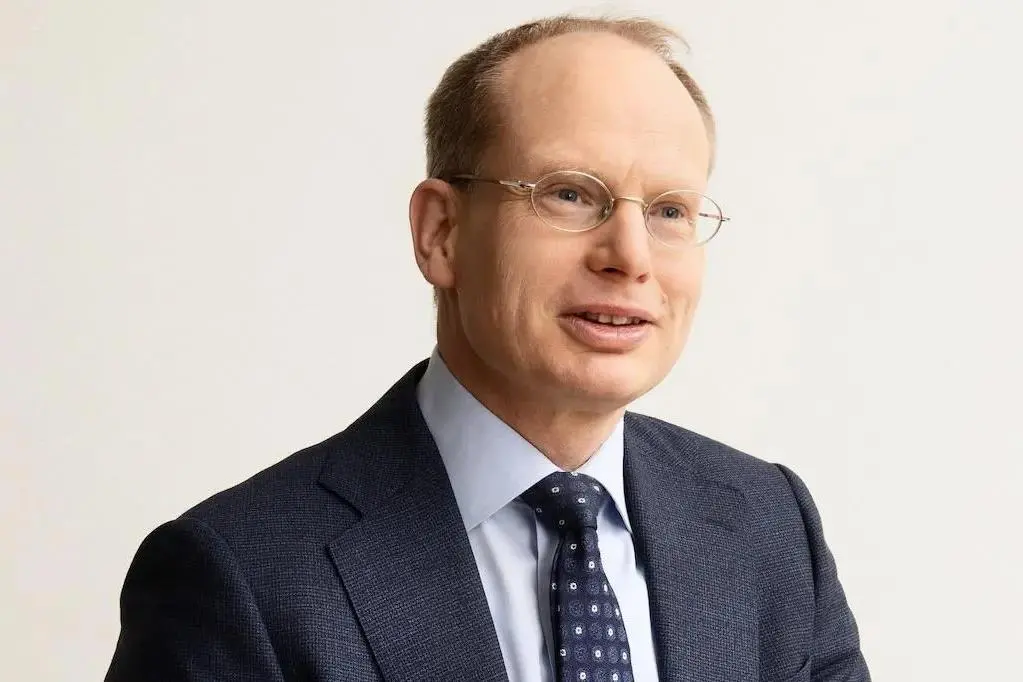
A strong first quarter, characterised by a double-digit order intake of 10%, with orders for marine and energy combined reaching 28% to €1,997 million, provides the foundation for the update.
However, insights from Håkan Agnevall, president and chief executive, Wärtsilä, point to a more structural shift in how growth is being generated across both marine and energy markets.
At the centre of this shift is the growing interplay between shipping decarbonisation and wider energy system demand.
Ammonia focus
Responding to questions on ammonia engine development, Mr Agnevall was explicit about its long-term role: “Ammonia is a fuel of choice in the marine industry, if you want to go zero carbon, you want to go ammonia,” he says.
He confirms that Wärtsilä has already moved beyond concept phase, with commercial deliveries due to take place early next year.
“We have two orders from Norway and we are delivering those engines as we speak. Today it is about the commercial offering, we have tackled the safety concerns that needed to be addressed in a robust manner and the ecosystem has evolved.”
For shipowners, this marks an important inflection point. The technology is no longer speculative, the focus is on scaling-up.
But it will take time for the volumes to build, Mr Agnevall notes.
”The challenge with ammonia right now, like many of the green fuels, is that they are not readily available in significant quantities and they are still expensive.”
Energy storage headwinds
In contrast to ammonia’s long-term promise, energy storage presents a more immediate operational challenge.
Despite expectations of improved demand conditions, order intake remains weak confirms Mr Agnevall, putting pressure on profitability.
Mr Agnevall acknowledges the severity of the situation, indicating that without sufficient new orders the company will not be able to offset the downturn through cost measures alone.
Cost actions are already underway, including headcount reductions and supply chain optimisation, but these are not sufficient in isolation.
At a system level, the need for storage is not in question though.
Mr Agnevall repeatedly links demand to the global shift toward renewables and grid flexibility, citing markets such as Australia where the transition from coal to renewables is driving the need for balancing power.
Reshaping energy demand
A more immediate and rapidly scaling opportunity lies in data centres, which are increasingly influencing Wärtsilä’s energy business.
Mr Agnevall quantifies the impact, noting that data centres now account for “probably 30% of our order intake” in recent periods. This surge reflects the energy intensity of digital infrastructure and its requirement for reliable, dispatchable power.
Importantly, the data centre segment is not just adding volume, it is reshaping demand characteristics. Projects are larger, more dynamic and often scheduled further into the future, pushing revenue recognition timelines.
Customers are increasingly securing capacity several years ahead, extending visibility but deferring near-term sales realisation.
Converging demand
Taken together, Wärtsilä’s performance and insight point to a convergence of demand drivers.
Ammonia represents a future-facing solution for shipping’s decarbonisation, but one that will scale slowly. Energy storage is strategically essential but currently constrained by market conditions. Meanwhile, data centres are emerging as a powerful and immediate catalyst for growth, reshaping both order intake and capacity planning.
Geographically, China continues to provide a strong underpinning for marine activity. Mr Agnevall describes it as “a vibrant market,” with shipyard backlogs at their highest levels since 2009 and local capacity expanding rapidly.
This supports Wärtsilä’s marine growth outlook, which remains tied to decarbonisation trends and healthy demand across core vessel segments.
The company is also scaling its own production footprint, with a significant capacity expansion in Vaasa driven primarily by demand from energy and data centre markets rather than alternative fuels alone.
For commercial shipping stakeholders, the takeaway is increasingly clear: Propulsion choices, fuel strategies and onboard technologies are becoming inseparable from broader energy system dynamics.
Wärtsilä’s positioning across these domains suggests it is not only responding to this shift, but actively structuring its business around it.
”We are executing our strategy with focus and consistency, working closely with our customers as the marine and energy markets continue to present opportunities for further profitable growth,” Mr Agnevall concludes.
“By strengthening our core businesses, we are building a resilient foundation for long‑term success in an increasingly uncertain global environment.”
Related Articles
 2-STROKE & 4-STROKE
 2-STROKE & 4-STROKE
 2-STROKE & 4-STROKE