



Experts turn focus to cylinder condition

Representatives from the ship owner and operator, OEM and insurance community and ExxonMobil met in Copenhagen to explore the theme ‘ECA compliance, cold corrosion and beyond: Tackling current and future challenges in marine engine conditioning’. Over an intensive two-hour discussion, panelists addressed many of the complexities and uncertainties facing the market, and examined how scrapedown oil analysis can identify and correct engine problems by ensuring the appropriate oil and feed rate are applied. The following report, compiled by The Motorship editor and roundtable chairman Gavin Lipsith, identifies the key points that arose in the discussion.
Increasing complexity
Driven by regulations on fuels and emissions, the cylinder lubrication scenario is becoming increasingly complex. Operators using fuels with less than 0.1% sulphur in designated emission control areas (ECAs) to meet MARPOL Annex VI regulation 14 are advised to use low base number (BN) cylinder lubricating oils.
At the same time, modern engine designs addressing the International Maritime Organisation’s (IMO) Tier III NOx limits and the Energy Efficient Design Index (EEDI) have the potential to be increasingly corrosive, necessitating the use of oils with a far higher BN. Iain White, global marketing manager, ExxonMobil, explains: “With the next range of changes from engine designers – slower, electronically controlled engines with a longer stroke, changes to timing and higher pressures – I think everyone was shocked to see that the issue of cold corrosion was emerging again.”
Faced with a continuum of engine demands – from older engines that did not show cold corrosion to newer ones that did – ExxonMobil worked with engine builders to evolve its MobilGard Cylinder Condition Monitoring (CCM) Programme, helping operators to identify potential problems and select the appropriate oil and feed rate.
Iain White, global marketing manager, ExxonMobil: “it is important that ship owners understand how to make the right decisions to get the engine operating effectively and economically.”
Data gleaned from the CCM programme has shown that many operators using older engines were over-lubricating. The philosophy among some chief engineers was that while too much oil would not damage engines, too little might. But, said White, the cleanest engines were in fact those with a much lower feed rate – in one recent case with Costamare Shipping, the operator of the container vessel Cosco Yantian, a reduction in feed rate allowed a ship owner to extend time between piston overhauls (TBO) on its engine to 55,000 hours, compared to an average TBO of 16,000 hours on MAN engines.
The issue of cold corrosion in modern two-strokes – where higher engine pressure causes condensation and corrosive attack in the cylinder liner – changed the picture, with ExxonMobil noting some cases of under-lubricating. But some operators are still convinced that using a typically cheaper 70BN cylinder oil at a higher feed rate is more cost-effective than using 100BN cylinder oil for combatting cold corrosion. In fact, ExxonMobil’s CCM data shows that using 100BN oil at a lower feed rate is the most cost effective option, from a total cost of lubrication and spare parts perspective, said White.
“But you won’t get it right if you are not monitoring properly,” White explained. “Today there are typically three oils on the market – one for ECA use, a traditional 70BN, or 100BN for a corrosive engine. But it’s not as simple as engine type. The degree of engine corrosiveness depends on many factors including the type of operation – such as slow steaming, engine rating, engine modification, engine load and atmospheric conditions such as high humidity, for example – and on fuel sulphur. All those variables make a difference. It’s a complex world now with many variables, so it is important that ship owners understand how to make the right decisions to get the engine operating effectively and economically.”
Unknown ECA impact
A major component of that complexity lies in the use of low-sulphur fuels. While the ‘low sulphur, low BN’ philosophy has been widely adopted for ship operators using 0.1% sulphur fuels in ECA zones, there has not been enough experience in the field to confirm the long-term impact of this approach. The changeover from heavy fuel oil to marine distillate and vice versa – along with the required change of cylinder lubricants – when moving into and out of ECA zones is another complicating factor.
Kjeld Aabo, director customer support, MAN Diesel & Turbo, highlighted the unknown factor with an early example of low BN oil use. In the mid-1990s the company made a modification with a lubricant supplier, switching from 70BN to 40BN for use with 0.6% sulphur fuel. “We saw more than 120 scuffing incidents,” Aabo reported. A closed graphite structure due to deposit abrasion on the inside of the liners meant that although the cylinders looked smooth, they were very close to major wear damage.
While operating on low-sulphur fuel is not new, relatively few operators use such fuels and this remain an area in which the industry still has little experience, Aabo said – explaining why engine designers have yet to recommend an optimum oil specification to lubricant suppliers. Another reason for the lack of experience has been the unavailability of long-term testing. MAN has tried to find test vessels since the early 1990s but stakeholders were unwilling to take on the high fuel costs that would have been incurred.
“Low-sulphur oil is a challenge, and in the next couple of years we will learn a lot. And oils out there will have to be modified accordingly,” said Aabo.
ExxonMobil and other fuel suppliers have moved quickly to introduce new types of fuel that comply with ECA limits while easing the issues associated with switching fuels. These oils combine low sulphur with a viscosity closer to that of heavy fuel oil (HFO), and include ExxonMobil’s Premium Heavy Distillate Marine ECA (HDME) 50 – a high viscosity distillate that can be fed through the HFO tank, purification system and boiler – and Advanced Fuel Marine ECA (AFME) 200, a clean, low-sulphur residual fuel.
 Kjeld Aabo, director customer support, MAN Diesel & Turbo: “Low-sulphur oil is a challenge, and in the next couple of years we will learn a lot. And oils out there will have to be modified accordingly.”
For ships operating continuously in ECAs, MAN recommends low BN oil. An extra coating on the engine’s piston rings will also help to prevent the possibility of seizures, said Aabo. For vessels going in and out of ECAs, the situation is more complicated.
“When should you change over to low BN when you go into an ECA? We don’t have the experience and engines are so differently rated today that the results depending what you are using for oil and fuel can be very different. We are recommending the continuous monitoring of cylinders, which will give a good indication of what is happening and how to adjust feed rate accordingly.”
The need for ship design elements that are fit for ECA purposes was also highlighted. Steve Walker, global marine equipment builder manager, ExxonMobil, noted that for vessels with just one cylinder oil tank, ECA operation was even more of a challenge.
“The chief engineer has to make a determination: Do I try to drain some of the excess oil away or have a mixture? What BN is the engine going to receive and when is it going to see it in relation to the fuel change which is happening over at least one or two hours?”
Closer collaboration with ship designers is needed to make systems onboard fit for purpose, Walker noted, while other delegates acknowledged that convincing yards to change procedures and install more tanks – both for cylinder oil and for fuel – would not always be easy.
Product tanker company Torm operates a fleet of around 75 vessels, with approximately 15-20 ships sailing in ECA zones at any one time – many in the US coastal ECAs. The company complies with ECAs using marine distillate fuel (although a new ECA fuel, with low sulphur but high viscosity, has previously been tested on one vessel). Jan Jensen, engine specialist at Torm, revealed how the company is seeking to simplify ECA fuel switching with the trial of a mixing unit for cylinder lubricants.
The equipment, provided by MAN, supplies lubricant at a constant feed rate and desired BN adjusted according to the fuel sulphur content. Oil from two tanks containing low and high BN lubricants is pumped to a small mixing tank where a stable blend of the two different BN cylinder oils is obtained before supplying to the main engine.
 Jan Jensen, engine specialist at Torm: Seeking to simplify ECA fuel switching with the trial of a mixing unit for cylinder lubricants.
Aabo noted that the system is under trial for diesel engines, but is already being fitted as standard to MAN’s dual-fuel engines. Gas carriers using these engines will use heavy fuel oil when they cannot run on boil-off gas, so the sulphur content of the fuel will vary dramatically – so a system to adjust BN is sensible. For other applications, trials such as Torm’s are still in process.
MAN’s trial system is not the only blending solution. Maersk Fluid Technology’s Blend On Board (BOB) has been around for several years and is a more complex option, while other alternative systems have also considered. One complexity of such systems – not evident in the MAN system – is that system oils, sometimes for four-stroke engines, are included in the mixture. But adding completely different oil types (system oil at SAE 30 as opposed to cylinder oil at SAE 50, for example) means there can be an unknown oil formulation reaching the engine.
While blending or mixing systems might simplify the issue for ship operators, Walker urged a cautious approach. “We formulate oils to the design and performance of the engine. We call it the balance formulation and we have to balance detergency and dispersancy capabilities in the oil. At the high-end there are a lot of additives, so in low BN oils you need to adjust the chemistry because there are less highly alkaline BN additives.
“Detergency and dispersancy is completely different in high BN and low BN oils. They are completely different animals. So when you are blending you know what will happen at high and low BN, because we have optimised for those, but you really don’t know what will happen in the middle, particularly when system oil is used to create those mid-BN mixtures.”
Engine design
Lubricant type and feed rate are just two of several factors affecting wear and corrosion in modern engines. Other considerations include air flow, combustion temperature, flame shape and lubricant distribution as well as fuel type and quality. Opportunities to test the long-term impact of new engine designs before they enter service are limited – while insurers are willing to cover technically justified prototyping, current market conditions mean that many ship owners are unwilling to host experimental technology. As a result, careful condition monitoring of new engine types is required.
The re-emergence of cold corrosion as a factor in modern engines emphasises the need for cylinder oil lubrication to be taken into account in new engine designs. But with the scale of marine two-strokes, there are clear limitations on the amount of testing that can be done before putting engines into service. As MAN’s Kjeld noted: “We’re not producing small engines, we can’t just run fifty on a test bed.
“When we develop an engine we trial it for a few hours at our test facility in Copenhagen. Then it will be put into one of the licensees test beds and we buy some time to put in a liner or two. Then we go out and service and put them in as test liners. We complete this process before we can say we have full reliability and availability. However, this procedure is still not enough time to show the long-term cold corrosion effect.”
Konrad Rass, senior manager, materials & tribology R&D at Winterthur Gas & Diesel, noted that in some engine designs the search for higher efficiency had resulted in a greater internal exhaust gas recirculation, which necessitated higher lubrication – through increasing either BN or feed rate. Low fuel consumption means that cylinders might not be completely scavenged, with newer efficient engines having very small scavenging ports compared to previous models. Piston rings were another example of engine evolution – wave cut and plasma-coated rings were jettisoned in WinGD’s engines more than a decade ago in favour of hard chrome galvanic-coated rings, combined with 100% cylinder honing, which Rass said ensure the lowest possible surface area and less scuffing.
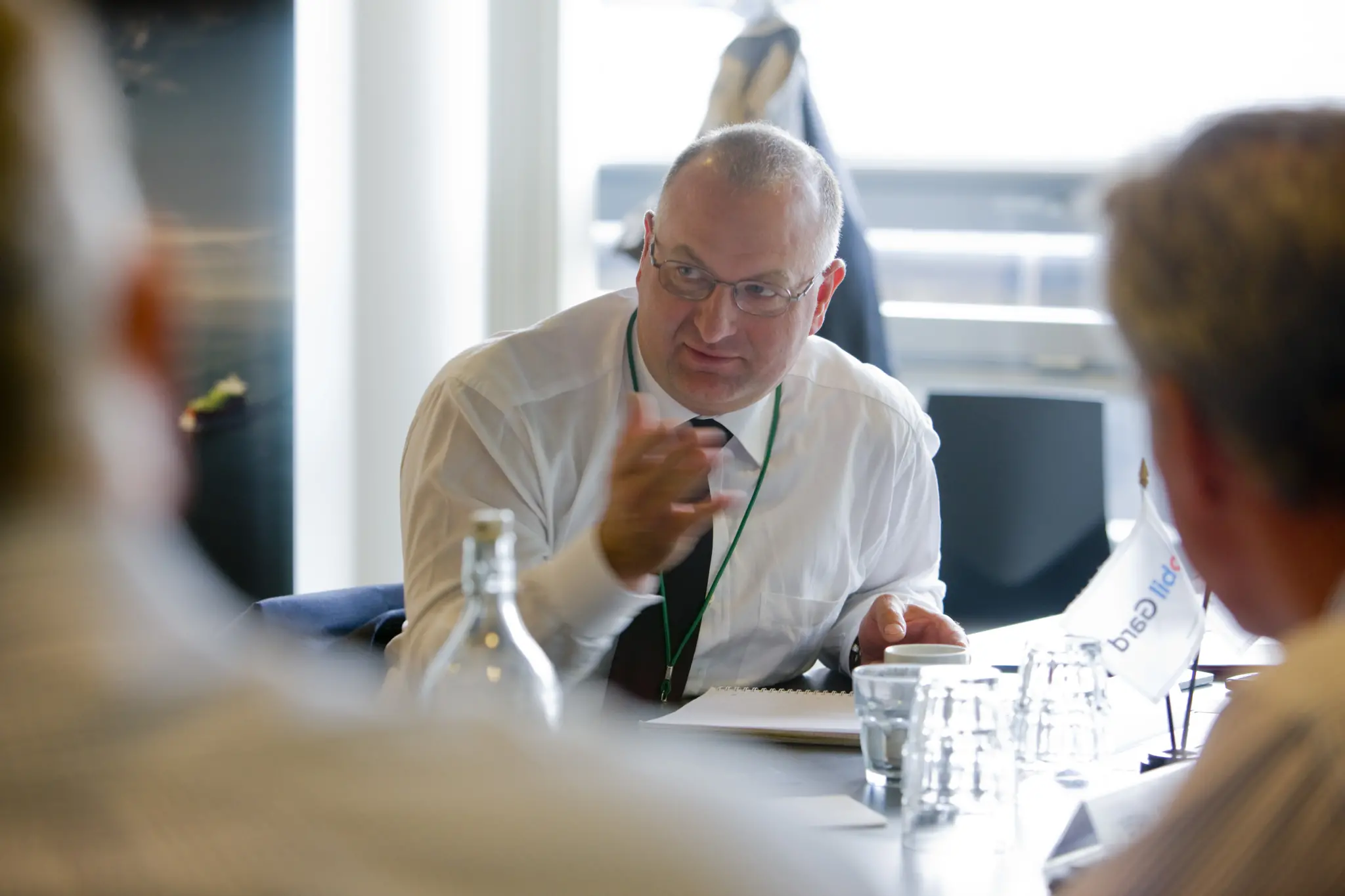 Konrad Rass, senior manager, materials & tribology R&D at Winterthur Gas & Diesel, argued for an approach to engine design that enables builders to revert back to earlier designs if problems occur.
Other factors noted by Rass included the distribution of lubricant, with a clear difference in cylinder condition when modern or outdated systems are employed. Care also needs to be taken with the efficiency allowance given to turbochargers – if they do not deliver the air flow they promise, the result can be less in-cylinder purity (or more internal recirculation of exhaust gas), with further implications for cylinder condition. Even the angles of the holes in fuel atomisers can have a huge impact on the combustion process, maximum combustion temperature and NOx creation, noted MAN’s Kjeld.
Jensen from Torm raised another example of the difficulties in troubleshooting cylinder problems in new engine types. Commenting on some unexpected scuffing in cylinders, he asked whether certain design modifications in the newer engines might have had an impact on their tribology.
Rass also acknowledged the limitations on testing before engines go into service, saying: “We can test the ring types, numbers and the different geometrical configurations. What we cannot do is the tuning and stroke of the next generation, longer-stroke engine. The tuning, the efficiency, the in-cylinder purity – we cannot test these onboard a vessel, otherwise we would have to change the entire engine build.”
As a result of this limitation, each step of the design process needs to be analysed for risk. Rass suggested that, where possible, designs should be introduced that are compatible with earlier designed components, in case problems do emerge. “You can’t do that with the A-frame or crankshaft,” Rass admitted, “but at least around the cylinder and components which are easier to move, we should have the possibility to redesign back to old specifications.”
All these design challenges have an impact on cylinder condition, and the panel agreed that further testing at sea, before engines are made available commercially, would be useful. The difficulty in was also highlighted by ExxonMobil. Walker noted: “When we were testing the high- and low-sulphur regimes, that involved two separate ships at 4,000 hours per test, for two manufacturers. That’s four ships for the best part of a year and it is very difficult sometimes to get the customers to sign up to that.”
From the ship operator perspective though, it was admitted that this is a hard request, particularly in light of current market challenges. Stefan Lindberg, technical director – fleet management, Brise Bereederungs, offered his perspective on the situation. Ship management company Brise manages more than 20 ships, including containerships, roro vessels, bulkers and cement carriers. Lindberg noted that shareholding companies are so tightly financed, and their returns so low at the moment, that many are only paying interest on their loans. Testing in this market is too expensive.
“It has to do with insurance as well as the cost on shipowners in making these conversions. So of course we are calculating potential savings by cutting feed rate and doing other things. This is really all that the banks will agree to, if you can give them a sensible conversion calculation. It’s sad because we really need these innovations and testing – and if it had been seven or eight years’ ago it would be a different story – but we cannot afford to.”
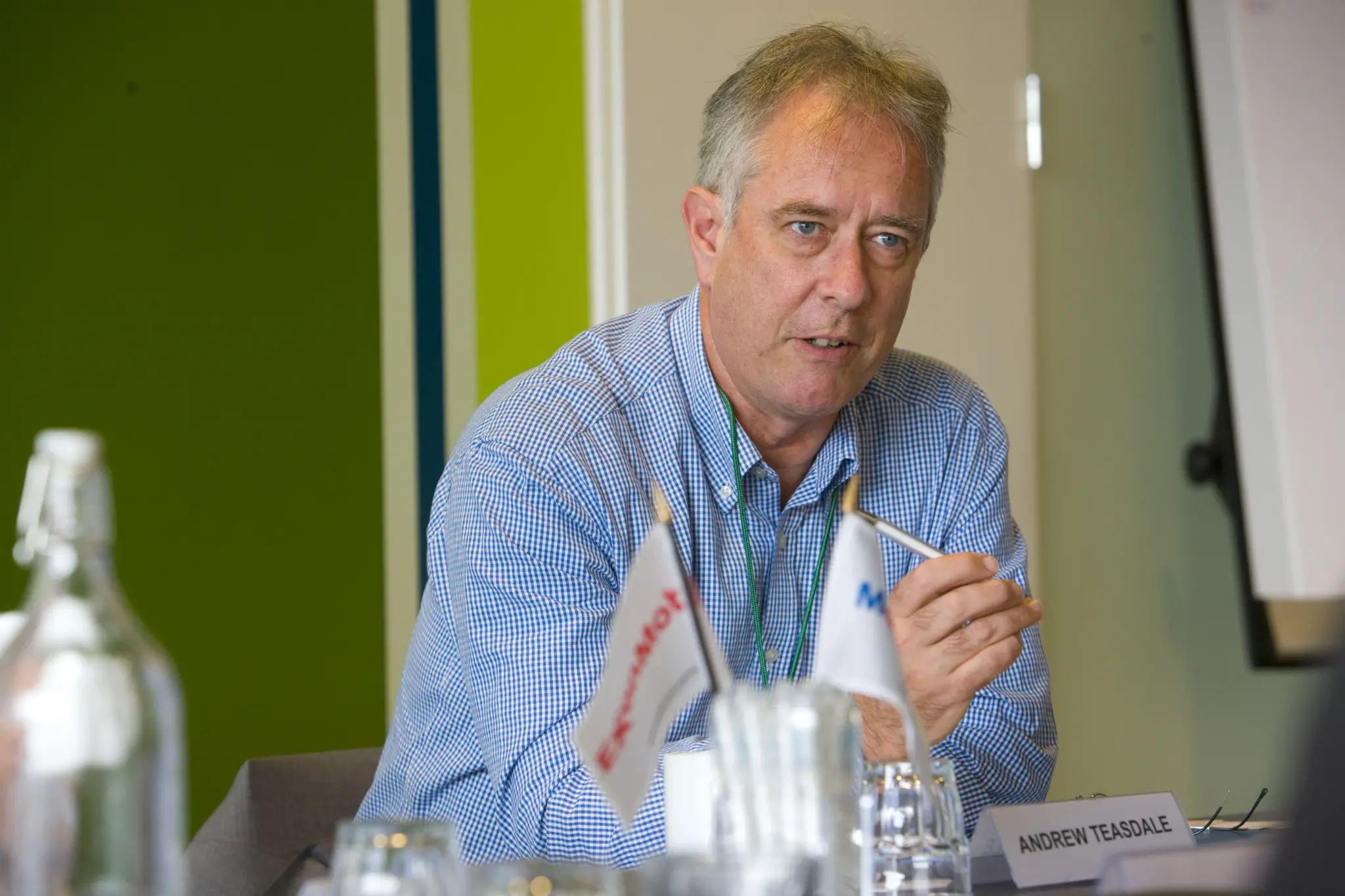 Andrew Teasdale, marine and hull surveyor, RSA Insurance: “We support and encourage technical innovation in the marine industry.”
Though the pressure on ship operators is likely to remain in the short-term – Lindberg suggested that in the long-term bigger ship managing operations might have greater flexibility through economies of scale – there was some encouragement from the insurance community. Andrew Teasdale, marine and hull surveyor, RSA Insurance noted that insurers were willing to, and indeed were already covering technically justified prototyping.
“I have seen examples of companies, where a vessel is going along supported by the banks or other finance which is in place, however when they break down or lose their charter they are put up for sale. So there is a financial incentive to put the right equipment on board.
“Engaging with your insurer from the outset, and explaining your actions supported with technical know-how, will ensure that they advise and support you. Just the other day a ferry company came to me with a hybrid fuel they wanted to use and we discussed the best way forward. To be a successful insurer you have to partner with likeminded customers, therefore we support and encourage technical innovation in the marine industry.”
Crew awareness
While insurance companies are keen to support innovation, they are also aware of the likely pitfalls in equipment use. Both ship owners and insurance companies confirm that the vast majority of incidents are caused by human error – either through lack of knowledge or failure to follow procedure. Crew training, retention and ‘sense of ownership’ – perhaps combined with the increasing complexity of onboard technology – are key factors. All industry stakeholders have a role to play in tackling these issues through passing on insight and simplifying procedures and operations where possible.
The presence of Teasdale from the insurance sector – a stakeholder segment represented at the ExxonMobil roundtable with The Motorship for the first time this year – cast a welcome light on another important aspect of cylinder condition: the role of the crew. With well over 90% of hull and machinery claims arising from human error, Teasdale asked, are ship crew good enough?
Ship operators Brise and Torm both responded openly to the question. Jensen noted that in Torm’s experience, it was not simply the knowledge of the crew but the failure to follow procedure that was responsible for the majority of equipment breakdowns. Lindberg highlighted crew knowledge – the days of a chief engineer who can ‘feel’ an engine may be disappearing – and also remarked on the market influence on crew retention.
 Stefan Lindberg, technical director – fleet management, Brise Bereederungs: Shareholding companies are so tightly financed, and their returns so low, that onboard testing can be prohibitive.
“The salaries for crew are significantly increasing because of the market. So if crew see a higher salary available somewhere else, they go. And a crucial issue for maintaining vessels is the retention of your crew leaders. If that retention is not there, they don’t have tendency to plan, and when that happens you tend to run after the problem.”
“Maybe our engines are becoming too complicated for this new kind of crew,” Rass suggested. He and others pointed to a future where online systems monitor liner lubrication and automatically adjust BN and feed rate. But panelists agreed that such developments are well in the future, and a well-trained, well-informed crew was the immediate need – something that can be reinforced by a robust cylinder condition monitoring programme.
Jensen from Torm identified that scrapedown analysis is an essential part of enabling crew and management to make the right decisions. The company has had a programme for around five years, where scavenge scrapedown oil is tested for residual iron and BN on a weekly basis. Specific cylinder oil consumption for each engine is reported daily into a data system which can be used to compare vessels across the fleet.
An interesting suggestion from Jensen – and one that ExxonMobil confirmed it was looking at for the next generation of its CCM programme – was for automated scrapedown analysis. “We have talked a lot about condition monitoring, but I think it needs to be stepped up several levels,” he said. “We can have qualified people but they lack experience – they don’t know what they’re looking for in the numbers, or how to inspect visually. So to make the process easier we could have this data collected and stored.”
Delegates were agreed that the collection and analysis of data on engine condition has a role to play in tackling uncertainty, complexity and gaps in crew knowledge. Wider use of scrape down oil analysis, along with the ability to integrate them into vessel optimisation and monitoring technologies, will offer an opportunity to develop such programmes into even more useful tools.
ExxonMobil’s Walker summarized: “I think it goes back to education and getting people to understand that modern engines are more complex than they used to be. All stakeholders have got a role to play in that education process.”
 Steve Walker, global marine equipment builder manager, ExxonMobil noted that fuel switching can lead to some complicated lubrication decisions for chief engineers.
The future
If the picture for cylinder lubricants looks complicated now, that is partly down to the fact that the industry is in an ‘in-between’ phase with regard to fuel sulphur content. When the global 0.5% fuel sulphur cap is introduced in 2020 or 2025, low BN lubricants will become the norm. By then, the industry will have had much more experience with low-sulphur fuels.
But the challenges do not end there. New engine designs will continue to raise new demands on lubricants. New fuels will have unforeseeable impact on the cylinder condition. Informing crew on these issues will remain a key priority. And ship owners and operators will continue to seek the most economical form of cylinder lubricant – convincing them to take the broad, lifecycle view on engine condition, rather than the cheapest possible oil, will be critical.
Across all these challenges, our panelists remain convinced of one constant – the need for regular and systematic scrape down oil analysis, and the adjustment of oil and feed rates based on that data. Without these, ship owners and operators are working blind in an area of engine maintenance that can have a dramatic impact on the equipment that keeps their assets moving.
Related Articles
 ALTERNATIVE FUELS & LUBRICANTS
 FUELS & LUBRICANTS