



First LPG retrofit project completed
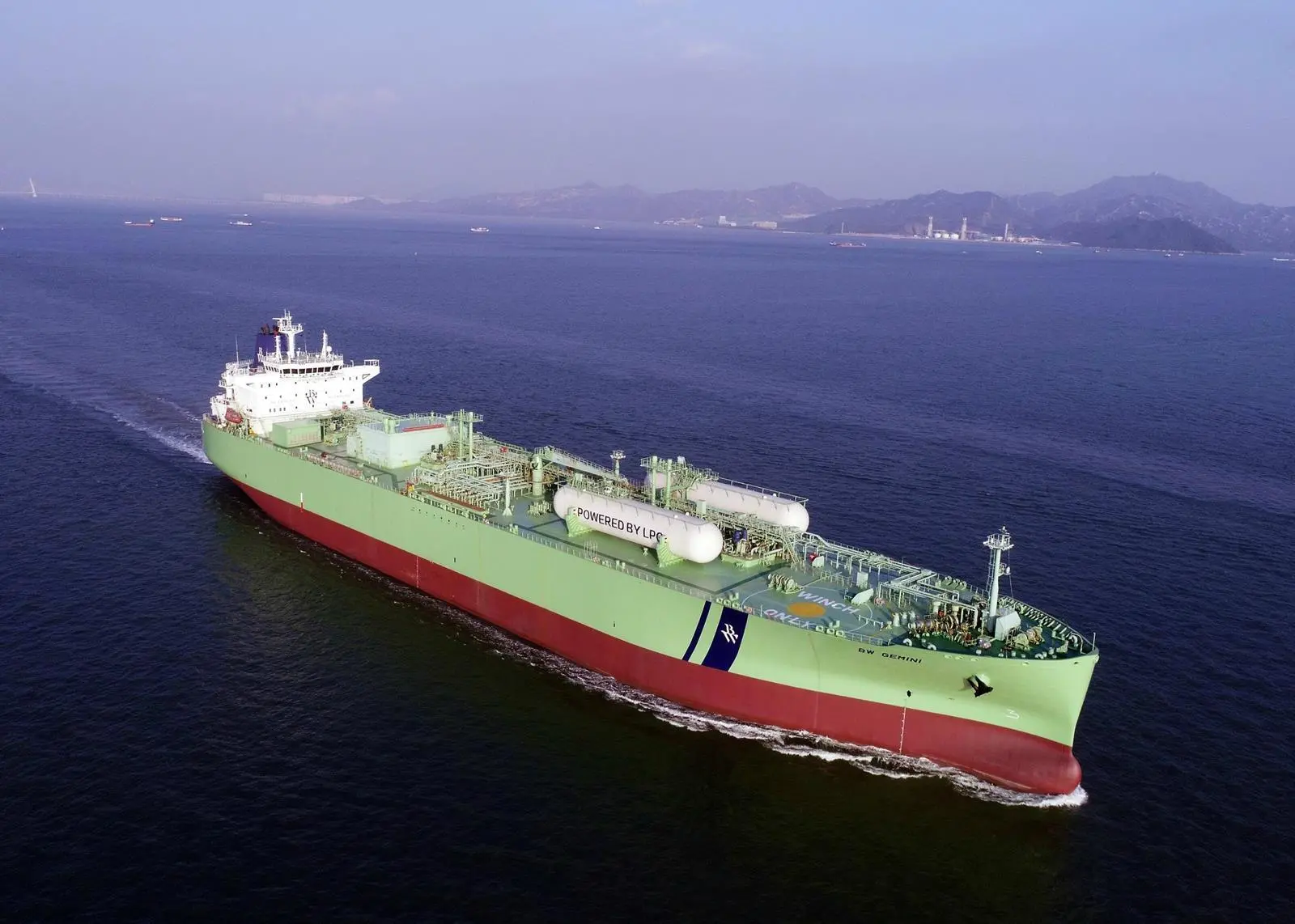
The 84,414cbm ship owned by BW LPG had its six-cylinder, MAN B&W G60ME-C9.2 engine converted to a dual-fuel (fuel oil and LPG) MAN B&W 6G60ME- LGIP type engine.
The successful conversion will make the BW Gemini the world’s first commercial vessel to be propelled by a two-stroke LPG dual-fuel engine. Sea trials are scheduled for October 2020 with the LPG carrier due to re-enter commercial trading upon their successful completion. The conversion is the first of 12 ordered by BW LPG for a series of vessels in its fleet.
The conversion was conducted at Yui Lian Ship Yard in Shenzhen, China. MAN PrimeServ, MAN Energy Solutions’ after-sales division, collaborated closely via remote connection due to pandemic restrictions.
Retrofits offer emissions reductions
BW LPG chose retrofits over newbuildings for a number of reasons. Pontus Berg, Executive Vice President, Technical and Operations, LPG, said: “Retrofitting allows us to minimise our carbon footprint – the process emits up to 97% less carbon dioxide compared to a newbuilding construction. Retrofitting also means that we do not add additional tonnage that the world does not need. In addition, BW LPG’s fleet is already widely recognised amongst charterers for its efficiency, and so retrofitting 12 of its vessels to dual-fuel LPG would help to further reinforce the company’s strong reputation in this area.” Oslo-listed BW LPG is the world’s leading owner and operator of LPG vessels.
MAN PrimeServ contributed dual-fuel technological insights to BW LPG during the development of the initial business case. One particular insight was that retrofitting offered environmental savings compared with newbuildings, while LPG as a fuel offers lower emissions than 2020-compliant fuels. By using LPG as a fuel, a vessel could achieve reductions of SOx by 99%, CO2 by 15%, NOx by 10%, and particulate matter by 90%.
Supportive retrofit economics
The economic case for the conversion was also supportive. With LPG as a marine fuel, the BW Gemini’s output efficiencies rise by around 10% against fuel oil, which will in turn generate notable gains in total voyage fuel-economics. BW LPG’s vessels also benefit from lower fuel consumption and full dual-fuel flexibility, which guards against price sensitivity to post-2020 fuel price fluctuations. Furthermore, the ability to use LPG cargo as a supplemental fuel source also reduces time and fees for fuel bunkering.
Wayne Jones OBE, Chief Sales Officer and member of the Executive Board, MAN Energy Solutions, said: “MAN PrimeServ’s dual-fuel expertise helped BW LPG to get a clear picture of the economics involved in this ambitious retrofit project. Although it requires significant upfront investment, the returns will be positive in both financial and environmental terms, and showcase perfectly BW LPG’s commitment to action on sustainability. It also displays the adaptability of MAN Energy Solutions’ technology and how retrofitting our engines can future-proof them to handle whatever alternative fuels come to prominence in the decades ahead.”
Dr Uwe Lauber, CEO of MAN Energy Solutions, said: “The industry is moving towards a zero-carbon future and there is a strong global push towards sustainability. As we pass the 2020 sulphur cap and get closer to future IMO targets in 2030 and 2050, companies that show strong corporate commitment to sustainability will become more commercially attractive. In this context, this retrofit project represents an important milestone and case study for the future of our industry.”
Related Articles
 ALTERNATIVE FUELS & LUBRICANTS
 ALTERNATIVE FUELS & LUBRICANTS
 ALTERNATIVE FUELS & LUBRICANTS