



First ME-GA engine with individual cylinder control option completes gas trials
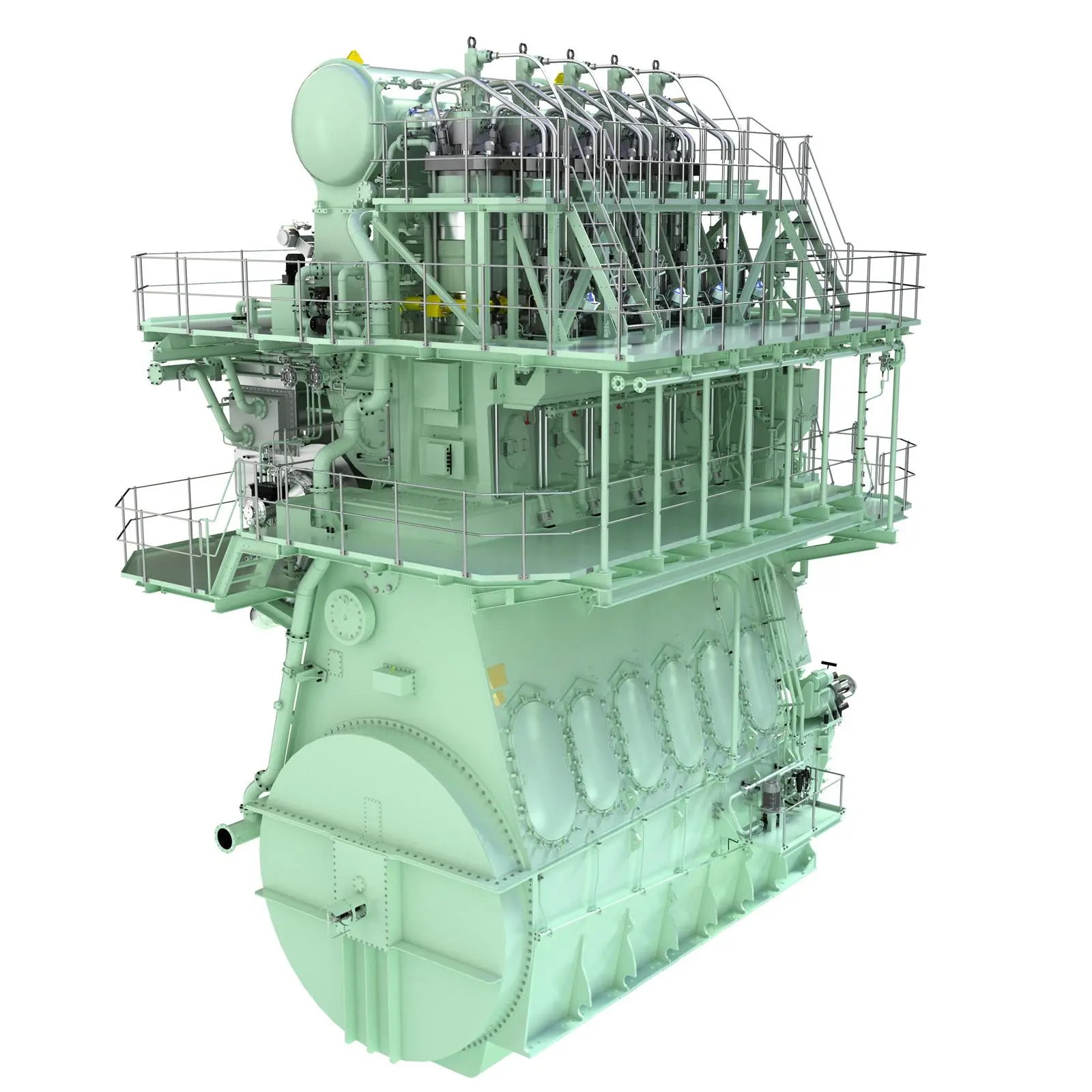
The MAN B&W ME-GA engine has been installed on an LNG carrier under construction by Samsung Heavy Industries (SHI) for an unspecified shipowner. The dual-fuel vessel, which was ordered in Q2 2021 and is scheduled for delivery in July 2023, is equipped with Exhaust Gas Recirculation (EGR) for emission reduction.
The vessel’s engine-control system is the first to be equipped with a new control feature called ‘ME-GA opti’, which MAN ES states will allow optimal engine operation through individual cylinder control.
The introduction of individual cylinder control into the ME-GA engine control system is expected to lead to improvements in the performance of the engine platform. The solution is expected to improve specific gas consumption during the average service life of an LNG carrier by ”several percentage points”.
The algorithms used by the ‘ME-GA-opti’ ensure, in an unprecedented way, that the two-stroke Otto engines’ combustion process runs as close to its designed optimum as possible in service.
One of the ways in which the ME-GA-opti does this is by reducing the influences of ambient temperature, pressure and humidity, all of which can influence Otto-cycle engines’ operation.
The MEGA-opti is able to adapt the engine’s running conditions as the combustion moves towards the pre-ignition limit, reducing fuel-ratio control activation.
The solution has the capacity to match ideal running conditions for the engine even in the toughest weather conditions and without oil activation.
In the adverse sea conditions that these vessels very often find themselves in, engines operate in far from ideal conditions. Prior to the development of ME-GA-opti, the engine would rely on oil operation to stabilise combustion in such rough weather.
Oil activation is a feature still found in the engine-control software, but its usage is expected to be significantly limited from now on, meeting LNG charterers’ preference for maximised gas operation for LNG carriers.
Related Articles
 2-STROKE & 4-STROKE
 2-STROKE & 4-STROKE
 2-STROKE & 4-STROKE