



Five-generation framework for wind
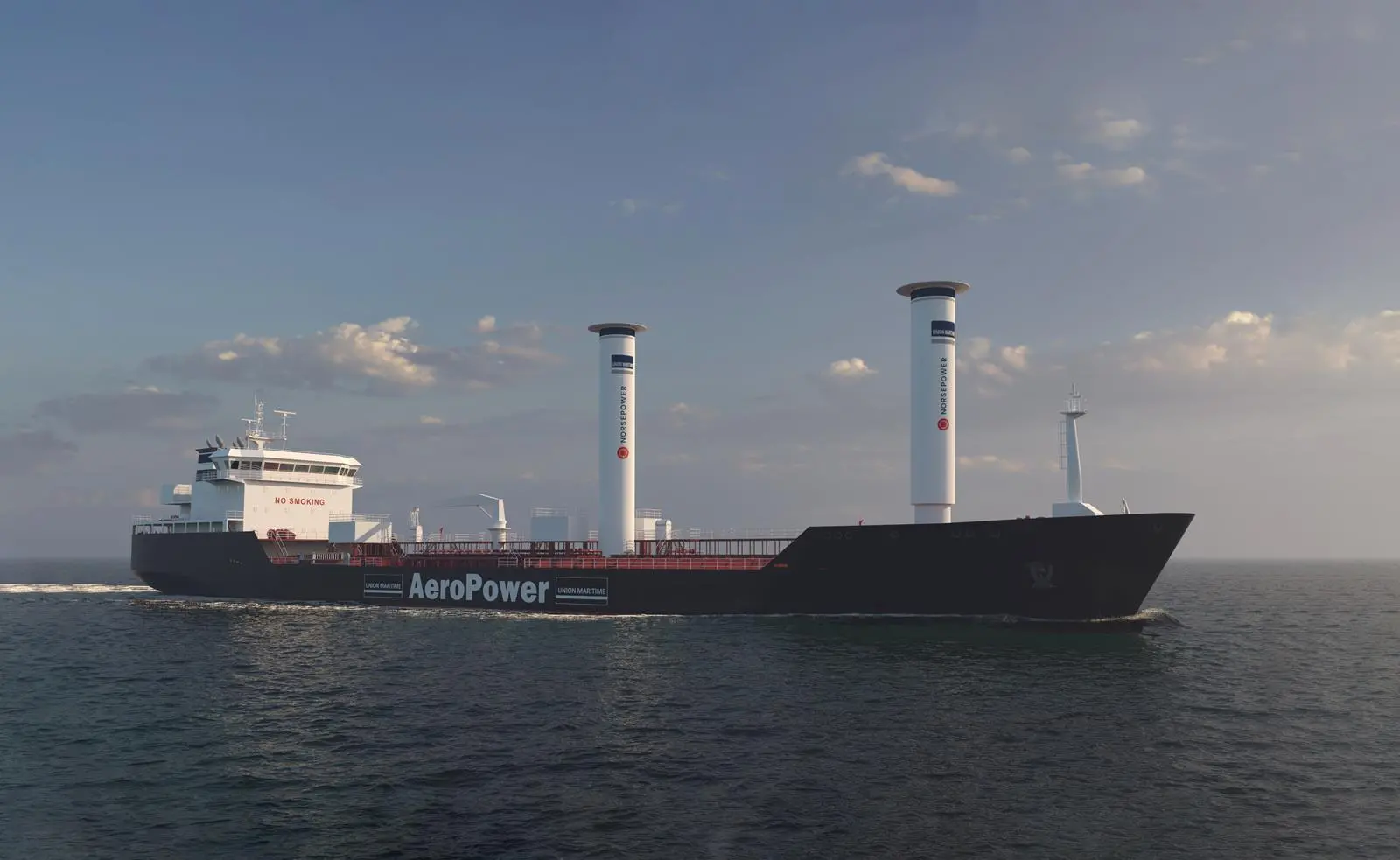
Ville Paakkari, head of R&D at Norsepower and Henrik Sjöblom, vice president Business Concepts at Kongsberg Maritime, outline a five-generation model classifying mechanical sails by automation, integration and data intelligence.
“Wind propulsion is no longer a niche or experimental technology,” said Paakkari. “It is evolving into a complex, data-driven system that interacts with the vessel, the route and eventually the wider fleet.
“A shared definition of the technology generations helps the industry speak the same language about where the technology stands today and where it is heading next.”
The first generation dates to the 1920s, including early Flettner rotor vessels such as Buckau. Second-generation systems, entering commercial service from around 2014, introduced advanced materials and basic sail-level automation, helping bring wind-assisted propulsion into mainstream shipping.
Third-generation concepts now undergoing testing shift optimisation from individual sails to whole-vessel performance. Fourth-generation designs envision fleet-level data sharing, while a fifth, theoretical stage imagines quantum-enabled optimisation and biomimetic structures embedded in global logistics networks.
READ MORE: 2026: An inflection point for wind propulsion
“Introducing technologies from the ‘eureka’ moment to commercial standards always goes through generations,” said Sjöblom. “Today we can establish that wind propulsion is a valid solution, suitable for sophisticated vessel integration.”
The publication follows a decision at the 12th session of the International Maritime Organization Sub-Committee on Ship Design and Construction to incorporate wind propulsion into its draft safety framework for greenhouse gas-reducing technologies, with interim guidelines expected by 2029.
Related Articles
 ENERGY SAVING DEVICES
 ENERGY SAVING DEVICES
 AMMONIA