



Fuel savings and European unity
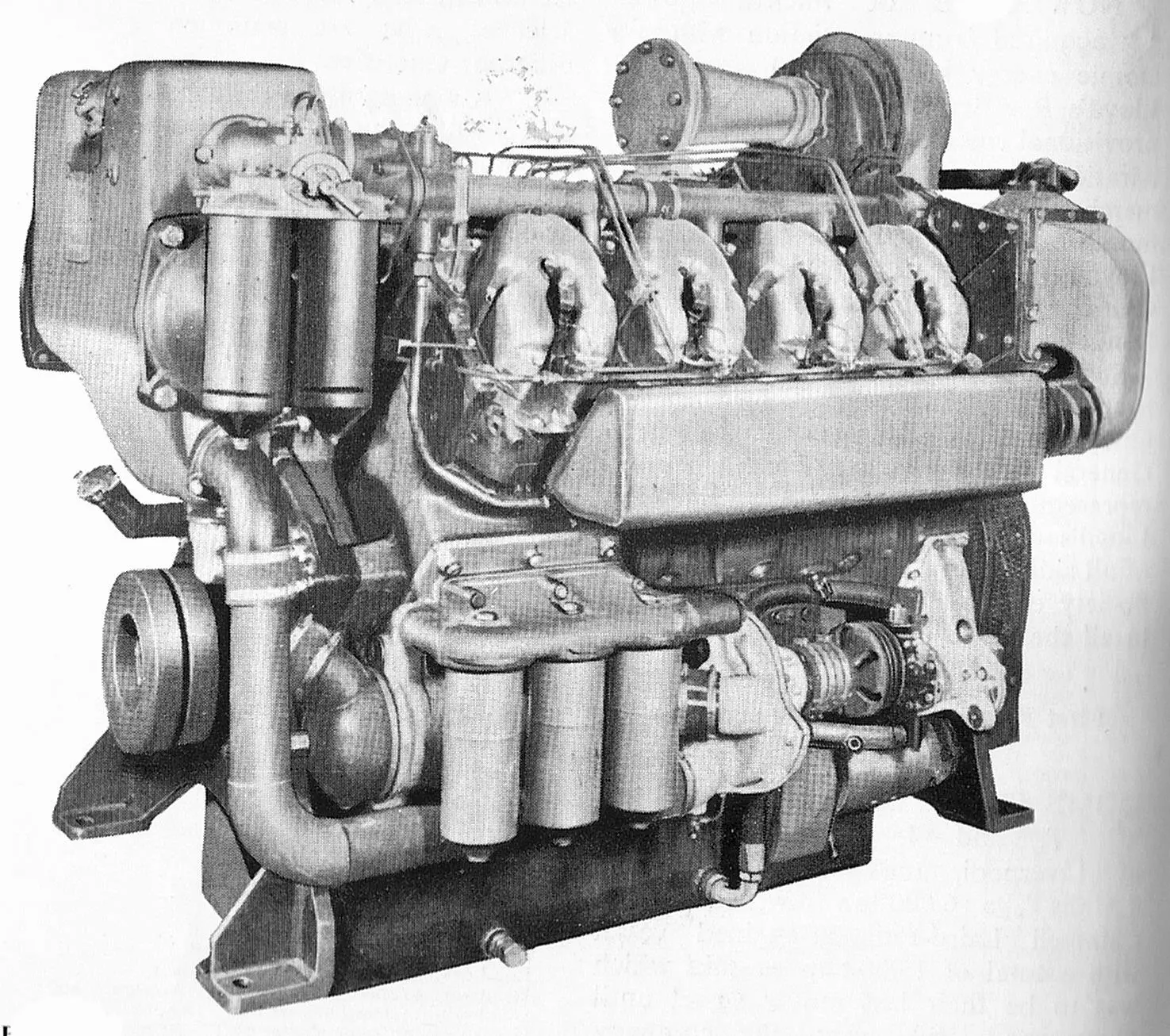
The November 1962 issue of The Motor Ship mentioned that the use of ‘boiler fuel’ – what we now refer to as heavy fuel oil – was increasing. It had previously been thought that this was not an economic fuel to use in engines of less than 3,000bhp output. The cost of the extra equipment needed to use HFO rather than lighter distillates was not likely to be recovered quickly enough through the reduced bunker costs of engines that used relatively little fuel. Nevertheless a trend was emerging for using intermediate grades of fuel oil in ships of around 2,000bhp. And some owners advocated using the same ‘boiler fuel’ in their auxiliaries as was burned in the main engines. Two British liner companies had in fact been doing this for 10 years, with satisfactory results in non-turbocharged auxiliary diesels. Smaller fleets were, it was thought, unlikely to consider that the fuel bill savings would be enough to justify the capital cost involved – although it may be worthwhile installing equipment for HFO on a newbuilding. Larger fleets, though, stood to realise considerable economies through operating both auxiliary and main engines on the same grade of heavy fuel, as long as serious maintenance problems could be avoided.
With a table of bunker prices showing heavy fuel oil at around 60% of the cost of MDO there was obviously potential for savings, but no great incentive – the writers remarked that in many bunkering locations, prices had remained unchanged for some three years, since October 1959.
Still on the subject of fuel savings, a new waste heat recovery system was explained. This was based on a system that had been fitted to the BP tanker British Kestrel, and explained in these pages earlier in the year. Satisfactory results obtained from this installation had led to the owner specifying another system, of simpler design, for the newbuild tanker British Venture. This ship’s Hawthorn-Sulzer 8RD90 engine was rated at 14,200bhp, and consequently the quantity of exhaust gas available was considerably more than that of the 7,600bhp British Kestrel.
In the new ship, it was not considered necessary to seek maximum heat recovery, so a single-pressure system was adopted rather than the earlier more complex dual-pressure system. Around 11,500lb/h (imperial units of measure were still the norm) of feed water at 124°F was passed through a heat exchanger in which the temperature was raised to 347°F before entering one of the two oil-fired water-tube boilers. Saturated steam at 4,200lb/h was taken to the ship’s services, and – after passing through a superheater – to a 600kW Brotherhood turbo alternator. The new system was considered to be more economical than the earlier arrangement, despite removing a lower proportion of waste heat.
Among other subjects of interest were a couple of short articles discussing the implications of Britain’s proposed entry into the ‘Common Market’ – as the EEC was known back then. The UK had in fact applied to join in 1960, but a French veto had prevented this and in reality it was not until 1973 that Britain gained membership of Europe. Even so, the prospect of entry caused some speculation. As far as shipbuilding went, there was thought to be no direct effects, though indirectly the price of raw materials and other costs could increase. One big advantage was thought to be that Britain’s membership would put the UK on a more equal footing with France and Italy, where government subsidies had enabled those two countries to undercut British bids. Surprisingly, membership was thought to be a good thing for the UK fishing industry – optimism that hindsight showed was seriously misplaced.
Related Articles
 50 YEARS AGO
 50 YEARS AGO
 50 YEARS AGO