



Funding received for high-speed fuel cell vessel
The consortium will receive up to NOK5 million (US$500,000) in funding support.
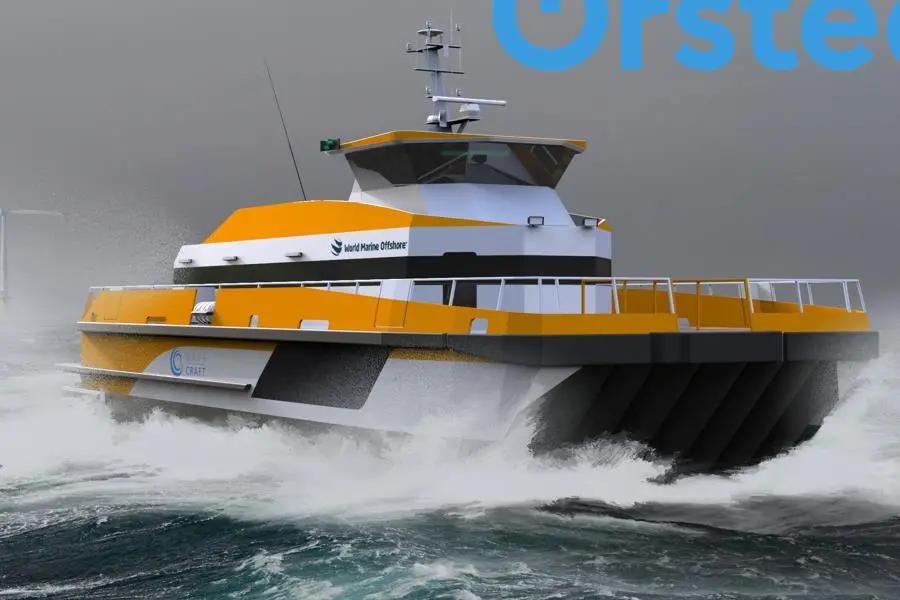
The vessel will combine the fuel cell systems from TECO 2030 and energy-efficient catamaran design with surface effect ship (SES) technology from Umoe Mandal. The vessel will have the capacity to transport 200-300 passengers at speeds above 35 knots while sailing over a longer distance.
The consortium is one of three qualified for the project “High-speed vessel of the future”, established by the county municipalities of Finnmark, Nordland, Trøndelag and Vestland in Norway to develop ground-breaking technology including the world’s first hydrogen-powered high-speed vessel.
Umoe Mandal has over 30 years of experience in delivering light-weight and energy-efficient vessels, based on the SES (Surface Effect Ship) Technology. This includes the world’s fastest combat ship, the Skjold class corvette, and the Wavecraft CTV series for the offshore wind market.
The contract contains two phases, where the consortia in 2022 and 2023 will first develop and get their solutions approved. In the next phase, one supplier will be chosen to build and demonstrate the newly developed vessel. The vessel will be in pilot operation from 2025.
“By introducing hydrogen as an energy carrier for high-speed vessels, we can create the uncompromising high-speed vessel that can replace all current high-speed vessels in Norway,” says Nordland county mayor, Tomas Norvoll.
In April 2022, Ørsted commissioned three new vessels called Surface Effect Ships for transferring technicians to turbines. The SES is twice as fast as a normal crew transfer vessels and has technology to help the waves pass under the vessel, with an air cushion that acts as a damper, ensuring much more stable transfers to and from the wind turbines. There is also 25% reduced fuel consumption compared to competing vessels in high speed.
Unlike a hovercraft, an SES vessel does not depend on speed to rise in the water. Even at a complete standstill, large fans create a cushion of air inside the enclosure formed between the twin hulls by flexible skirts fore and aft. Rubber finger-type seals in the bow, and a bag seal in the stern maintain an air-tight pocket.
Related Articles
 ALTERNATIVE FUELS & LUBRICANTS
 ALTERNATIVE FUELS & LUBRICANTS
 ALTERNATIVE FUELS & LUBRICANTS